


The Complete Guide to Golf Cart Wheel Size
Why Golf Cart Wheel Size Matters More Than You Think
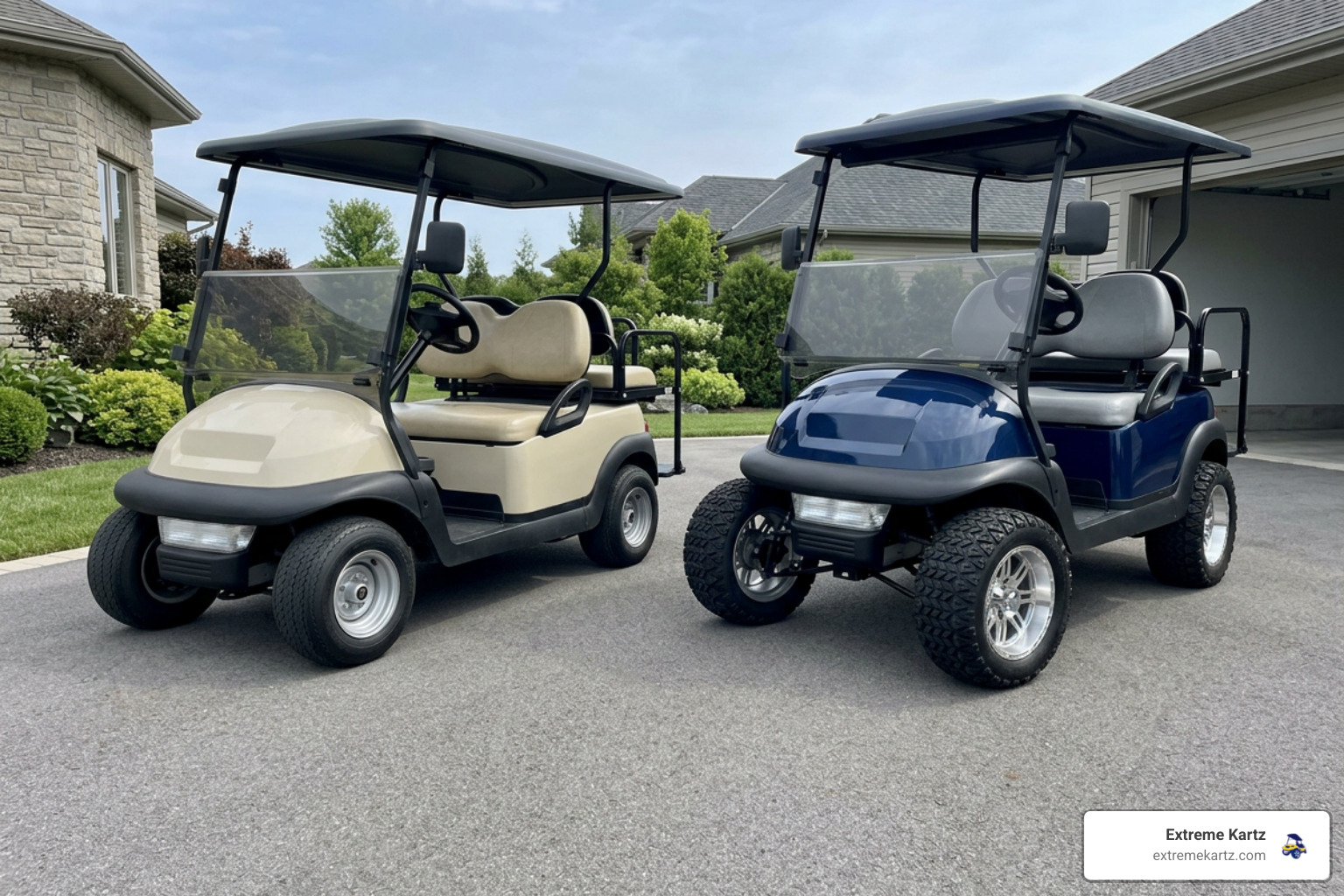
Golf cart wheel size affects how your cart looks, how it handles, and — most importantly — whether your tires will actually fit without rubbing.
Here's a quick answer to the most common question:
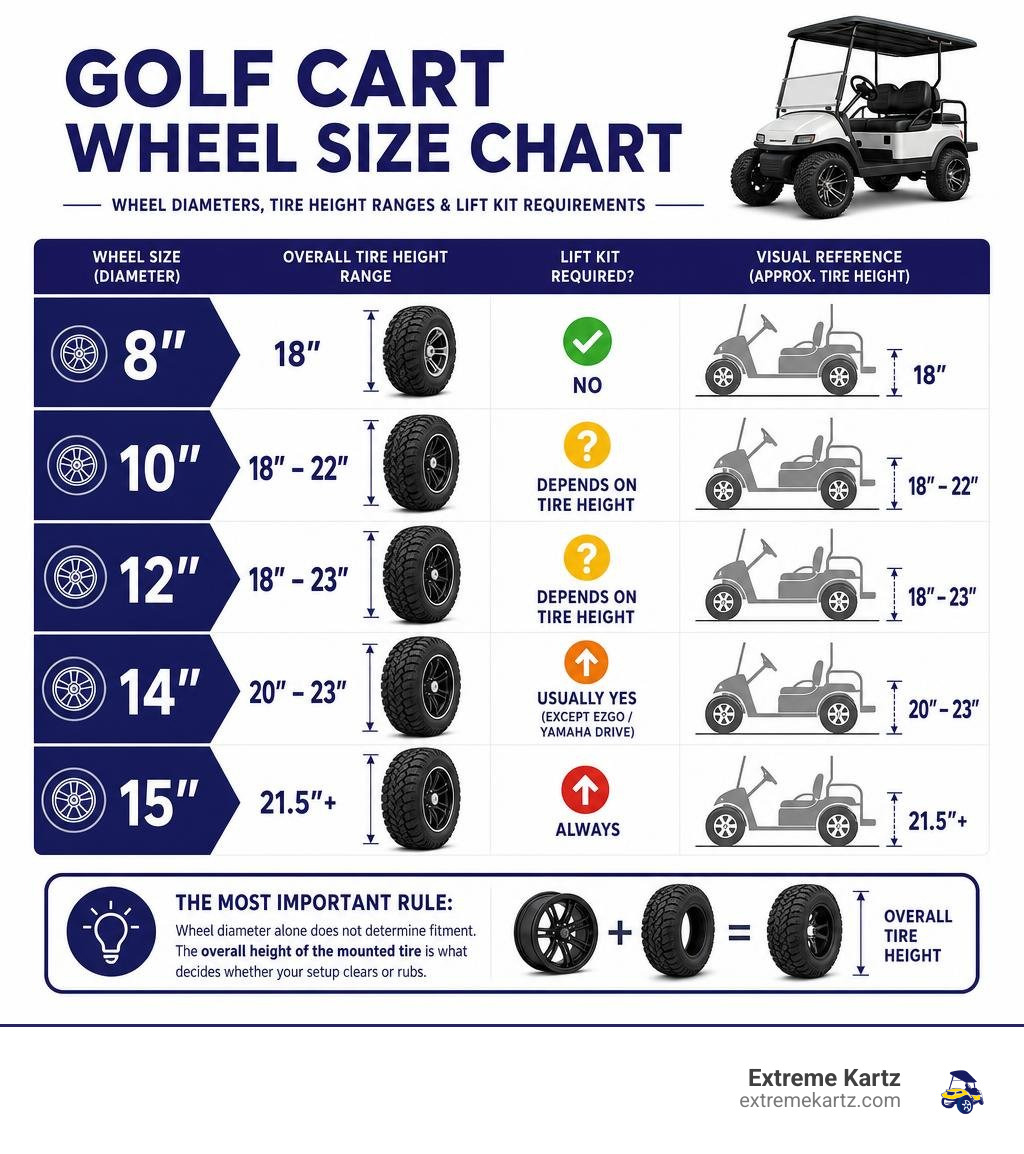
Most common golf cart wheel sizes and what fits:
| Wheel Size | Overall Tire Height Range | Lift Kit Required? |
|---|---|---|
| 8" | 18" | No |
| 10" | 18" – 22" | Depends on tire height |
| 12" | 18" – 23" | Depends on tire height |
| 14" | 20" – 23" | Usually yes (except EZGO/Yamaha Drive) |
| 15" | 21.5" + | Always |
The most important rule: wheel diameter alone does not determine fitment. The overall height of the mounted tire is what decides whether your setup clears the fenders and suspension — or rubs against them.
Most stock Club Car, EZGO, and Yamaha carts roll off the factory floor with 8-inch steel wheels paired with 18-inch tires. That combination fits any non-lifted cart. Once you go bigger, you need to know the total height of the wheel-and-tire combo before you order — not just the wheel diameter.
I'm Martin Davis, owner of Extreme Kartz, and I've helped thousands of customers navigate golf cart wheel size decisions across every major cart brand and upgrade configuration. In this guide, I'll walk you through everything — from reading tire size labels to choosing the right setup for your specific cart and how you use it.
Understanding Standard Golf Cart Wheel Size Options
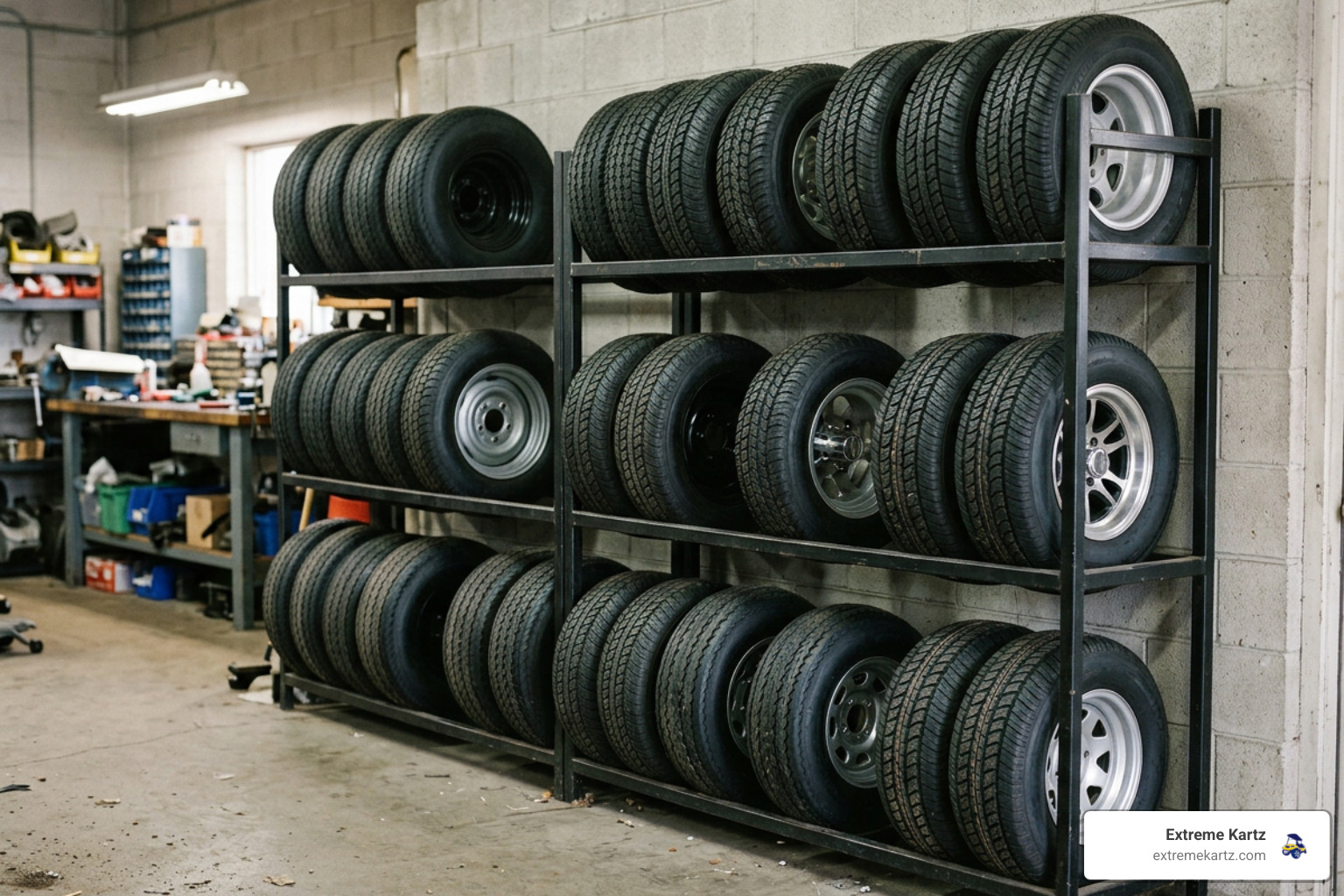
When upgrading your ride, navigating the standard options for golf cart wheel size is the first step toward getting the perfect setup. While OEM standards historically stuck to basic utility, modern aftermarket trends have blown the doors wide open, offering wheel diameters ranging from 8 inches all the way up to 15 inches.
Choosing the right size is a balancing act between the look you want and the clearance your cart's suspension allows. If you want a deep dive into how these components pair together, check out our Golf Cart Rims and Tires Guide.
Let's break down how these sizes differ in appearance, utility, and everyday use.
The Classic 8-Inch and 10-Inch Golf Cart Wheel Size
For decades, the 8-inch wheel has been the standard OEM fleet standard for Club Car, EZGO, and Yamaha. These basic white or black steel wheels are typically paired with 18-inch tall tires. They provide maximum turf protection and a plush, cushioned ride because the tire sidewall is thick enough to absorb bumps on the golf course.
Stepping up to 10 Inch Golf Cart Wheels is one of the most practical upgrades you can make. The most popular 10-inch combo on the market is the 205/50-10 street/turf setup, which maintains an overall height of 18 inches. This means you get a sportier look with low-profile tires without needing a lift kit. It is an excellent choice for neighborhood cruising and paved paths where you want a sharper look but still need to protect the grass. You can browse these options in our collection of Golf Cart Tires and Wheels.
Upgrading to 12-Inch, 14-Inch, and 15-Inch Golf Cart Wheel Size
If you want to turn heads, upgrading to custom aluminum rims in the 12-inch, 14-inch, or 15-inch range is the way to go.
- 12-Inch Wheels: Often called the "sweet spot," 12-inch wheels offer the perfect compromise. They allow you to run low-profile street tires (keeping the overall height at 18 to 20 inches) or taller, beefier all-terrain tires if your cart is lifted.
- 14-Inch Wheels: This size has exploded in popularity because the prominent metal-to-rubber ratio completely transforms the stance of the cart. That because the smallest tire combo for a 14-inch wheel starts around 20 inches in overall height, they often require a lift kit on Club Car models and older Yamaha models. Learn more about these setups in our Golf Cart Tires 14 Complete Guide and our Golf Cart 14 Rims and Tires Guide.
- 15-Inch Wheels: The newest and largest option on the market. These wheels are designed to stand out. Because the smallest available tire combo for a 15-inch wheel is 21.5 inches in overall diameter, you must install a lift kit on your cart to run them, regardless of your cart's make or model.
How to Read Golf Cart Tire and Wheel Size Designations
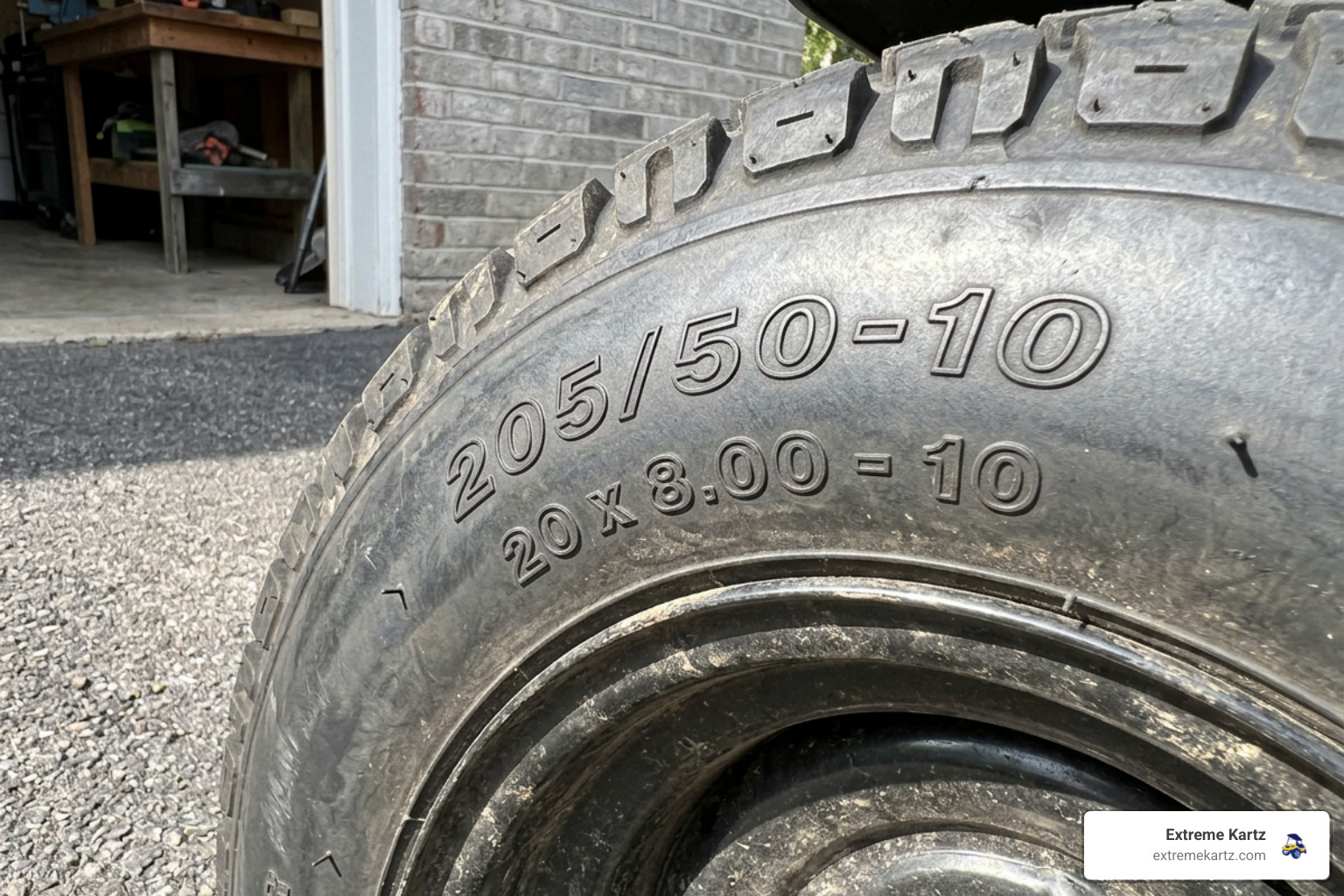
Reading the numbers printed on a tire sidewall can feel like trying to crack a secret code. In the golf cart industry, manufacturers use two entirely different systems: standard (imperial) format and metric format.
Understanding how to read these markings is crucial to ensuring you don't accidentally order a tire that rubs against your frame. For a broader look at this topic, refer to our Golf Cart Tires Rims Complete Guide.
Standard Sizing Format Explained
The standard (or imperial) format is the most straightforward because every measurement is listed in inches. It typically looks like this: 23x10-14 or 18x8.50-8.
Let's break down 23x10-14:
- 23 (First Number): The overall height of the tire in inches when fully inflated (23" tall).
- 10 (Second Number): The overall width of the tire tread in inches (10" wide).
- 14 (Third Number): The wheel diameter in inches that this tire is designed to fit (14" wheel).
This format makes it incredibly easy to determine fitment because the first number tells you exactly how much vertical clearance you need under your fender wells. To explore taller tire options using this sizing system, check out our Golf Cart Big Tires Complete Guide.
Metric Sizing Format Explained
The metric format is borrowed from the automotive industry and is commonly used for low-profile street tires. It looks like this: 205/50-10 or 215/50-12.
Let's break down 205/50-10:
- 205 (First Number): The width of the tire in millimeters (205 mm, or about 8 inches).
- 50 (Second Number): The aspect ratio. This is the sidewall height expressed as a percentage of the width. In this case, the sidewall is 50% of 205 mm (which is 102.5 mm, or roughly 4 inches).
- 10 (Third Number): The wheel diameter in inches (10" wheel).
To find the overall height of a metric tire, you have to do a bit of math: multiply the sidewall height by two (for the top and bottom of the wheel) and add the wheel diameter. For example, a 205/50-10 tire has an overall height of approximately 18 inches, making it a perfect fit for non-lifted carts. If you are looking at 10-inch wheel options, our 20x10 10 Golf Cart Tires Complete Guide provides excellent insight into how these dimensions translate to real-world fitment.
For a handy reference tool, you can also consult external resources like the [PDF] golf cart tire size designation using aspect ratio to see how these standard and metric sizes align.
Wheel Offset and Its Impact on Fitment and Stability
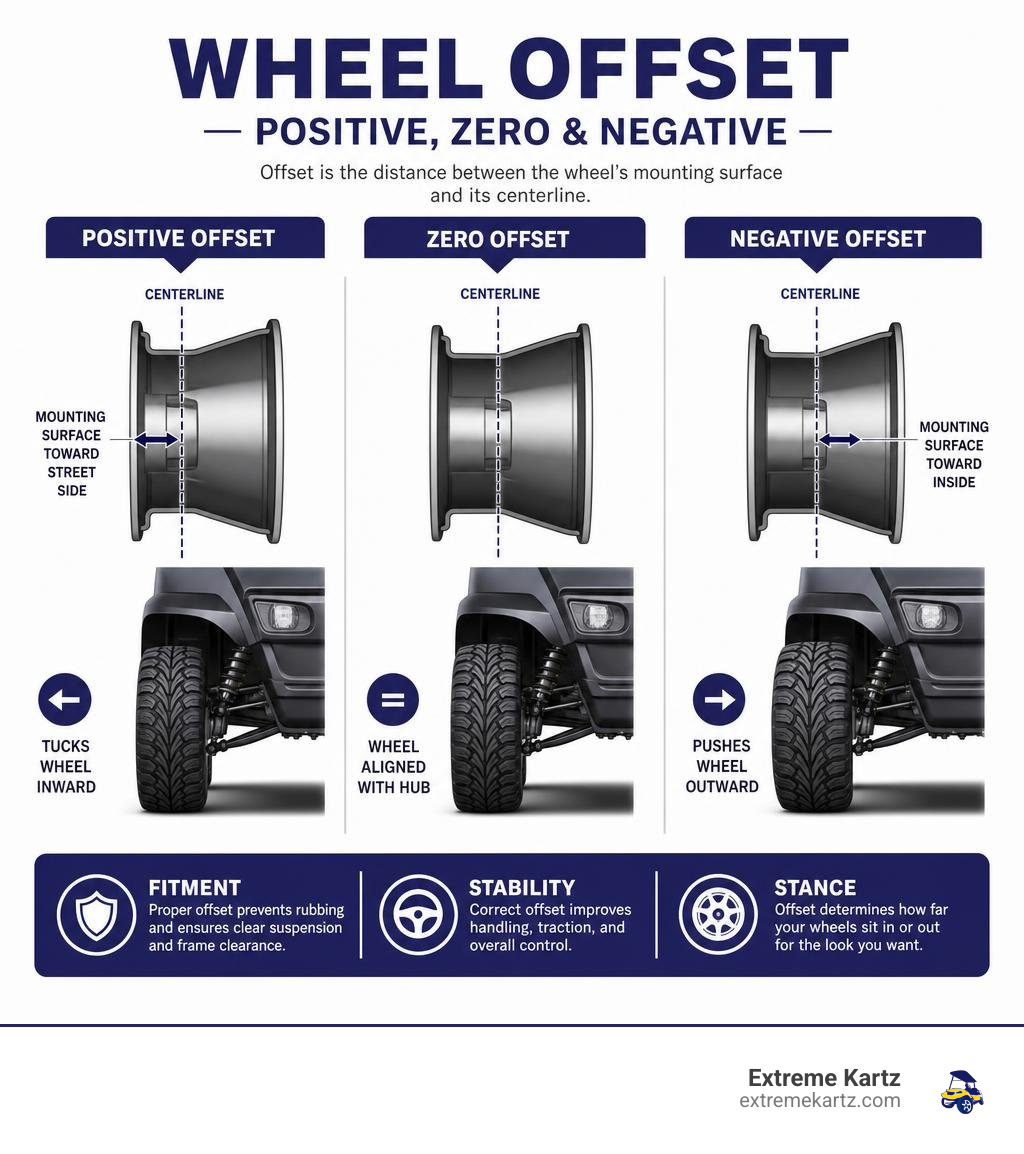
Wheel offset is the unsung hero of proper wheel fitment. It refers to the distance between the wheel’s mounting surface (where the wheel bolts to the hub) and its centerline.
Understanding offset is critical because it dictates how far your wheels stick out from the fenders, which directly impacts your cart's stability, steering clearance, and stance.
- Positive Offset: The mounting surface is pushed toward the front (street side) of the wheel. This tucks the wheel and tire inward, closer to the cart's frame. While common on passenger cars, positive offset is rarely used on custom golf carts because it can cause larger tires to rub against the internal suspension components.
- Zero Offset (Centered): The mounting surface is perfectly aligned with the centerline of the wheel. This splits the wheel width evenly on both sides of the hub.
- Negative Offset: The mounting surface is pushed toward the back (brake side) of the wheel. This pushes the entire wheel and tire outward, away from the cart's body, creating a wider, more aggressive stance.
Why Negative Offset Matters: All lifted golf carts require negative offset wheels, and virtually all aftermarket wheels designed for off-roading are built with a negative offset (such as a "3+4" offset, meaning 3 inches of backspacing and 4 inches of front clearance). This outward push is necessary to prevent the inside of the tire from rubbing against your aftermarket lift kit's spindles, A-arms, or frame. As an added benefit, a wider stance significantly improves the lateral stability of a lifted cart, making it much less prone to tipping on uneven terrain.
If you are upgrading your suspension or wheels, keeping your steering aligned is vital; refer to our Golf Cart Tire Wheel Alignment Guide to ensure a smooth, straight ride.
Compatibility and Lift Kit Requirements by Cart Model
Fender clearances vary significantly between Club Car, EZGO, and Yamaha. Because of these structural differences, a tire size that fits perfectly on one brand might rub terribly on another.
The table below outlines the maximum overall tire height you can run on stock (non-lifted) suspensions versus various lift kit heights across the "Big Three" manufacturers:
| Cart Brand & Model | Max Tire Height (No Lift) | Max Tire Height (3" Lift) | Max Tire Height (4" - 5" Lift) | Max Tire Height (6" Lift) |
|---|---|---|---|---|
| Club Car (Precedent, Onward, Tempo, DS) | 18.5" | 20.0" | 22.0" | 23.0" |
| EZGO (TXT, RXV, Liberty) | 20.5" | 22.0" | 23.0" | 23.0" – 25" |
| Yamaha (G-Series, Drive/YDR) | 18.5" | 20.0" | 22.0" | 23.0" |
| Yamaha (Drive2) | 20.0" | 22.0" | 22.0" | 23.0" |
Key Differences to Keep in Mind:
- EZGO Carts: EZGO models are famous for having generous, square fender wells. They can comfortably accommodate up to a 20.5-inch tire (such as a 205/65-10) on a stock suspension without rubbing.
- Club Car and Older Yamaha Carts: These models have much tighter, rounder fender clearances. If you try to put anything larger than an 18.5-inch tire on a stock Club Car, you will experience severe tire rub when turning or carrying passengers.
- Lift Kit Types: When stepping up to 22-inch or 23-inch tires, you will need a lift kit. Spindle lifts are cost-effective and great for street use, while A-arm lift kits replace the entire front suspension, providing maximum durability for off-road trails. All of our lift kits ship in 1-2 business days.
For a complete breakdown of lifted tire configurations, check out our Ultimate Lifted Golf Cart Tires Guide and our guide on Golf Cart Wheels for Yamaha Ezgo Clubcar. You can also reference the comprehensive Golf Cart Tire Size Chart: Best Tires & Wheels (2026) for additional model-specific fitment details.
Performance Trade-offs of Larger Wheels and Tires
Upgrading your golf cart wheel size and tire height isn't just about aesthetics; it fundamentally alters how your cart performs. Before making the leap to massive 23-inch tires on 14-inch wheels, you need to understand the mechanical trade-offs involved.
- Top Speed vs. Torque: Taller tires act like an overdrive gear. By increasing the outer circumference of your tire, your cart will achieve a higher top speed (often gaining 2 to 4 mph). However, this comes at the direct cost of low-end torque. Your cart will have to work much harder to climb hills, accelerate from a dead stop, or carry heavy rear passenger loads.
- Ride Quality and Low-Profile Harshness: The larger your wheel, the thinner your tire's sidewall must be to maintain the same overall height. Low-profile tires on 14-inch or 15-inch wheels look incredibly sleek, but because there is less air cushion to absorb road imperfections, the ride will feel noticeably firmer and harsher on bumpy pavement.
- Rolling Resistance and Battery Range: Larger, heavier tires (especially aggressive off-road treads) increase rolling resistance and rotational weight. On an electric cart, this extra strain can reduce your battery range by 10% to 20%.
Unleashing Performance with the Right Upgrades
If you are planning to run large tires, we highly recommend upgrading your battery system to handle the increased electrical load. Moving to a premium lithium battery is the single best way to regain lost torque and boost your range. At Extreme Kartz, we specialize in high-performance system solutions and recommend industry-leading lithium brands like Eco Battery, Bolt Energy, Lithium Rhino, and Bedrock Battery to keep your upgraded cart running at peak efficiency.
Additionally, maintaining the correct tire pressure is vital to balancing ride comfort and tire wear. Be sure to read our Golf Cart Tire Pressure Guide and our Golf Cart Tire Guide 2026 to keep your new setup rolling smoothly.
Frequently Asked Questions About Golf Cart Wheels
Do larger wheels require a lift kit?
Not necessarily. Remember: wheel size does not dictate fitment; overall tire height does. You can mount a large 14-inch wheel on a stock (non-lifted) cart as long as you pair it with an ultra-low-profile tire that keeps the overall height at 20 inches or less (depending on your cart model). However, if you want that classic rugged look with beefy tire tread, you will need a lift kit. For a deeper dive into rim styles and clearances, see our Golf Cart Rims Complete Guide.
What is the most popular wheel and tire combo?
For non-lifted street and turf use, the absolute gold standard is the 10-inch wheel paired with a 205/50-10 low-profile tire (measuring 18 inches tall). It fits every stock cart without modification, offers a smooth ride, and looks fantastic.
For lifted carts, the most popular choice is a 12-inch wheel paired with a 23x10-12 all-terrain tire, which strikes a perfect balance between custom style and rugged capability. Explore these pre-matched setups in our Golf Cart Tires with Rims collection.
How do I choose the right tread type for my wheel size?
Your tread choice should match where you drive most often:
- Turf/Street Tires: Best for golf courses and manicured lawns. They have a shallow, tightly packed tread pattern designed to maximize contact with pavement while preventing damage to delicate grass.
- Street Radials: Excellent for paved neighborhood roads. They offer automotive-style steel-belted construction, which dramatically improves ride smoothness, reduces road noise, and lasts much longer than bias-ply tires.
- All-Terrain (AT) Tires: Perfect for mixed-use driving (pavement, gravel paths, dirt roads, and light trails). They feature deeper, wider tread blocks that offer excellent off-road traction without creating excessive vibration on the street.
- Off-Road/Mud Tires: Designed strictly for loose dirt, mud, and rugged trails. They feature aggressive, deep lugs that claw through debris but will ride loudly and wear down quickly on hard pavement.
For a complete overview of tire styles, take a look at our Golf Cart Tires guide. You can also compare related Extreme Kartz fitment resources for wheel-and-tire packages, rim sizing, tire pressure, and lifted cart setups before choosing your final combination.
Conclusion
Choosing the right golf cart wheel size and tire combination is the ultimate way to customize your cart's performance and style. Whether you are looking for a sleek, low-profile street cruiser or a lifted, aggressive off-road machine, understanding how wheel diameter, overall tire height, and offset interact is the key to a successful upgrade.
At Extreme Kartz, we are here to take the guesswork out of your next upgrade. We focus on complete, system-based solutions to ensure that your wheels, tires, lift kits, and power systems work together in perfect harmony. If you are ready to take your cart to the next level, our team of experts is standing by to help you verify fitment and choose the perfect package.
Explore our curated selection and Shop Golf Cart Tires and Wheels at Extreme Kartz today!
Related Products


Vendor: Set of (4) 14" GTW Bravo Wheels with 22x10-14 GTW Timberwolf All-Terrain Tires

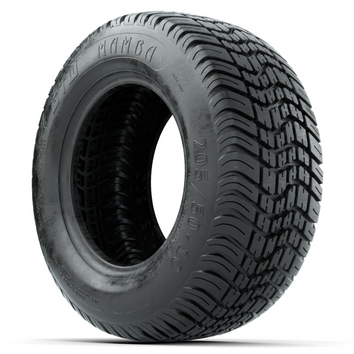
Vendor: 205/50-10 GTW® Mamba Street Tire (No Lift Required)


Vendor: 22x11-10 GTW® Predator A/T Tire

Vendor: RHOX Vegas, Matte Black w/ Center Cap, 10x7 ET-25


