


Ultimate Guide to Lifted Golf Cart Tires
Why Lifted Golf Cart Tires Are Worth the Upgrade
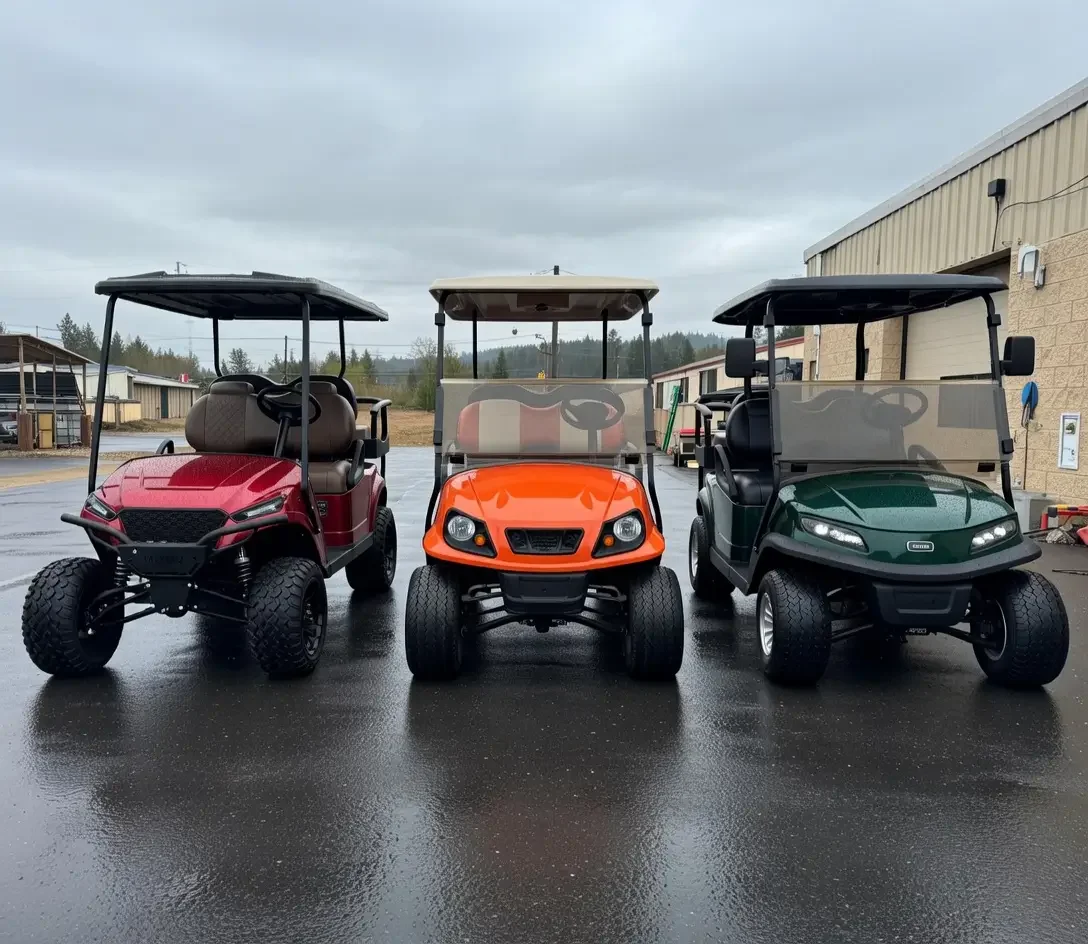
Lifted golf cart tires are one of the most impactful upgrades you can make to a golf cart — whether you're crossing rough trails, cruising a neighborhood, or just want a more aggressive look.
Here's a quick answer if you're ready to shop:
| Lift Kit Height | Recommended Tire Height | Common Tire Sizes |
|---|---|---|
| 1"–2" | 20"–21" | 20x10-10, 22x9.50-12 |
| 3"–4" | 22" | 22x10-12, 22x11-12 |
| 5"–6" | 22"–23" | 23x10-12, 23x10-14, 255/50-12 |
- Tires 20"–21" tall can fit carts with smaller lifts (1"–2")
- Tires 22"–23" tall are the most popular range, with over 275 combos available
- Most tires above 22" require a lift kit installed before fitting
- Wheel sizes typically run 12", 14", or 15" depending on lift height
- Tread types include street, turf, all-terrain, and hybrid — each suited to different terrain
The right setup depends on three things: your lift kit height, your cart brand (Club Car, EZGO, Yamaha), and how you actually use your cart.
This guide covers all of it — sizing, tread types, brand fitment, and common mistakes to avoid.
I'm Martin Davis, owner of Extreme Kartz, and I've worked directly with manufacturers and technicians to help cart owners across all 50 states find the right lifted golf cart tires for their exact setup. In the sections below, I'll walk you through everything you need to make a confident, accurate decision before you buy.
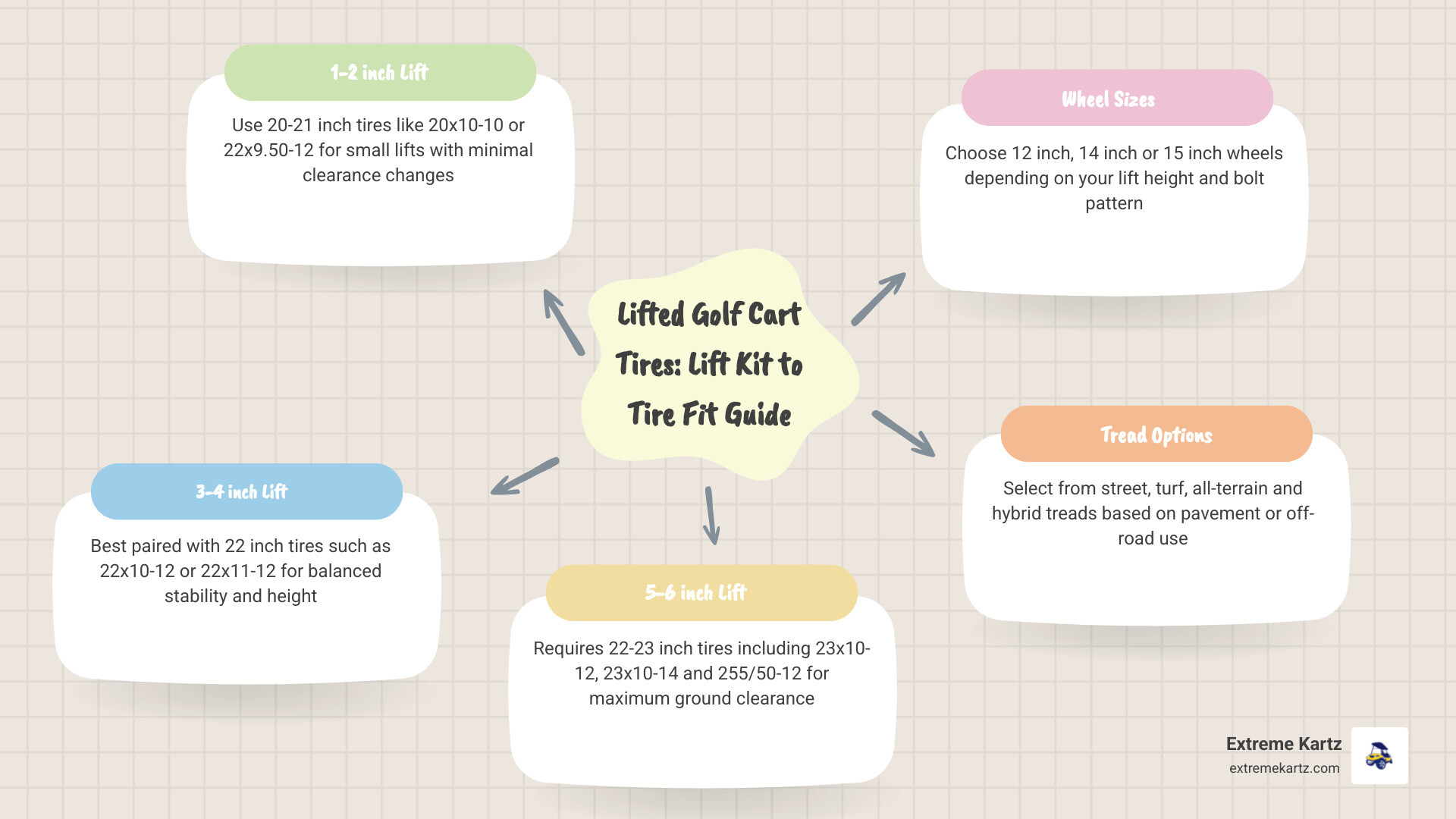
Understanding Lifted Golf Cart Tires vs. Standard Tires
When we talk about lifted golf cart tires, we aren't just talking about a "bigger" tire. We are talking about a fundamental change in how your cart interacts with the ground. Standard golf cart tires typically measure 18 inches in total height and are designed for flat, manicured turf or paved paths. They have thin sidewalls and shallow treads to minimize impact on golf course grass.
In contrast, lifted golf cart tires typically range from 20" to 25" in overall height. This increased diameter requires a lift kit to provide the necessary clearance within the wheel wells. Beyond just height, these tires feature reinforced sidewalls for better stability and a wider contact patch.
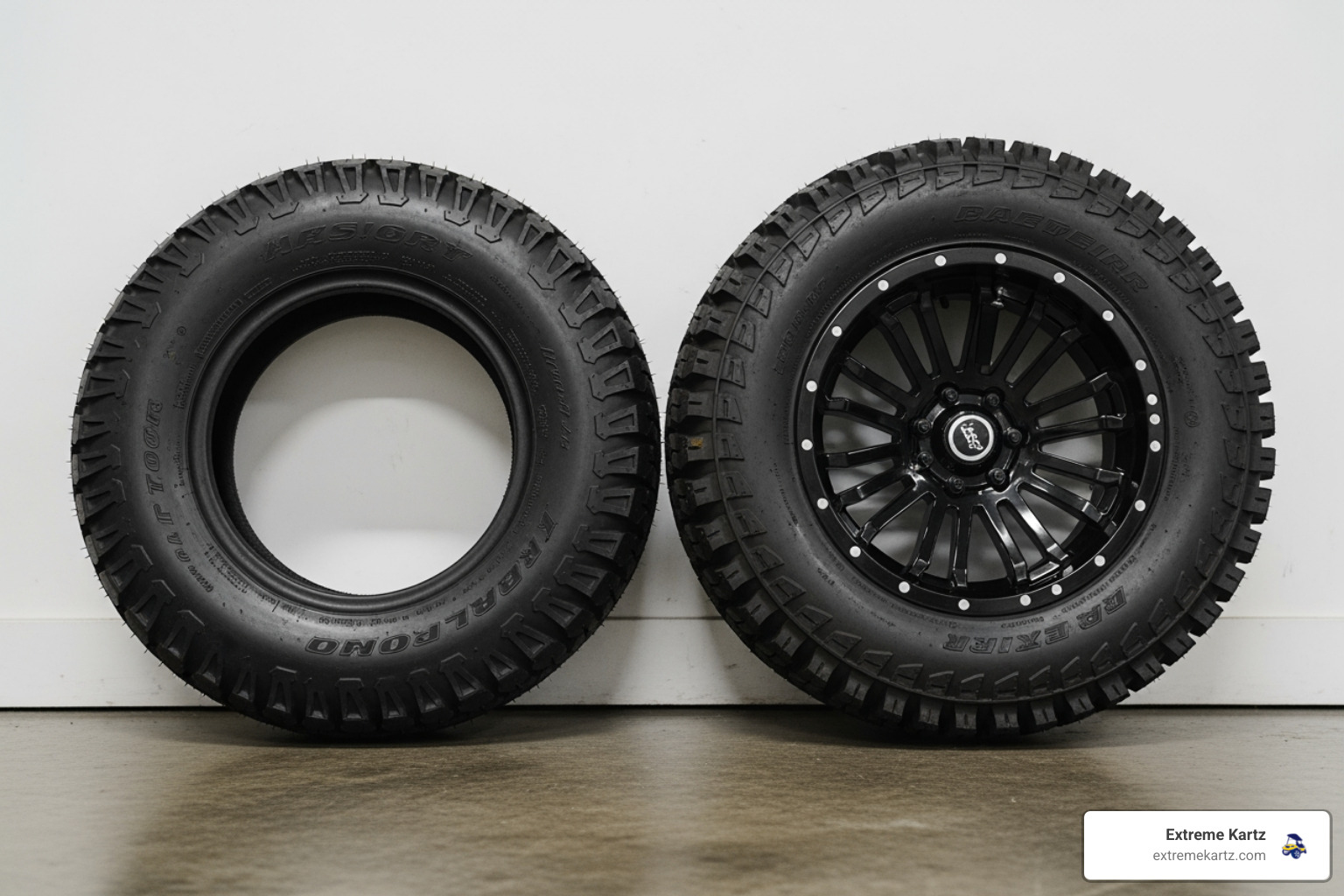
At Extreme Kartz, we focus on system-based solutions. When you Explore Lifted Golf Cart Tires at Extreme Kartz, you'll notice that as the tire height increases, the load capacity usually follows. A larger tire can carry more weight and distribute that weight over a larger surface area, which reduces ground pressure despite the more aggressive look. This is crucial for carts equipped with heavy lithium battery packs or rear seat kits carrying extra passengers.
Key Benefits of Upgrading to Lifted Golf Cart Tires
Why do so many owners move away from the standard 18-inch setup? It comes down to performance and versatility:
- Off-Road Capability: The larger diameter and deeper tread patterns allow you to navigate mud, sand, gravel, and tall grass without getting stuck.
- Increased Top Speed: It’s simple physics—a larger tire covers more ground with every single rotation of the motor. By switching from an 18" tire to a 23" tire, you can often see a gain of 2–4 mph in top-end speed without touching the motor or controller.
- Rugged Styling: Let's be honest—a lifted cart looks better. It gives the vehicle a "mini-truck" or SUV aesthetic that standard carts lack.
- Enhanced Bottom Clearance: By lifting the chassis and adding taller tires, you move the sensitive underbelly of your cart (including the motor and battery tray) away from rocks and debris.
- Improved Suspension Travel: Most lift kits that accommodate these tires also upgrade the front suspension, providing a plusher ride over bumps.
Matching Tire Sizes to Your Lift Kit Height
The most common question we get is: "Will these tires fit my cart?" The answer depends almost entirely on your lift kit height. If you try to stuff a 23-inch tire under a cart with only a 3-inch lift, you’re going to experience "rubbing"—where the tire hits the body or frame during turns.
| Lift Kit Height | Max Tire Diameter | Best Fitment Examples |
|---|---|---|
| 1" - 2" (Low Profile) | 20" | 20x10-10, 215/50-12 |
| 3" - 4" (Medium Lift) | 22" | 22x11-12, 22x10-14 |
| 5" - 6" (High Lift) | 23" - 25" | 23x10.5-12, 23x10-14, 255/50-12 |
When you View Lifted Tire and Wheel Combos, you'll see that 22-inch and 23-inch tires are the industry standard for lifted carts. For example, a 22x11-12 tire means the tire is 22 inches tall, 11 inches wide, and fits a 12-inch diameter wheel.
Clearance isn't just about vertical height; it's also about width. A 23x10.5-12 tire is quite wide, and without the proper offset on your wheels, the inside of the tire may rub against the suspension components or the frame when you lock the steering wheel to one side.
Recommended Wheel Diameters for Lifted Golf Cart Tires
The wheel (or rim) you choose dictates the "look" and the ride quality of the tire.
- 12-Inch Wheels: These are the "workhorse" of the industry. They allow for a thicker tire sidewall, which provides more cushion. If you do a lot of off-roading, a 12-inch wheel with a 22-inch or 23-inch tire is ideal because the extra rubber absorbs shocks.
- 14-Inch Wheels: Currently the most popular choice for neighborhood cruisers. They offer a great balance of "more metal, less rubber" for a modern look while still allowing enough sidewall for a comfortable ride.
- 15-Inch Wheels: The ultimate style choice. These require a 5" or 6" lift kit. Because the wheel is so large, the tire sidewall is thinner (low profile). This looks incredible but results in a slightly stiffer ride on bumpy roads.
Regardless of size, you must ensure the bolt pattern matches. Most major brands (Club Car, EZGO, Yamaha) use a 4x4 bolt pattern (4 bolts spaced 4 inches apart), but always verify your specific model year.
Choosing the Right Tread Type for Your Terrain
Not all lifted golf cart tires are created equal. The tread pattern you choose should be dictated by where you spend 80% of your driving time.
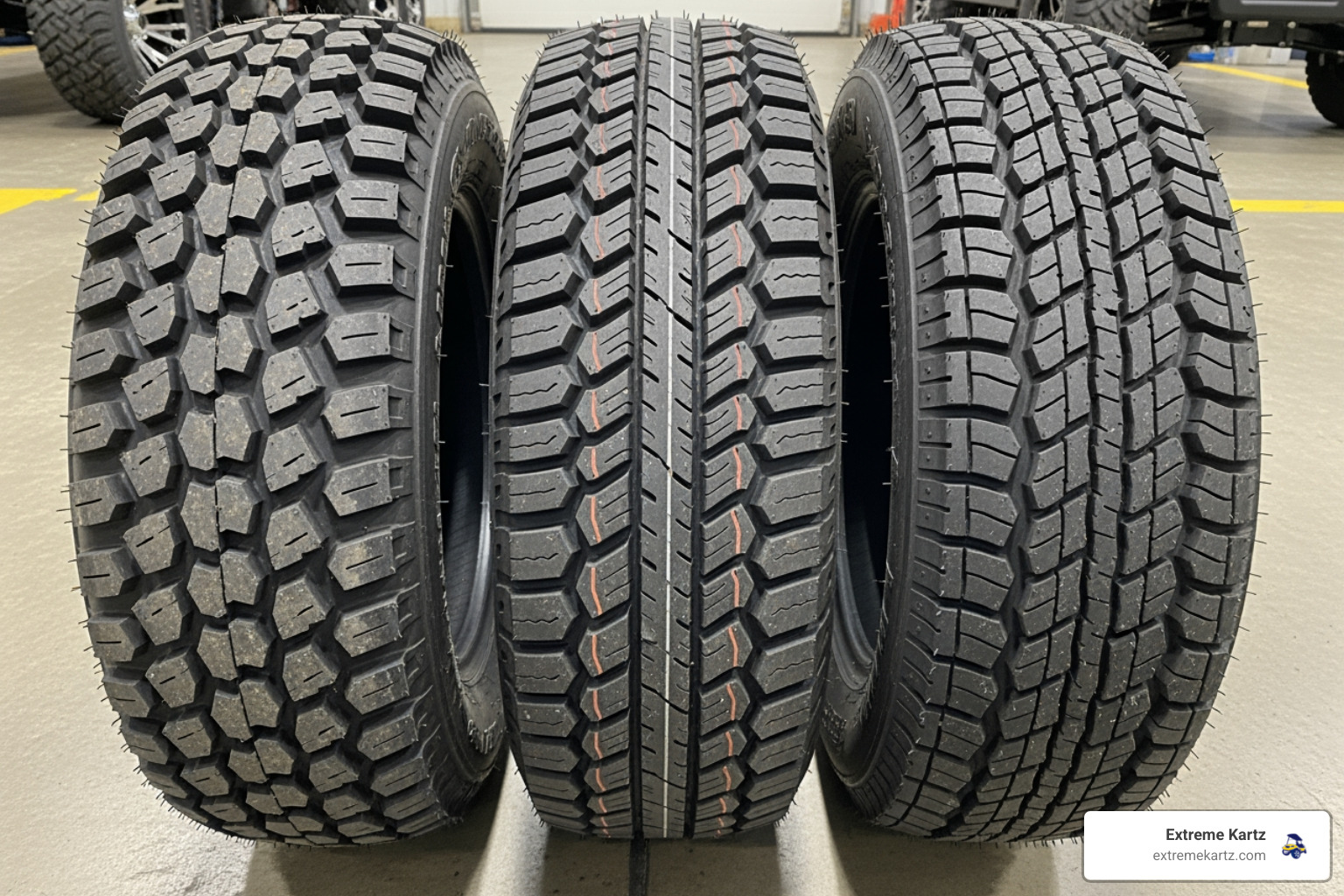
- All-Terrain (A/T): These feature aggressive, knobby lugs. They are designed for maximum grip on dirt, gravel, and mud. While they look the best, they can be slightly noisier on pavement and may leave marks on delicate golf course turf.
- Street/Turf: If you primarily drive on asphalt or frequently visit the golf course, look for street-legal or turf-safe tires. These have a flatter profile and tighter tread blocks, providing a quiet, smooth ride and excellent longevity on hard surfaces.
- Hybrid: The best of both worlds. Hybrid tires, like the Timberwolf A/T, feature a moderate tread that is quiet on the street but has enough "bite" to handle a trail or a wet grassy hill. This is our top recommendation for most users.
When you Browse All Lifted Wheel and Tire Options, consider the ply rating as well. A 4-ply tire is standard, but for heavy-duty use or puncture resistance on trails, a 6-ply or steel-belted radial tire offers superior durability.
Performance Impacts of Different Lifted Golf Cart Tires
Upgrading your tires changes the physics of your ride.
- Ride Quality: Radial tires generally offer a smoother ride than bias-ply tires because they flex more easily over bumps.
- Road Noise: Aggressive off-road lugs will hum or growl on pavement. If silence is a priority, stick to a hybrid or street tread.
- Stability: Taller tires raise the center of gravity. This is why we recommend wider tires (10" to 11" wide) for lifted carts—the wider stance helps offset the height, keeping the cart stable during turns.
- Handling: Larger tires can make the steering feel "heavier" if you don't have electronic power steering. However, the increased traction usually results in more confident braking and acceleration.
Brand-Specific Fitment: Club Car, EZGO, and Yamaha
Fitment isn't "one size fits all." Each of the "Big Three" manufacturers builds their chassis differently, which affects how tires fit.
- Club Car: Known for their aluminum frames. Older DS models almost always require a lift kit for anything over 18 inches. Precedent, Onward, and Tempo models have slightly more room but still require a 3" lift for 22" tires. More info about Club Car accessories.
- EZGO: Generally the most "lift-friendly" carts. An EZGO TXT or RXV can sometimes fit a 20-inch tire without a lift kit, though it’s tight. For a 23-inch tire, a 5" or 6" drop axle or A-arm kit is standard. More info about EZGO accessories.
- Yamaha: Yamaha carts (especially the G-series and Drive/G29) often have tighter wheel wells. We highly recommend a 3" or 6" spindle lift for these to ensure no rubbing occurs when the wheels are turned. More info about Yamaha accessories.
Common Mistakes to Avoid with Lifted Golf Cart Tires
We’ve seen it all, and most "bad" installs come down to a few simple oversights:
- Incorrect Offset: Standard wheels have a "centered" offset. Lifted tires almost always need an "offset" wheel (usually 3x4 or 2x5) that pushes the tire outward, away from the cart's frame.
- Rubbing at Full Lock: Just because a tire fits while the cart is parked doesn't mean it fits while driving. Always check for clearance while turning the steering wheel all the way to the left and right.
- Over-Inflating: Owners often pump these tires up to 30+ PSI. For most lifted golf cart tires, the "sweet spot" for comfort and traction is between 15 and 22 PSI. Over-inflating leads to a bouncy ride and uneven tire wear.
- Neglecting Alignment: When you install a lift kit and new tires, your "toe-in" and "camber" will be off. If you don't realign the front end, your expensive new tires will wear out in a matter of months.
- Ignoring Weight Limits: If you have a 6-passenger cart, ensure your tires are rated for the load. Low-quality 2-ply tires can fail under the weight of a fully loaded limousine cart.
Frequently Asked Questions about Lifted Tires
Do I need a lift kit for 20-inch tires?
It depends on the cart. Most EZGO models can squeeze a 20-inch tire (like a 205/50-10) with no lift or a very small 1-inch "leveling" kit. However, for Club Car and Yamaha, we almost always recommend at least a 1" to 3" lift to prevent the tire from hitting the fender flares when you hit a bump.
How do larger tires affect my cart's battery life?
Larger tires are heavier and require more torque to get moving. This can lead to a slight decrease in battery range (roughly 5-10%). However, many owners find that the increased top speed and better "roll" of the larger tire make up for the initial energy draw. If you are worried about range, this is a great time to consider a lithium battery conversion.
What is the best tire pressure for lifted carts?
For most all-terrain and hybrid tires, we recommend 18-22 PSI for neighborhood use. If you are strictly off-roading in soft sand or mud, you can drop down to 12-15 PSI to increase the footprint and traction. Always check the "Max PSI" on the sidewall and never exceed it.
Conclusion
Upgrading to lifted golf cart tires is the single best way to transform your vehicle's performance and personality. By matching the right tire height to your lift kit and choosing a tread pattern that fits your lifestyle, you ensure a ride that is safe, stylish, and efficient.
At Extreme Kartz, we don't just sell parts; we provide system-based solutions. We want to make sure the wheels you buy today fit the lift kit you have tomorrow. Whether you are looking for a rugged off-road beast or a sleek neighborhood cruiser, our team is here to ensure fitment accuracy and long-term satisfaction.
Ready to take your cart to the next level? Extreme Kartz can help you choose the right mix of tire size, lift, style, and performance for your Club Car, EZGO, or Yamaha.
Related Products

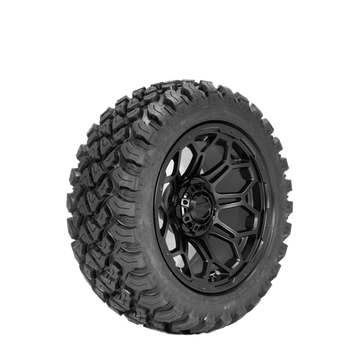
Vendor: Bravo 14" Matte Black Finish with 23X10-R14 Nomad Radial Tire Set of 4


Vendor: 14" GTW Bravo Wheels with 22x10-14 GTW Timberwolf All-Terrain Tires (Set of 4)


Vendor: RHOX Mojave II, 22x10-14 4 Ply

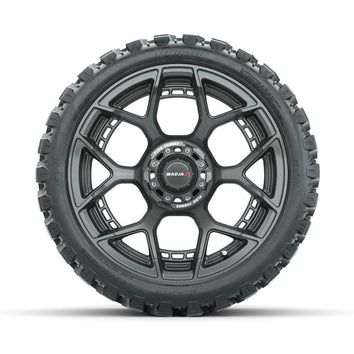
Vendor: Set of (4) 15" MadJax® Flow Form Evolution Gunmetal Wheels with GTW® Nomad Off Road Tires


