


Golf Cart Tires and Wheels Terms Demystified
Understanding Sizing Formats for Golf Cart Tires and Wheels
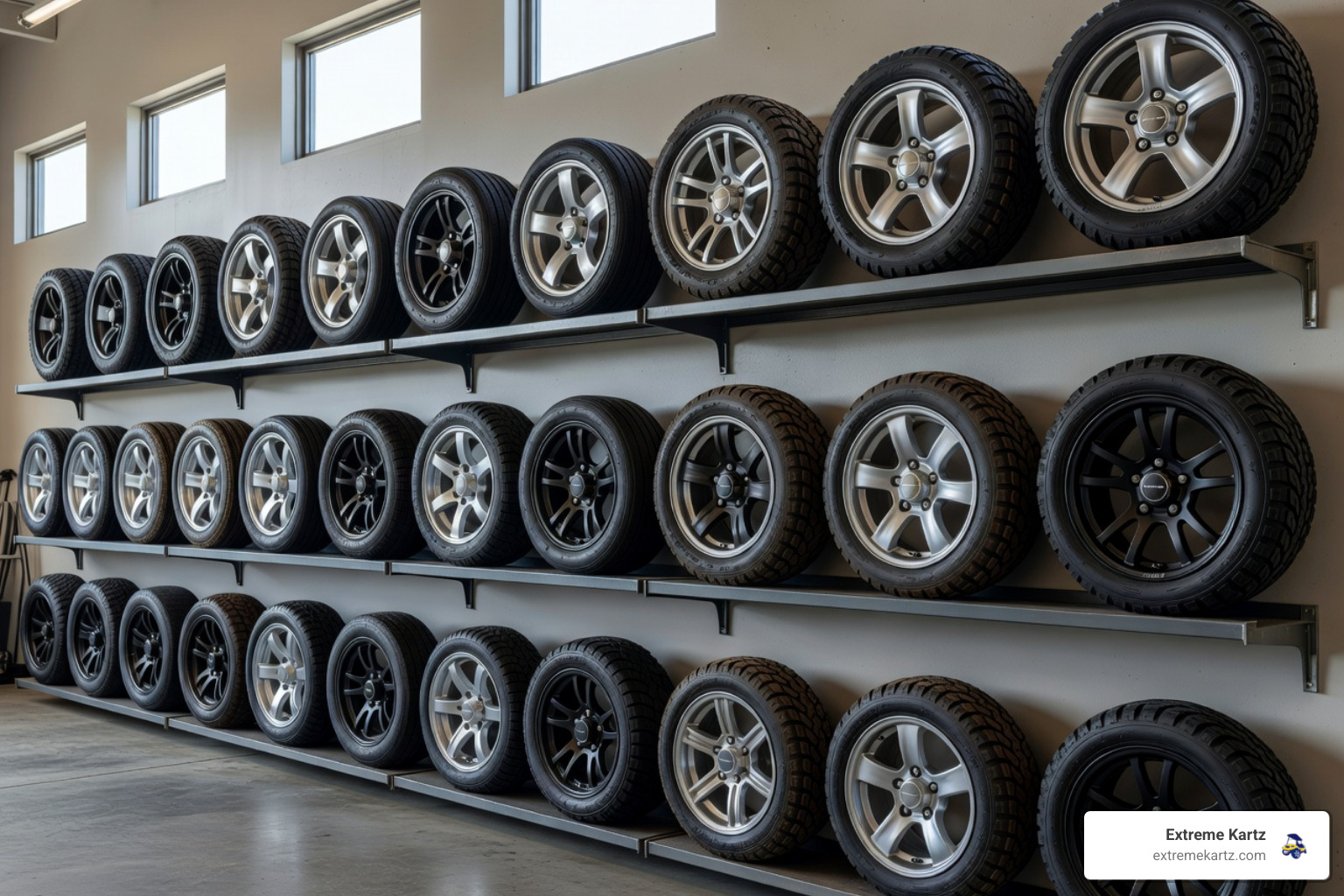
Golf cart tires and wheels are one of the most impactful upgrades you can make to your cart — affecting how it looks, handles, and performs across every type of terrain.
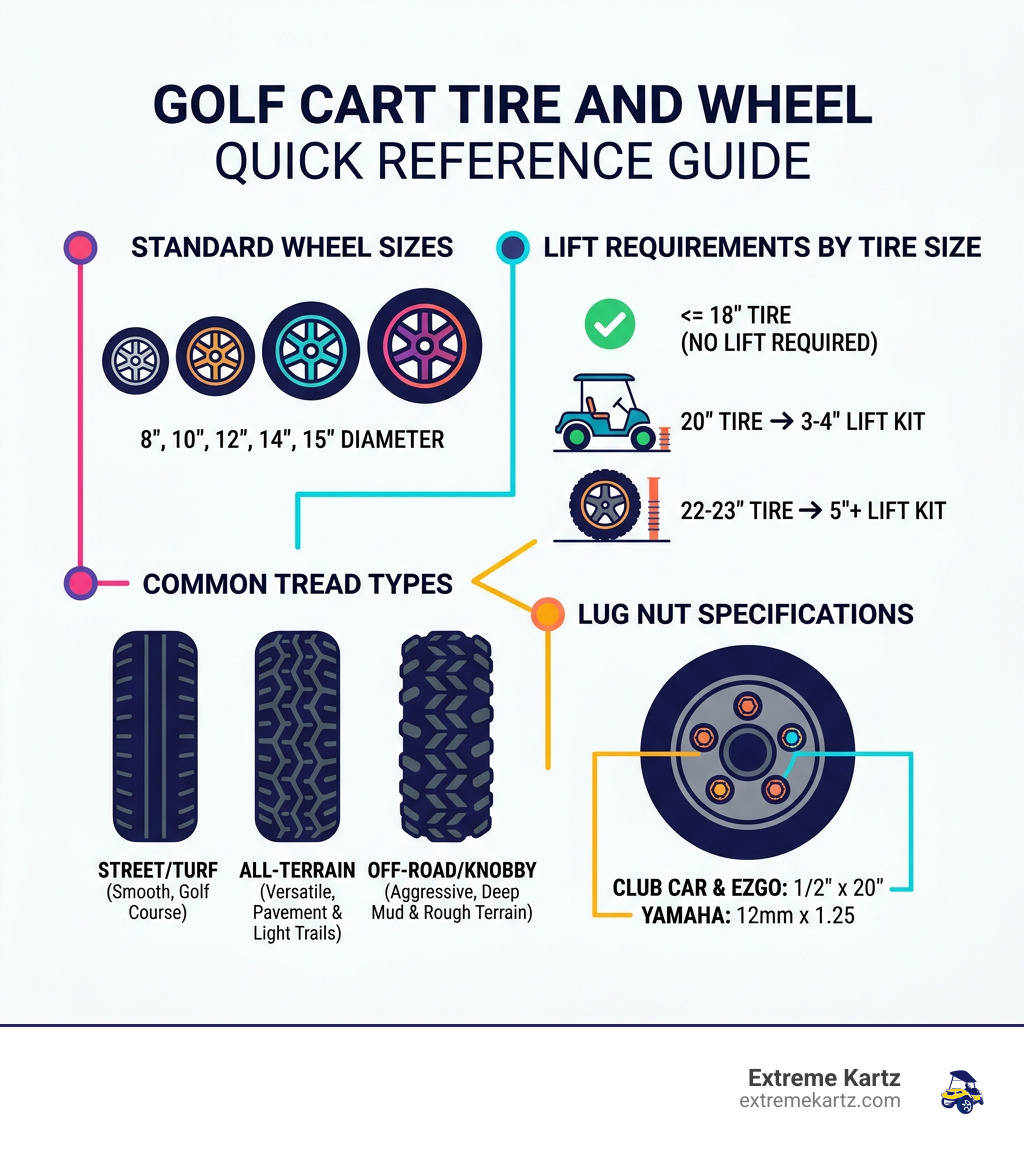
Here's a quick reference to the most important things to know:
| Topic | Key Facts |
|---|---|
| Standard wheel sizes | 8", 10", 12", 14", 15" diameter |
| Tire sizing formats | Golf cart style (18x8.5-8) or metric (205/50-10) |
| Non-lifted max tire size | Up to 18" overall diameter for most carts |
| Lift kit needed for | Tires over 18" OD; 3-4" lift for 20", 5"+ for 22-23" |
| Common tread types | Street/turf, all-terrain, off-road/knobby |
| Ply ratings | 2-ply (soft), 4-ply (versatile), 6-ply (heavy duty) |
| Lug nut sizes | 1/2" x 20 (Club Car, EZGO) or 12mm x 1.25 (Yamaha) |
| Wheel materials | Steel (durable, budget-friendly) or aluminum (lighter, more styles) |
But picking the right setup isn't just about choosing a size you like. The wrong tire diameter can rub against your cart's body. The wrong wheel offset can throw off your stance. And the wrong lug nut thread size means your wheels won't mount at all.
Most of the confusion comes down to terminology — sizing formats, offset numbers, ply ratings, and lift kit specs that look like a foreign language if you haven't seen them before.
This guide breaks all of it down in plain language, so you can shop with confidence and get the right fit the first time. We also provide resources on tire pressure for golf cart tires and tires for golf cart selection.
I'm Martin Davis, owner of Extreme Kartz, and I've spent years helping golf cart owners across the country navigate golf cart tires and wheels — from simple OEM replacements to full lifted builds with custom aluminum rims. This guide is built on that hands-on experience to help you avoid the most common and costly fitment mistakes.
One of the first hurdles we encounter when shopping for new rubber is the two different ways manufacturers label sizes. You will see "Standard" (Imperial) and "Metric" (Automotive) formats. While they look different, they are both telling you the same three things: how tall the tire is, how wide it is, and what size rim it fits.
In our golf cart tires rims complete guide, we often emphasize that the overall diameter is the most critical number. This determines whether the tire will fit under your wheel wells or if it will rub every time you make a turn.
Decoding golf cart tires and wheels Sizing
Let’s break down the two main formats:
-
Standard/Imperial (e.g., 18x8.5-8):
- 18: The first number is the total height (overall diameter) in inches.
- 8.5: The second number is the width of the tire across the tread in inches.
- 8: The final number is the wheel (rim) diameter it fits.
-
Metric/Automotive (e.g., 205/50-10):
- 205: This is the "Section Width" in millimeters.
- 50: This is the "Aspect Ratio." It represents the sidewall height as a percentage of the width (50% of 205mm).
- 10: This is the wheel diameter in inches.
Impact of Wheel Diameter on Performance
When choosing between 8, 10, 12, 14, or even 15-inch rims, aesthetics are usually the primary driver, but performance changes too.
- 8-inch rims: These are the industry standard for utility and golf course use. They offer a taller sidewall, which provides more "cushion" and a softer ride.
- 10 and 12-inch rims: These are the "sweet spot" for many owners. They allow for a more modern look while still maintaining enough sidewall for a comfortable ride on paths and streets.
- 14 and 15-inch rims: These provide a high-end, automotive look. However, because the rim is larger, the tire sidewall must be thinner (low-profile) to keep the overall height the same. This can result in a stiffer ride where you feel more bumps in the road.
Check out our guide on golf cart rims how to select the perfect set to see how different diameters change the geometry of your cart.
Selecting the Right Tread and Ply for Your Terrain
The "best" tire depends entirely on where you drive. We categorize golf cart tires for every terrain into three main groups:
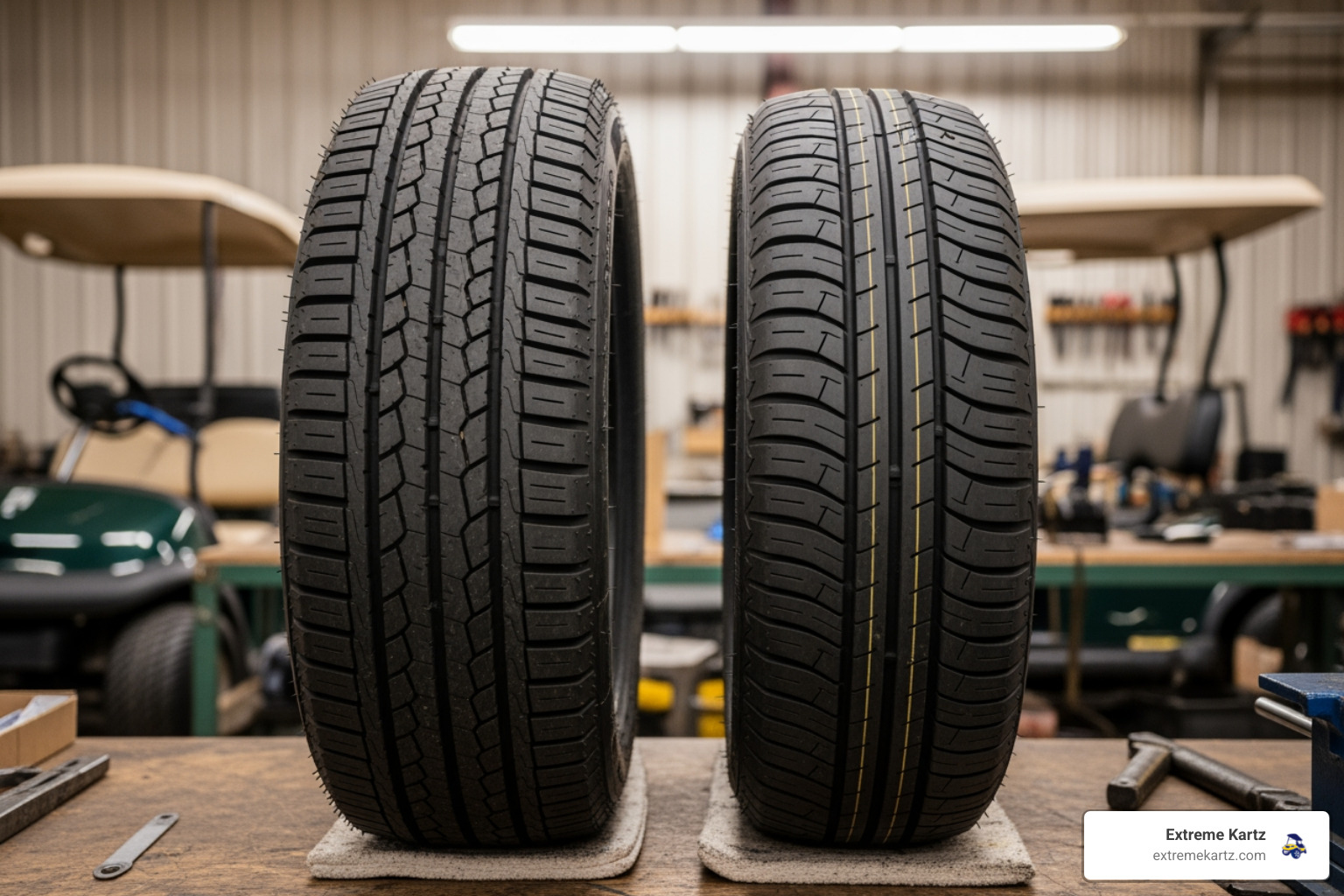
- Street/Turf: These typically feature a "sawtooth" or smooth siped pattern. They are designed to be "turf-safe," meaning they won't tear up the grass on a golf course, and they offer a quiet, smooth ride on pavement.
- All-Terrain (AT): These are the versatile middle ground. They have deeper grooves than street tires but aren't as aggressive as off-road lugs. They work well for "neighborhood" carts that occasionally venture onto dirt paths or grass.
- Off-Road/Knobby: These feature large "lugs" designed to dig into mud, sand, and loose dirt. While they look "badass," they can be noisy and vibrate significantly on smooth pavement.
Ply Ratings and Durability
The ply rating tells you about the tire’s construction and strength. In the past, this referred to the actual number of layers (plies) of cotton or nylon. Today, it’s a measure of "ply equivalent" strength.
- 2-Ply: Very soft and lightweight. Great for a plush ride on a manicured golf course, but prone to punctures.
- 4-Ply: The industry standard for most golf cart tires and wheels. It offers a perfect balance of durability and ride quality.
- 6-Ply: Heavy-duty construction. These are common for off-road or industrial use where puncture resistance is a priority. 6-ply tires have stiffer sidewalls, which can make the ride feel harsher.
DOT Approval vs. Off-Road Specialization
If you plan to drive your cart on public roads (where local laws allow), you should look for DOT-approved tires. These tires have been tested by the U.S. Department of Transportation to meet specific safety standards for high-speed (relative to a golf cart) road use. Many low-profile street tires and premium all-terrain tires, like the new madjax timberwolf and raptor series tires, are DOT-rated.
Wheel Construction and the Impact of Offset
When it comes to the wheels themselves, you generally have two choices: steel or aluminum.
- Steel Wheels: These are your "workhorse" wheels. They are typically powder-coated white, black, or tan. They are incredibly durable and cost-effective, making them the go-to for fleet use or budget-conscious replacements.
- Aluminum Wheels: These are cast from aluminum alloy, allowing for much more intricate designs and finishes (machined, chrome, matte black). They are lighter than steel and won't rust, which is a major plus in coastal areas.
Understanding Wheel Offset and Stance
This is a term that confuses many, but it’s vital for fitment. Wheel offset is the distance from the wheel's mounting surface to its true centerline.
Most aftermarket golf cart tires and wheels feature a negative offset (often expressed as -25mm or a "2+5" offset). This means the mounting surface is closer to the inside of the cart, which "pushes" the wheel further out.
Why do we do this?
- Stability: A wider stance makes the cart less likely to tip.
- Clearance: It moves the tire away from the inner wheel well and suspension components, which is necessary when installing wider or taller tires.
For a deeper dive into how offset affects different brands, see our article on golf cart wheels for yamaha ezgo clubcar.
Fitment Guide for Lifted and Non-Lifted golf cart tires and wheels
Fitment is where the rubber meets the road—literally. Every cart model has different clearance limits.
- Club Car (DS & Precedent): These are the tightest. Without a lift kit, you are generally limited to an 18-inch overall diameter. Anything larger than 18.8 inches will likely rub the front wheel wells.
- EZGO (TXT & RXV): These are more forgiving. Stock EZGO TXT models (2001.5+) can often fit up to a 20-inch tire without a lift kit.
- Yamaha (Drive/G29): These sit somewhere in the middle. They can often handle 19-inch tires comfortably, but 20-inch setups may require a small "low-pro" lift.
If you are planning an upgrade, we recommend reading our golf cart rims and tires guide to see specific measurements for your model.
Lift Kit Requirements by Tire Diameter
If you want that aggressive, "jacked-up" look, you'll need a lift kit. Here is a general rule of thumb for tire height and the lift required:
- 20" Tall Tires: Usually require a 3" to 4" lift for Club Car and Yamaha.
- 22" Tall Tires: Require a 5" to 6" lift kit.
- 23" Tall Tires: Require a 5" to 6" lift kit (and may require some minor trimming of the body/fenders).
When you're ready to make the change, follow our how to change your golf cart wheels tires a step by step guide to ensure a safe installation.
Essential Accessories and Maintenance for Longevity
Don't forget the small stuff! Your new golf cart tires and wheels need the right hardware to stay secure.
-
Lug Nuts: This is the #1 mistake buyers make.
- Club Car & EZGO: Use Standard threads (1/2" x 20).
- Yamaha: Uses Metric threads (12mm x 1.25).
- Center Caps & Hub Caps: If you are sticking with steel wheels, a set of chrome hub caps can vastly improve the look for a fraction of the cost of new rims.
- Wheel Spacers: If your tires are rubbing on the inside frame, a 1-inch or 2-inch spacer can push them out for clearance.
Maintenance and Rotation Strategies
To get the most life out of your tires, you must maintain proper tire pressure. Most golf cart tires perform best between 15 and 25 PSI, but low-profile tires often require higher pressure (up to 35 PSI) to protect the rim from impact.
We also recommend following a golf cart tire rotation guide. Because golf carts often have slightly different alignment settings in the front versus the rear, rotating your tires every 6 months will ensure even tread wear and a longer lifespan.
Frequently Asked Questions about golf cart tires and wheels
What is the maximum tire size for a non-lifted Club Car?
For most stock Club Car Precedent and DS models, the maximum tire height is 18 inches. While some owners have squeezed 18.5 or 18.8-inch tires (like a 215/40-12) onto their carts, you run a high risk of "rubbing" when the cart is loaded with passengers or when making sharp turns. If you want to go larger, a 3-inch spindle lift is the best way to gain clearance without a massive mechanical overhaul.
Do Yamaha golf carts use different lug nuts?
Yes! This is a critical distinction. Yamaha is the only major manufacturer that uses metric (12mm x 1.25) lug nuts. If you try to force a standard 1/2" x 20 lug nut (used by Club Car and EZGO) onto a Yamaha stud, you will strip the threads and face an expensive repair. Always double-check your cart brand before ordering a wheel and tire combo.
Why are pre-mounted wheel and tire combos recommended?
At Extreme Kartz, we almost always recommend buying pre-mounted combos. Here’s why:
- Convenience: They arrive aired up and ready to bolt on. You don't have to haul four tires and four rims to a local tire shop.
- Professional Mounting: Mounting low-profile or off-road tires can be difficult without specialized equipment. We ensure the beads are set correctly and the valves are high quality.
- Guaranteed Fitment: When you buy a combo, you know the tire is the correct width for the rim.
- Value: You can often find significant savings, like our RHOX 20x10-10" All Terrain combo, which is often discounted by 40% or more compared to buying parts individually.
Plus, all our kits ship in 1-2 business days.
Conclusion
Upgrading your golf cart tires and wheels doesn't have to be a guessing game. By understanding your cart's clearance limits, matching your tread to your terrain, and ensuring you have the right lug nuts for your brand, you can transform your ride's performance and style in an afternoon.
Whether you're looking for a "no-lift" street setup or a rugged off-road beast, we're here to help. If you're still unsure about which size will fit your specific year and model, contact us for expert fitment recommendations at 678-331-7404. We specialize in system-based solutions to ensure your upgrade works perfectly from the moment you let the jack down. All our kits ship in 1-2 business days.
Related Products

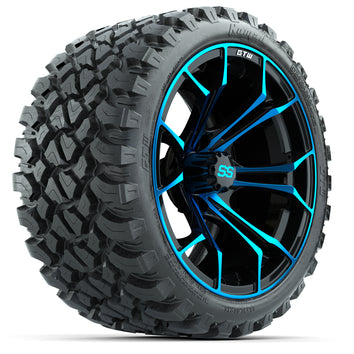
Vendor: Set of (4) 15" GTW Spyder Blue/Black Wheels with 23x10-R15 Nomad All-Terrain Tires


Vendor: Set of (4) 15" GTW Bravo Matte Black Wheels with 23x10-R15 Nomad All-Terrain Tires

Vendor: SGC 12" Vampire Machined/Black Wheel - Aluminum Alloy STEELENG 215/50-12 Comfort Ride Street Tire DOT approved - SET of 4


Vendor: 14" GTW Bravo Wheels with 22x10-14 GTW Timberwolf All-Terrain Tires (Set of 4)


