


Everything You Need to Know About Golf Cart Tires
Why Choosing the Right Golf Cart Tire Matters More Than You Think

Picking the right golf cart tire is one of the most practical upgrades you can make — and one of the most misunderstood. The wrong tire can cause rubbing, turf damage, poor handling, or a bumpy ride. The right one improves comfort, safety, and how your cart performs on any surface.
Here's a quick overview of what you need to know:
| Question | Quick Answer |
|---|---|
| Most common sizes | 18x8.50-8, 205/50-10, 215/35-14 |
| Wheel diameters available | 8", 10", 12", 14", 15" |
| Do larger tires need a lift kit? | Yes, typically anything over 18" |
| Best tire for turf? | Sawtooth tread, 2- or 4-ply |
| Best tire for streets? | DOT-rated radial tire |
| Best for off-road? | 6-ply all-terrain or knobby tread |
| Typical tread life (radial) | Up to 30,000 miles |
| Shipping time | Kits ship in 1-2 business days |
Whether you're replacing worn-out tires on a Club Car, upgrading your EZGO for trail riding, or just trying to figure out what size fits your Yamaha — this guide covers it all in plain language.
I'm Martin Davis, owner of Extreme Kartz since 2022, and I've helped thousands of golf cart owners across all 50 states navigate golf cart tire fitment, sizing, and upgrades. In this guide, I'll walk you through everything — from reading tire size numbers to choosing the right tread for your terrain.
Understanding Golf Cart Tire Sizes and Types
When you start shopping for a golf cart tire, the first hurdle is usually the math. Unlike car tires, which use a metric system (like 205/55R16), many golf cart tires use a three-number format measured in inches. For example, the standard OEM size is 18x8.50-8.
Here is how to decode that:
- 18: The total height of the tire (from the ground to the top) in inches.
- 8.50: The width of the tire across the tread in inches.
- 8: The diameter of the wheel (rim) the tire fits on.
As we move into 2026, the market has expanded far beyond the basic 8-inch wheel. We now see 10, 12, 14, and even 15-inch wheels becoming standard for neighborhood cruisers and off-road builds.
| Wheel Diameter | Common Tire Size | Typical Use Case |
|---|---|---|
| 8-Inch | 18x8.50-8 | Standard golf course use; no lift kit required. |
| 10-Inch | 205/50-10 | Low-profile street look; usually fits non-lifted carts. |
| 12-Inch | 215/40-12 | Performance street/turf; fits most non-lifted carts. |
| 14-Inch | 215/35-14 | High-end custom look; very low profile or lifted off-road. |
If you are looking for that classic, reliable performance, the Kenda Tires | Turf / Trailer / Specialty | K389 - Hole-N-1 has been an industry standard for years. It features a "sawtooth" tread that provides traction without tearing up the grass. For those needing a slightly more modern take on the classic turf tire, the Fairway Pro Tire offers a wide footprint that improves stability while minimizing soil compaction.
Choosing the Right Golf Cart Tire for Your Terrain
The most important question we ask our customers at Extreme Kartz is: "Where are you actually driving?" A tire designed for the 9th fairway will perform poorly in a muddy hunting camp, and a knobby off-road tire will vibrate your teeth out on smooth asphalt.
- Turf Tires: These are designed specifically for golf courses. They use "sawtooth" or "ribbed" treads to provide grip while being gentle on sensitive grass. Options like the Ocelot P825 Golf Cart tire are excellent for maintaining that "greens-ready" status.
- Street/Slick Tires: These have a smoother tread pattern similar to a car tire. They offer the quietest ride and the best contact patch for braking on pavement.
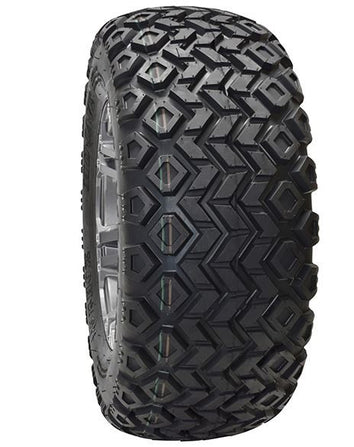
- All-Terrain (AT) Tires: If you split your time between the neighborhood and light trails, AT tires are the "Goldilocks" solution. They have deeper grooves than street tires but aren't as aggressive as mud tires.
- Off-Road/Knobby Tires: These are for the adventurers. They feature large, deep lugs (the "knobs") to bite into dirt, gravel, and mud. These almost always require a lift kit.
For a deeper dive into which tread pattern matches your lifestyle, check out our more info about golf cart tires guide.
The Benefits of Radial Golf Cart Tire Technology
In the past, almost every golf cart tire was a "bias-ply" tire. These are tough and cheap, but they tend to get flat spots if the cart sits too long and they don't handle high speeds very well.
Modern "Radial" tires, like the XCOMP or Innova lines, have changed the game. Radial construction allows the sidewall and the tread to function independently. This results in:
- Longer Tread Life: Some radial tires are estimated to last up to 30,000 miles.
- Smoother Ride: They hold their "true" round shape better, reducing vibration.
- Better Efficiency: Lower rolling resistance means your batteries last longer or you get better gas mileage.
- DOT Approval: Many radials are Department of Transportation (DOT) rated for street use, with speed ratings up to 62 mph.
When looking at durability, pay attention to the Ply Rating. A 2-ply tire is very soft and lightweight, while a 4-ply or 6-ply tire offers much better puncture resistance for rocky or debris-filled environments.
Compatibility and Installation: Will It Fit Your Cart?
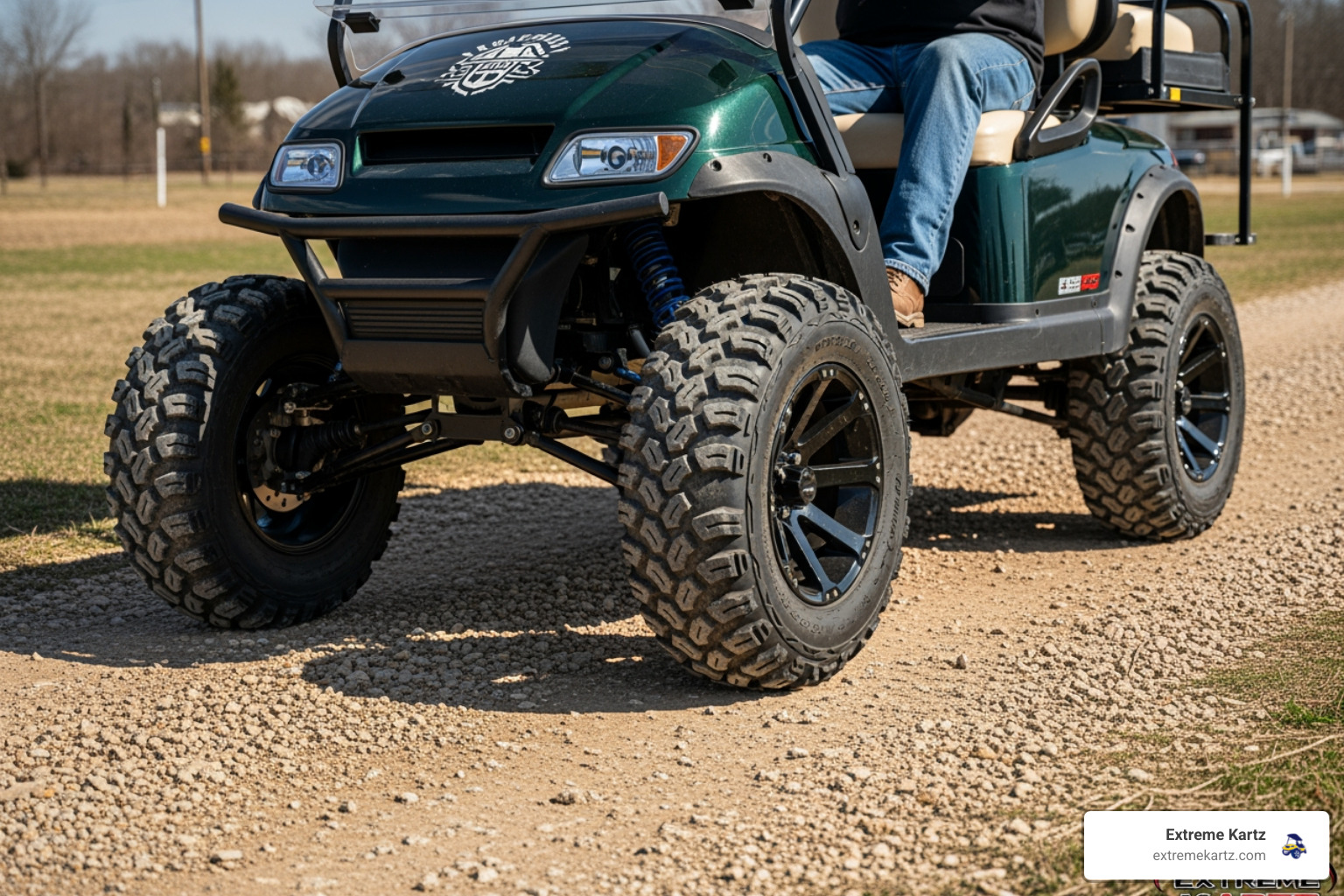
This is where things get tricky. We often see owners buy a beautiful set of 23-inch tires only to realize they won't even turn the steering wheel without hitting the body.
As a general rule:
- Non-Lifted Carts: You are usually limited to an 18-inch total tire height. Some Yamaha and EZGO models can squeeze in a 20-inch tire on a 10-inch wheel (like a 205/50-10) without a lift, but it’s tight.
-
Lifted Carts: To run 20-inch, 22-inch, or 23-inch tires, you will need a lift kit.
- EZGO: Typically requires at least a 3-inch lift for 20-21 inch tires.
- Club Car/Yamaha: Often require a 4-inch lift for the same sizes due to tighter wheel wells.
Another critical factor is Wheel Offset. Standard wheels are centered, but "Negative Offset" wheels push the tire further out away from the cart. This provides a wider stance, better stability, and prevents the inner part of the tire from rubbing against the suspension or frame.
For model-specific fitment advice, we recommend browsing our more info about Club Car parts or our more info about EZGO parts sections to see which lift kits pair best with specific tire sizes.
Wheel and Tire Combos vs. Individual Tires
Should you buy just the rubber or the whole set? At Extreme Kartz, we almost always recommend Wheel and Tire Combo sets. All kits ship in 1-2 business days, so you can get your cart back on the road quickly.
Here is why:
- Professional Mounting: Mounting a golf cart tire on a rim at home is a nightmare without a commercial tire machine. Combos arrive pre-mounted and aired up.
- Guaranteed Fit: When you buy a combo, the wheel offset and tire size are already matched for performance.
- Style: You can choose from popular designs like the MODZ Assault or MODZ Vampire in various finishes (Glossy Black, Machined, etc.).
- Value: Combos usually include new chrome or black lug nuts and center caps, which refreshes the entire look of the vehicle.
If you are upgrading a Yamaha, they often use metric lug nuts, whereas Club Car and EZGO use standard imperial sizes. We cover these nuances in our more info about Yamaha parts section.
Maintenance and Replacement: Extending Tire Life
A golf cart tire doesn't usually wear out its tread from high mileage like a car tire does—unless you're driving exclusively on pavement. Instead, they usually succumb to "dry rot" or improper inflation.
Maintenance Tips for 2026 and Beyond:
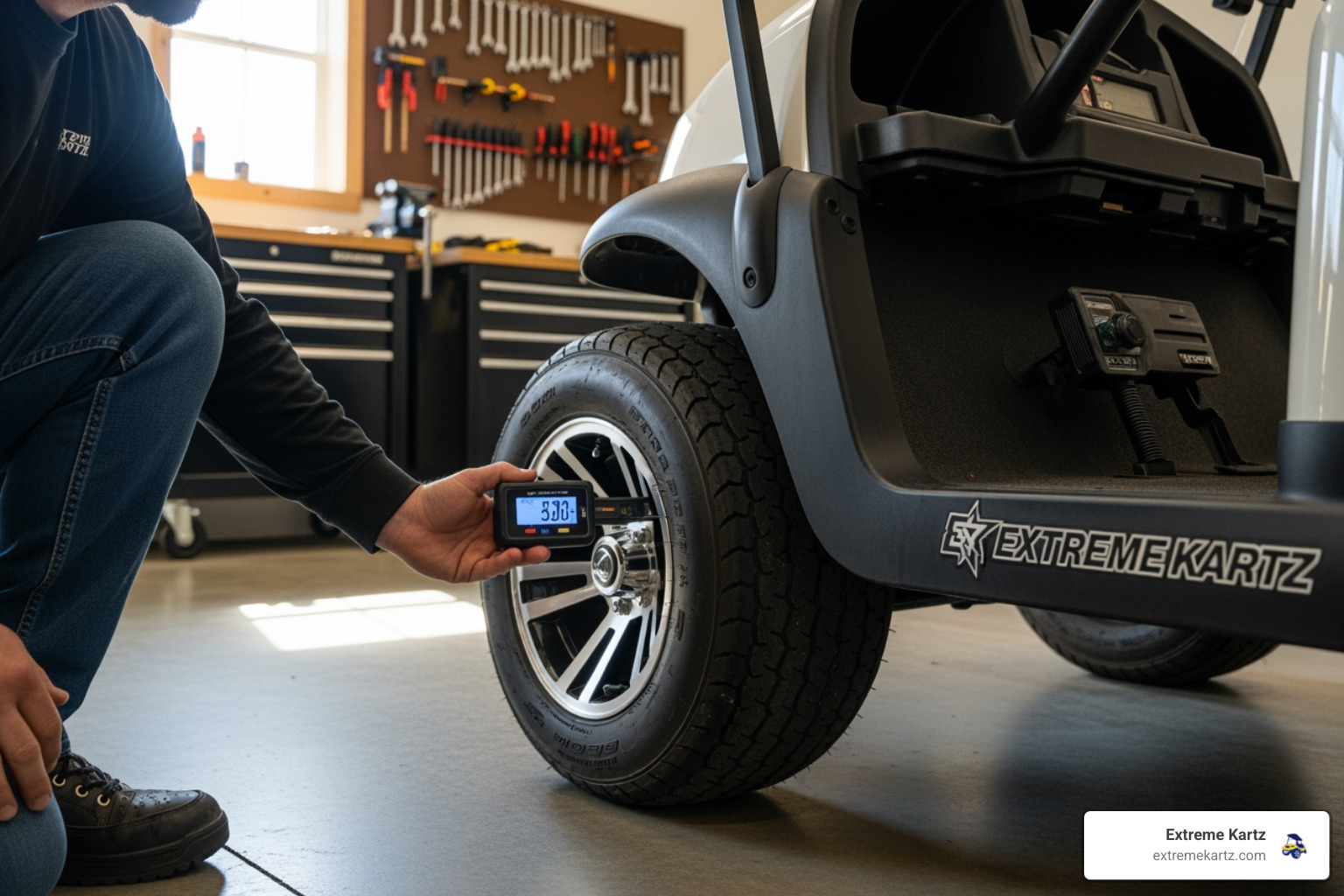
- Check PSI Regularly: Most golf cart tires should be between 15 and 25 PSI. Low pressure causes the motor to work harder and kills your battery range. High pressure leads to a harsh ride and center-tread wear.
- Inspect for Dry Rot: If you see small cracks in the sidewall, the rubber is breaking down. This is common in sun-drenched areas like Florida or Arizona. If you see cracks, it's time to replace them before they blow out.
- Alignment: If your cart pulls to one side or one tire is wearing faster than the other, your "toe-in" alignment is off. This is a simple adjustment on most carts.
- Rotation: Just like a car, rotating your tires every 6 months can help them wear evenly, especially on carts with heavy rear-seat loads.
For those looking to keep their cart in top shape, we offer a variety of more info about golf cart accessories to help with maintenance and styling.
Frequently Asked Questions about Golf Cart Tires
How often should I replace my golf cart tires?
For the average user, tires last 3 to 7 years. If you use radial tires on the street, you might get 30,000 miles. However, you should replace them immediately if you see exposed cords, deep sidewall cracks, or if the tread depth drops below 2/32 of an inch.
Do I need a lift kit for 20-inch tires?
In most cases, yes. While some EZGO models can fit a 20-inch low-profile tire without a lift, most Club Car and Yamaha models will experience "rubbing" when you turn the wheel or hit a bump. We generally recommend at least a 3-inch lift for 20-inch tires to be safe.
What is the difference between DOT and non-DOT tires?
DOT-rated tires have been tested and certified by the Department of Transportation to meet safety standards for use on public roads. They are usually radial construction and can handle higher speeds. Non-DOT tires are intended for "off-highway use" only, such as on the golf course or private property. If you live in a "golf cart friendly" community with local LSV (Low-Speed Vehicle) laws, you likely need DOT-approved tires to stay legal.
Conclusion
Upgrading your golf cart tire setup is about more than just looks—it's about matching your cart's capabilities to your actual needs. Whether you want the smooth, automotive-grade feel of a radial street tire or the rugged, go-anywhere grip of an all-terrain tread, the right choice will transform your driving experience.
At Extreme Kartz, we don't just sell parts; we provide system-based solutions. We want to make sure that the tires you buy actually fit your cart and work with your suspension. If you're planning a performance upgrade, such as a lithium battery conversion or a high-torque motor, having the right tires to put that power to the ground is essential.
Ready to give your cart the upgrade it deserves? Shop the best golf cart tires and wheels at Extreme Kartz today—all kits ship in 1-2 business days—and let us help you find the perfect fit for your ride.
Related Products


Vendor: 20x10-10 GTW® Barrage Mud Tire (Lift Required)

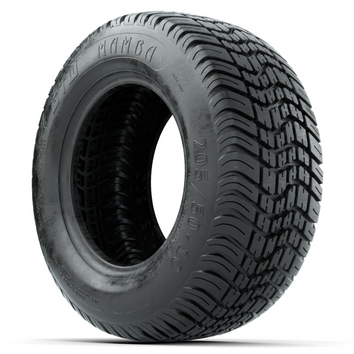
Vendor: 205/50-10 GTW® Mamba Street Tire (No Lift Required)


Vendor: Madjax 23X10-14 Predator Series All Terrain Tire

Vendor: RHOX Mojave, 22x10.5-12, 4 Ply


