


Golf Cart Rims 101
What You Need to Know Before Buying Golf Cart Rims
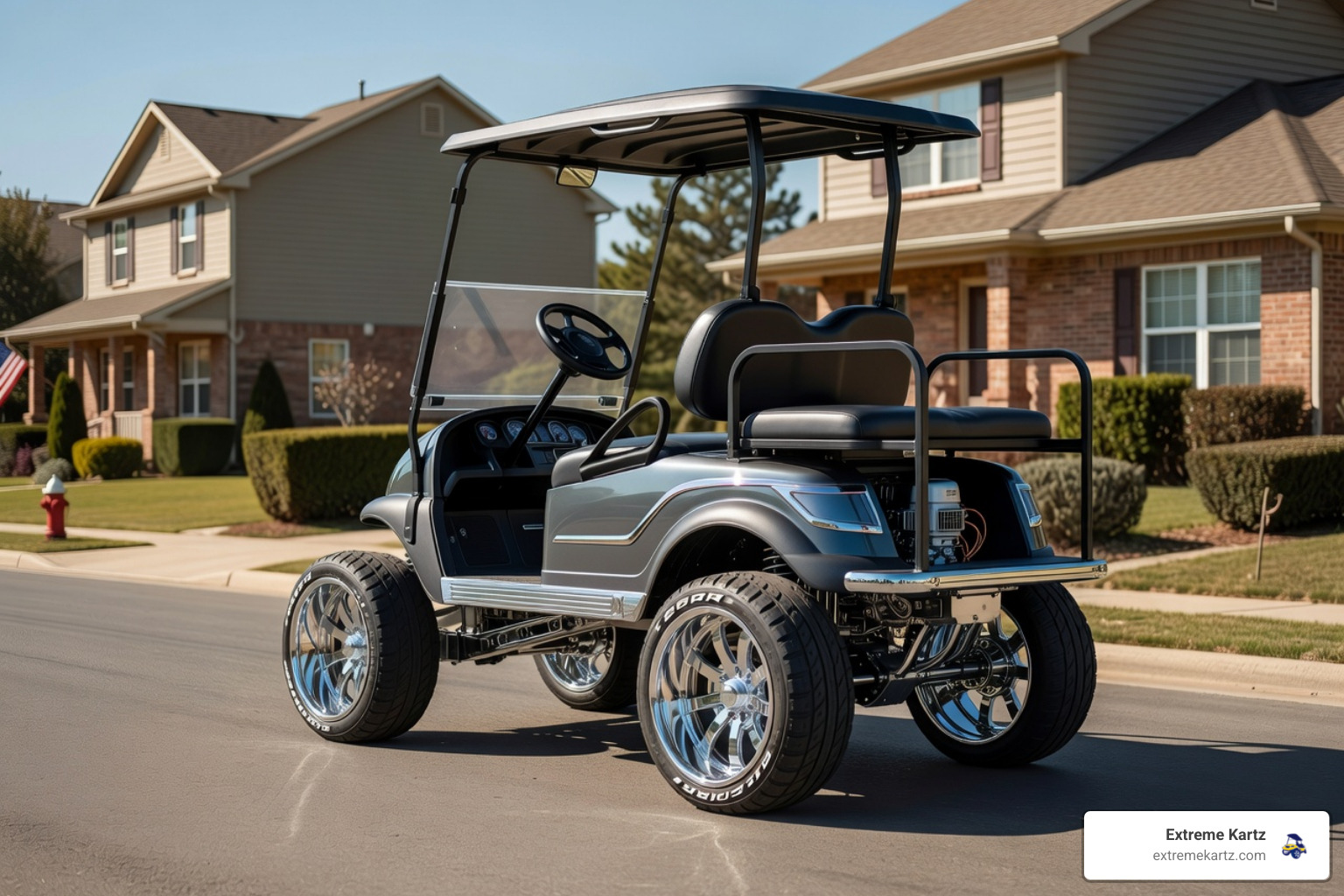
Golf cart rims are one of the most impactful upgrades you can make to your cart — affecting both how it looks and how well your tires perform across different surfaces.
Here's a quick overview of what matters most:
| Topic | Key Facts |
|---|---|
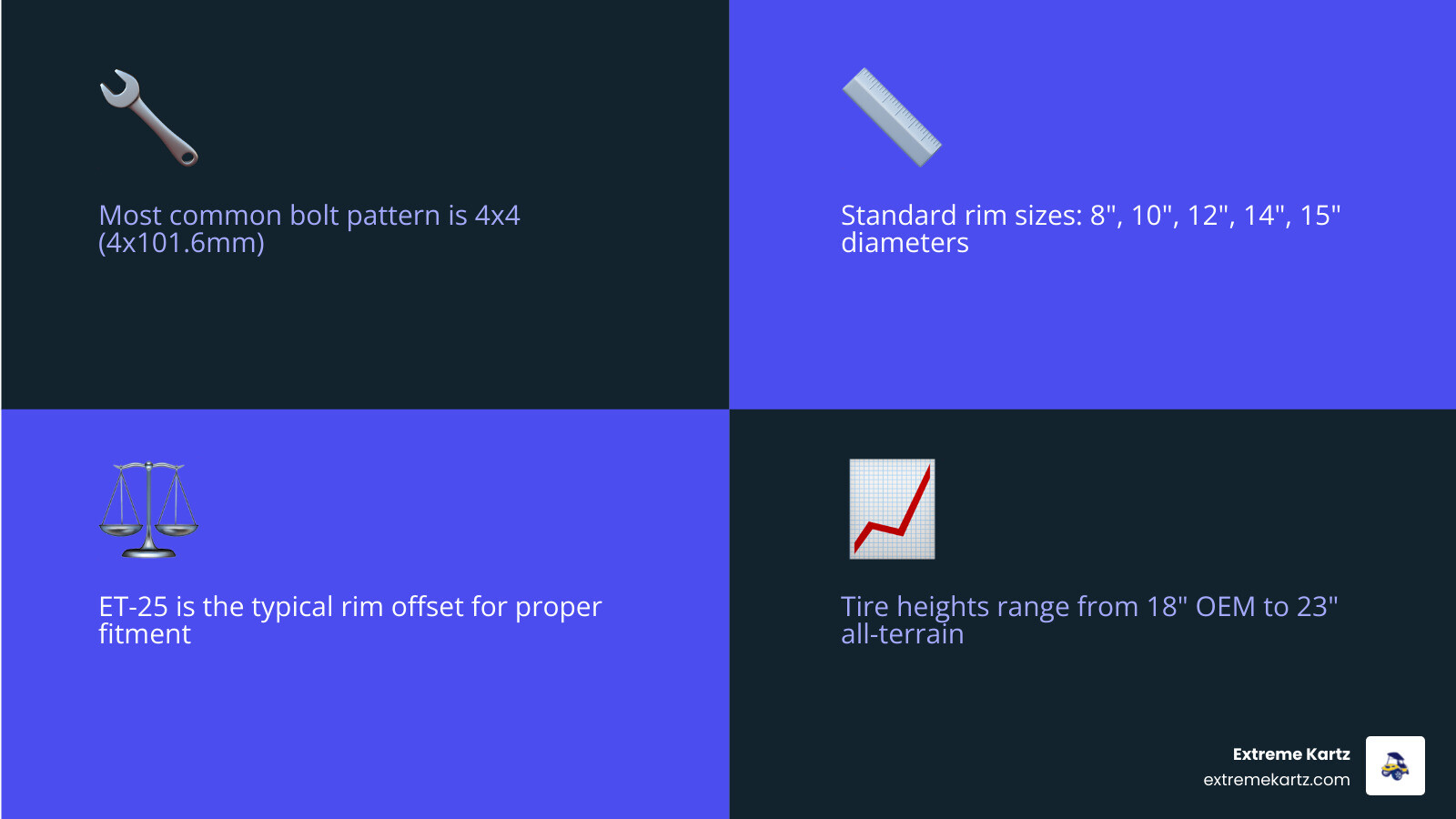
| Available sizes | 8", 10", 12", 14", and 15" diameter |
| Common bolt pattern | 4x4 (4x101.6mm), ET-25 offset |
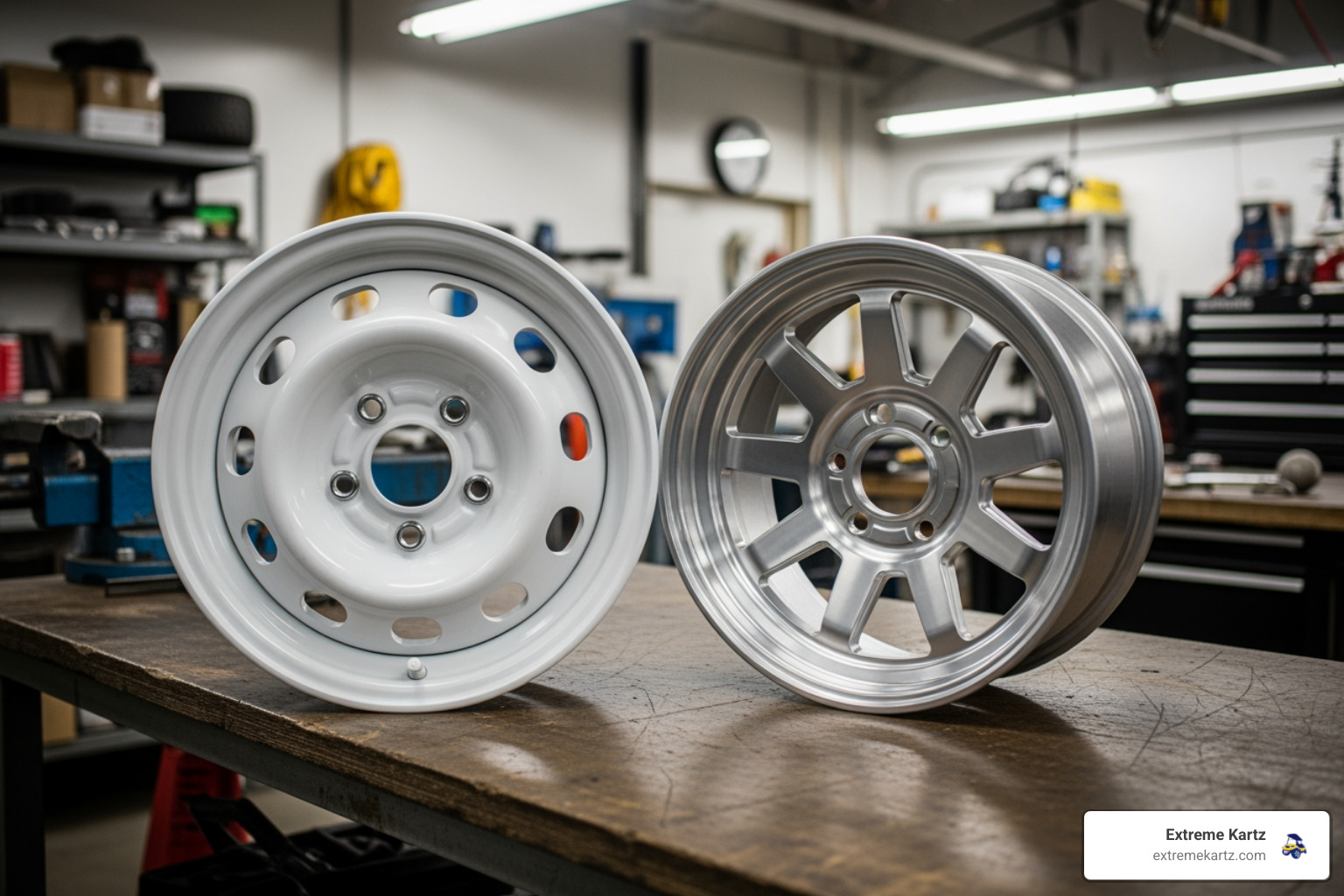
| Materials | Aluminum alloy or steel |
| Tire height range | 18" (standard OEM) to 23" (all-terrain) |
| Lift kit needed? | Depends on tire height and cart model |
| Major brand fitment | Club Car, EZGO, Yamaha, ICON, Star EV |
| Combos available | 2,000+ wheel and tire combinations |
Picking the wrong rim — wrong size, wrong offset, wrong bolt pattern — means your tires won't fit properly. And with so many options out there, it's easy to get lost. All our kits ship in 1-2 business days.
This guide breaks it all down simply: sizes, materials, fitment, lift requirements, accessories, and brand compatibility. Whether you're upgrading for looks, off-road performance, or street use, you'll know exactly what to look for.
I'm Martin Davis, owner of Extreme Kartz, and I've spent years helping golf cart owners across the country navigate fitment decisions around golf cart rims — from basic steel replacements to full lifted builds with machined aluminum wheels. Let's get into it.
Understanding Standard Sizes for Golf Cart Rims
When we talk about golf cart rims, the first thing you need to understand is diameter. Unlike automotive wheels that vary wildly, golf carts typically stick to five primary sizes. Choosing the right diameter is the foundation of your cart’s aesthetic and determines which tires you can actually mount.
- 8-Inch Rims: These are the standard OEM (Original Equipment Manufacturer) size. If you see a basic fleet cart on a golf course, it’s likely running 8-inch steel wheels. They are functional, budget-friendly, and offer the most "cushion" because they are usually paired with high-profile tires.
- 10-Inch Rims: A popular middle ground. They offer a bit more "metal" to look at without requiring a lift kit in most applications. They are often the minimum size required if you plan on upgrading to certain hydraulic disc brake kits.
- 12-Inch Rims: This is the "sweet spot" for many of our customers. A 12-inch rim looks modern and fills out the wheel well nicely. It allows for a low-profile street tire or a moderately sized turf tire.
- 14-Inch Rims: If you want that "custom" look, 14-inch golf cart rims are the way to go. These are almost always made of aluminum alloy and come in aggressive designs. Because the rim is larger, you’ll typically use a lower-profile tire to keep the overall height manageable, or a very large all-terrain tire if your cart is lifted.
- 15-Inch Rims: The newest addition to the market. These are for the enthusiasts who want the absolute maximum presence. They almost always require a lift kit because the resulting wheel-and-tire combo is quite tall.
Determining the Right Wheel and Tire Size
The most important thing to remember is that the "rim size" and the "tire height" are two different numbers that must work together. We often look at the overall diameter of the tire once it is mounted on the rim.
Standard OEM tires are 18 inches tall. If you stay at an 18-inch total height, you don’t need a lift kit. However, if you move up to 20-inch, 22-inch, or 23-inch all-terrain tires, you are entering "lift kit required" territory. For a deeper dive into how these measurements interact, check out our complete guide to golf cart rims and tires.
| Rim Size | Typical Tire Height | Lift Kit Required? |
|---|---|---|
| 8" | 18" | No |
| 10" | 18" - 20" | Model Dependent |
| 12" | 18" - 21" | Model Dependent |
| 14" | 20" - 23" | Usually Yes |
| 15" | 23"+ | Yes |
Common Bolt Patterns and Offsets
We see a lot of confusion regarding bolt patterns, but for 99% of golf carts (Club Car, EZGO, Yamaha), the standard is a 4x4 bolt pattern. This means there are 4 lugs spaced 4 inches apart (or 101.6mm). If you have a specialized vehicle like a GEM car, you might see different patterns, but for the Big Three, 4x4 is king.
Offset is the other technical hurdle. Most custom golf cart rims have an "offset" or "backspacing" designed to push the wheel slightly outward. Common offsets include:
- 3:4 Offset (ET -25): This is the industry standard for custom wheels. It pushes the wheel out about an inch further than stock, providing a wider stance and better stability, especially on lifted carts.
- 5:5 Offset: This is a centered offset, often found on narrower OEM wheels.
Material Matters: Aluminum vs. Steel
Choosing the material for your golf cart rims isn't just about looks—it's about how you use your cart. We generally categorize rims into two camps: lightweight aluminum alloys and heavy-duty steel.
Benefits of Aluminum Golf Cart Rims
Aluminum alloy is the gold standard for custom carts. Most of the 2,000+ combinations we offer feature aluminum rims because of their versatility.
- Styling: Aluminum can be cast into intricate designs. Whether you want a "Vampire," "Tempest," or "Bravo" style, you’ll find them in machined, matte, or glossy finishes.
- Weight Reduction: Aluminum is significantly lighter than steel. This reduces the "unsprung weight" of your cart, which can lead to slightly better acceleration and less wear on your suspension components.
- Corrosion Resistance: Unlike steel, aluminum doesn't rust. If you live near the coast or use your cart in salty environments, aluminum is a much better long-term investment.
- Heat Dissipation: Aluminum dissipates heat better than steel, which can be a minor benefit for your braking system during long descents.
To help you decide which style fits your personality, we've put together a resource on how to select the perfect set of golf cart rims.
Utility and Steel Rim Applications
While aluminum gets all the glory, steel golf cart rims are the unsung heroes of the utility world. If you are using your cart for heavy farm work, construction, or as a fleet vehicle, steel might be the better choice.
- Durability: Steel is incredibly tough. If you hit a curb or a large rock at high speed, a steel rim is more likely to bend (which can be hammered back) than an aluminum rim, which might crack.
- Cost-Effectiveness: Steel wheels are significantly cheaper. If you want a fresh look on a budget, you can buy basic black or white steel wheels and pair them with chrome hub caps for a classic aesthetic.
- Powder Coating: Most steel wheels come with a durable powder-coated finish (usually white, black, or ivory) that stands up well to workplace abuse.
Fitment Guide: Lifted vs. Non-Lifted Configurations
One of the most frequent questions we get at Extreme Kartz is: "Will these golf cart rims fit without a lift kit?" The answer is almost always about the tire, not the rim itself. However, because certain rims are designed to hold larger tires, the two are linked.
How Lift Kits Affect Compatibility
If you want to run a tire taller than 18 or 20 inches, you generally need a lift kit to provide clearance in the wheel wells and prevent "scrubbing" (when the tire hits the body or frame during a turn).
- Non-lifted (stock) carts: You can typically run 8", 10", 12", or even 14" rims as long as you use "Low Profile" tires. For example, a 205/30-14 tire on a 14-inch rim stays at about 18 inches tall, meaning it fits most stock carts.
- Lifted carts: Once you install a 4-inch or 6-inch lift kit (like a Spindle or A-Arm lift), you open the door to 22-inch and 23-inch all-terrain tires. These require the offset found in custom golf cart rims to ensure the tire doesn't rub against the internal suspension components.
For a specific breakdown of measurements, refer to our golf cart tires and rims complete guide.
DOT-Approved Tires for Street Use
If you plan on driving your cart in a neighborhood or on public roads where golf carts are legal, look for DOT-approved tires. These tires have been tested and certified by the Department of Transportation for safety at higher speeds. For background on what the DOT is and what it regulates, see the United States Department of Transportation.
- Low-profile tires: Usually DOT-approved, these offer a smooth ride on pavement and a high-end "automotive" look.
- Turf-safe tread: Designed to provide grip without tearing up the grass on the course.
- All-terrain versatility: Some aggressive tires are now DOT-rated, giving you the best of both worlds-off-road traction and street legality.
Brand Compatibility and Performance Accessories
While the bolt pattern is usually the same, different cart brands have different tolerances for wheel and tire sizes. At Extreme Kartz, we focus on system-based solutions to ensure that what you buy actually works for your specific model.
Club Car, EZGO, and Yamaha Fitment
- EZGO: Generally the most "forgiving" when it comes to tire size. You can often fit a 20-inch tire on an EZGO Liberty or TXT without a lift kit.
- Club Car: The Precedent and Onward models have tighter wheel wells. If you want to go larger than 18.5 inches, we almost always recommend at least a 1-inch to 3-inch lift.
- Yamaha: The Drive (G29) and Drive2 models can often handle 20-inch tires on stock suspension, but older G-series carts usually require a lift for anything over stock.
For brand-specific advice, see our guide on wheels for Yamaha, EZGO, and Club Car.
Enhancing Your Golf Cart Rims with Accessories
The rims are the star of the show, but the accessories are the supporting cast that completes the look.
- Center Caps: Most custom aluminum wheels come with these. Popular options include chrome or matte black caps, often featuring the "SS" logo.
- Wheel Spacers: If your tires are rubbing the frame or you just want a wider, more aggressive stance, wheel spacers (usually 1" or 2") can be installed between the hub and the rim.
- Valve Stem Lights: A fun, affordable way to add some flair for nighttime cruising.
Lug Nut Specifications and Hardware
Don't forget the lug nuts! You cannot always reuse your stock lug nuts with custom golf cart rims, as the "well" in the new rim might be too narrow for a standard socket.
- Standard (1/2" x 20): Used by Club Car and EZGO.
- Metric (12mm x 1.25): Used by Yamaha and many newer EV brands like ICON.
- Finishes: We recommend matching your lug nuts to your rims—black lugs for black wheels, chrome for machined or silver wheels.
- Spline Drive: These require a special "key" to install and provide a slimmer profile and an extra layer of security.
Check out our comprehensive guide on rims and tires for more on hardware selection.
Frequently Asked Questions about Golf Cart Rims
Do larger rims affect golf cart speed or performance?
The rim size itself does not significantly change speed. However, the overall tire height does. A taller tire (like a 23-inch all-terrain) will increase your top-end speed but reduce your low-end torque (climbing power). If you go with very large tires, we often recommend a controller or motor upgrade to regain that lost torque.
Can I install 14-inch rims on a non-lifted golf cart?
Yes, but you must use low-profile tires. As long as the total height of the tire and rim combo remains around 18 to 19 inches, it will fit most non-lifted carts. Just be prepared for a slightly firmer ride, as there is less rubber "sidewall" to absorb bumps.
What maintenance is required for aluminum alloy wheels?
Aluminum wheels are relatively low maintenance. We recommend washing them with mild soap and water. Avoid harsh acid-based cleaners which can dull the machined finish. For polished aluminum, an occasional hit with a quality metal polish will keep them shining like new.
Conclusion
Upgrading your golf cart rims is one of the most rewarding projects you can take on. It completely transforms the personality of your vehicle, whether you're aiming for a sleek neighborhood cruiser or a rugged off-road machine.
At Extreme Kartz, we don't just sell parts; we provide solutions. We know that navigating offsets, bolt patterns, and lift requirements can be a headache. Our goal is to reduce that confusion and ensure you get the right fit the first time. We focus on the "whole system"—ensuring your rims, tires, and lift kits work in harmony. All our kits ship in 1-2 business days.
If you're ready to take your cart to the next level, we're here to help with expert advice and the highest quality components in the industry.
Related Products

Vendor: RHOX Vegas, 12 X 7 Matte Black w/ Center Cap, ET-25

Vendor: RHOX RX281, Gloss Black 14x7 ET-25

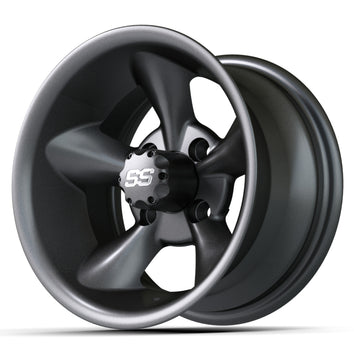
Vendor: GTW® Godfather 12” Matte Gray Golf Cart Wheel

Vendor: RHOX Vegas, Matte Black w/ Center Cap, 10x7 ET-25


