


Stop Veering Off Course with This Easy Golf Cart Alignment Guide
Why Most Golf Cart Owners Overlook Wheel Alignment (And What It's Costing Them)
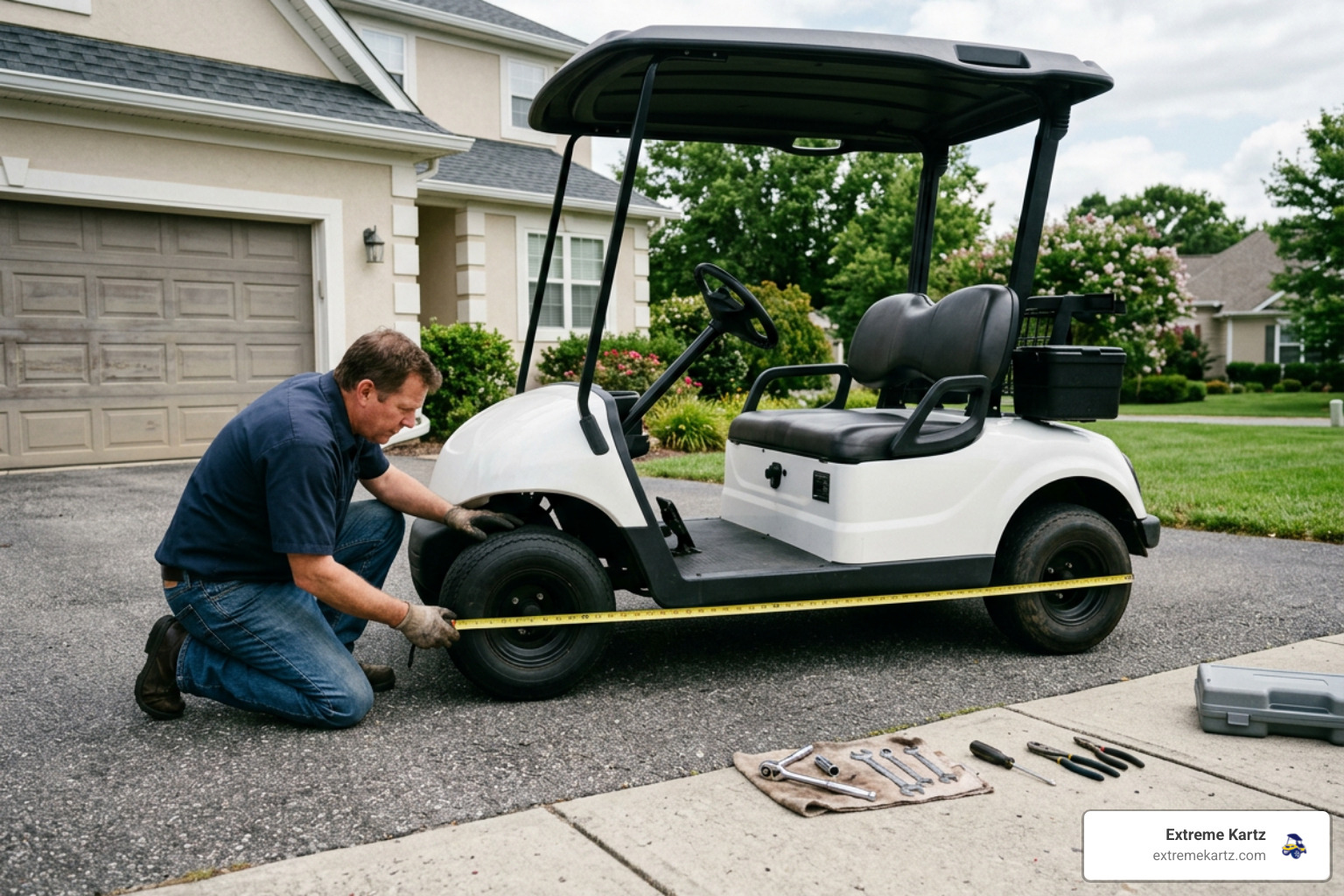
This golf cart tire wheel alignment guide covers everything you need to check and correct your alignment at home — here's the quick version:
How to align your golf cart tires (quick overview):
- Park on a flat surface and inflate all tires to the correct PSI
- Measure the distance between the front edges of both front tires at axle height
- Measure the distance between the rear edges of the same tires
- The front measurement should be 1/8" to 1/4" shorter than the rear (this is correct toe-in)
- If it's off, loosen the jam nuts on the tie rods and make small, equal adjustments on both sides
- Re-measure, then test drive to confirm the cart tracks straight
Most golf cart owners spend money on upgrades — new tires, lifted suspensions, custom wheels — and then quietly watch those tires wear out far too fast. The culprit is almost never the terrain or the brand of tire. It's alignment.
A small toe misalignment of just a few millimeters causes constant tire scrubbing with every foot the cart travels. Over time, that scrubbing can reduce tire lifespan by up to 30–50%. On an electric cart, the added rolling resistance also forces the motor to work harder, draining your battery faster than it should.
The good news? For most carts, alignment is a straightforward DIY job you can do in your driveway in under an hour with basic tools.
I'm Martin Davis, owner of Extreme Kartz, and I've spent years helping golf cart owners cut through confusing, conflicting information to find practical solutions — including building out reliable educational resources like this golf cart tire wheel alignment guide to help you get real results without guesswork. Let's walk through exactly how to do it right.
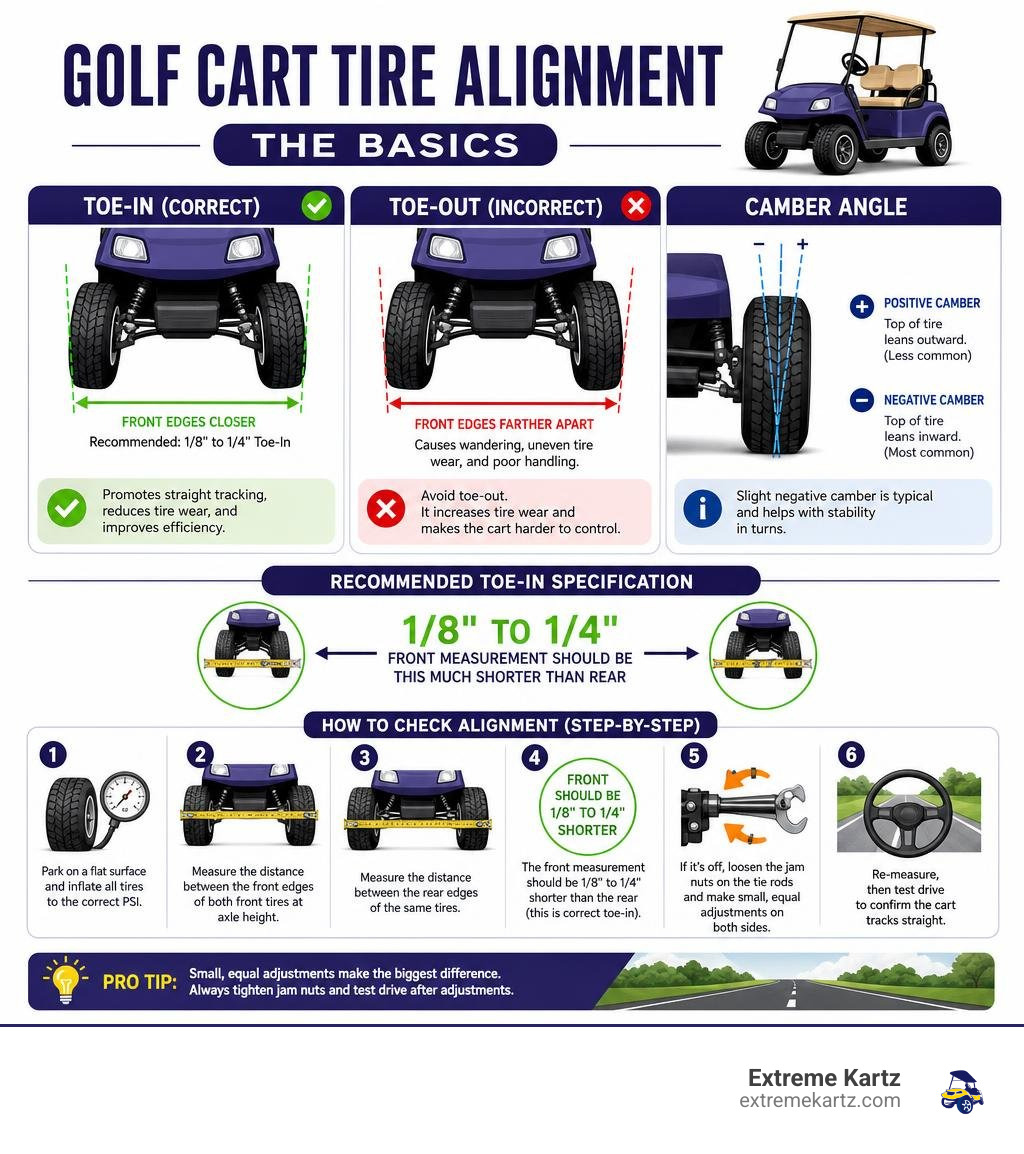
Why Proper Alignment Matters for Your Golf Cart
When we think of vehicle maintenance, we often focus on battery charging, engine oil (for gas models), or keeping the body clean. However, steering and suspension geometry are the actual foundation of your ride quality. Ignoring your front-end geometry doesn't just make driving a chore; it actively damages your investment.
Tire Longevity and Financial Savings
Let's talk numbers. High-quality golf cart tires are an investment, and nobody wants to replace them prematurely. Misaligned wheels can cause up to 30% to 50% faster tire wear. By ensuring your front tires roll straight rather than scrubbing sideways against the pavement, proper wheel alignment can extend tire life by up to 25%. If you are running premium street or all-terrain tires, keeping them aligned is the easiest way to protect your wallet.
Safety and Handling
Safety is our top priority. If your steering geometry is out of spec, your cart can become unpredictable, especially at higher speeds. Misaligned front ends can cause "darty" handling, twitchy steering, and a high-speed vibration. On lifted carts, this is a prime trigger for the dreaded "death wobble," where the front wheels shake violently, significantly increasing the risk of a rollover. Furthermore, testing shows that braking response and straight-line stability can improve by up to 28% with a properly aligned front suspension.
Energy and Fuel Efficiency
Whether you run a gas-powered cart or an electric model, rolling resistance is your enemy. When tires are misaligned, they drag rather than roll smoothly. This drag forces your motor or engine to work harder. Proper alignment can improve gas fuel efficiency by 3% to 5%. For electric carts, minimizing this mechanical drag reduces the workload on your electric motor, which preserves battery life and maximizes your range per charge. For a deeper look at how alignment interacts with your cart's overall setup, check out the Golf Cart Wheel and Tire Alignment Reference Guide.
Signs Your Vehicle Needs a Golf Cart Tire Wheel Alignment Guide Check
How do you know when your cart is begging for an adjustment? Your vehicle will usually send clear warning signs before severe tire damage occurs. Keep an eye out for these five common indicators:
- Uneven Tread Wear: Check your front tires for "feathering" (where one side of the tread block feels smooth while the other feels sharp) or heavy wear concentrated on just the inside or outside edges.
- A Crooked Steering Wheel: When you are driving straight down a flat path, your steering wheel spokes should be perfectly centered. If the wheel is turned to the left or right while you travel straight, your alignment is off.
- Constant Pulling: If you let go of the steering wheel on a flat, level surface and the cart immediately drifts or veers to one side, the alignment needs attention.
- Vibrations and Shakes: A loose, vibrating, or shaky steering wheel — especially when accelerating or cruising at top speeds — points directly to front-end issues.
- Squealing or Noisy Tires: If your tires chirp or squeal during normal turns on concrete, or if they make a noticeable scrubbing sound on smooth surfaces, they are fighting against each other.
Preparing for a DIY Golf Cart Tire Wheel Alignment Guide Procedure
Before you grab your wrenches, proper preparation is key. Taking a few minutes to set up your work area ensures your measurements are highly accurate.
1. Find a Flat, Level Surface
Never attempt an alignment on an angled driveway, a gravel path, or a sloped yard. You need a flat, level concrete surface, such as a garage floor or a flat shop bay, to get accurate geometry readings.
2. Verify and Equalize Tire Pressure
This is the most common mistake DIYers make. If one tire has 15 PSI and the other has 22 PSI, the cart will lean slightly, throwing off your camber and toe measurements. Check your tire sidewalls for the manufacturer's recommended PSI and inflate all four tires exactly to that specification before taking any measurements.
3. Inspect for Worn or Bent Parts
An alignment cannot fix worn-out hardware. Before adjusting anything, jack up the front end, secure it on jack stands, and grab each front wheel. Wiggle them side-to-side and top-to-bottom. If you feel excess play, check for:
- Worn tie rod ends or loose steering joints
- Worn kingpin bushings or control arm bushings
- Loose wheel bearings
- Bent spindles, A-arms, or steering linkages
If any of these parts are worn or bent, replace them first. Attempting to align a cart with loose components is a waste of time, as the settings will shift the moment you drive.
DIY Alignment vs. Professional Shop Alignment
| Feature | DIY Alignment | Professional Shop Alignment |
|---|---|---|
| Typical Cost | $0 - $20 (Basic hand tools) | $75 - $150 (Shop diagnostic & labor) |
| Time Required | 30 - 60 minutes | 1 - 2 hours (plus travel/waiting) |
| Precision | Excellent (with careful manual measurement) | High (using specialized laser alignment racks) |
| Required Tools | Tape measure, wrenches, straight edge | Specialized alignment machine, lift |
| Best For | Routine maintenance, post-lift kit installs | Post-collision repairs, bent frames, complex diagnostics |
Step-by-Step Guide to Adjusting Camber and Toe
Now that your cart is prepped, let’s dive into the step-by-step process of checking and adjusting your front-end geometry. We will focus on the two adjustable angles on most golf carts: Camber and Toe.
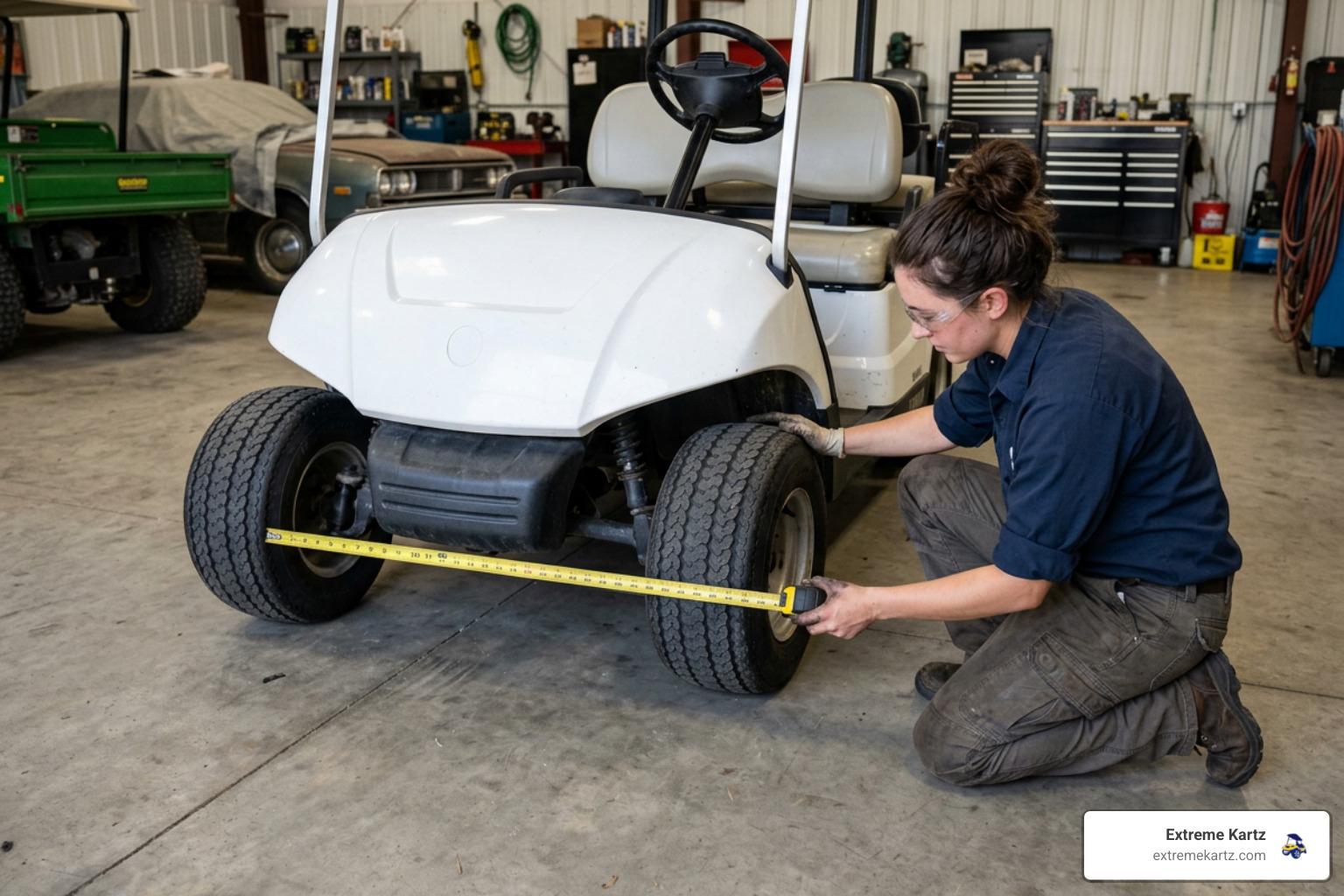
How to Measure and Adjust Camber
Camber is the vertical angle of your front wheels when viewed directly from the front of the cart.
- Positive Camber: The tops of the tires tilt outward away from the cart.
- Negative Camber: The tops of the tires tilt inward toward the chassis.
Ideally, most golf carts perform best with a very slight amount of positive camber (about 1/8" of outward tilt at the top). When you or your passengers sit in the cart, the suspension naturally compresses ("squats"), bringing the wheels into a perfectly vertical, neutral position.
Measuring Camber:
- Place the cart on flat ground with the wheels pointing straight ahead.
- Place a carpenter's square, a framing level, or a straight edge flat on the ground and position it vertically against the side of your front tire.
- Measure the gap between the straight edge and the tire at both the top and bottom of the wheel.
- If the gap at the bottom of the tire is roughly 1/8" wider than the top, your camber is in the sweet spot. If the wheel tilts heavily inward or outward, it needs adjustment.
Adjusting Camber:
Camber adjustment methods vary depending on your cart model:
- Club Car (Precedent/Onward/Tempo): These models typically feature a leaf spring front suspension. Camber is adjusted by loosening the lower control arm mounting bolts or adjusting the eccentric camber bolts on the outer ends of the control arms.
- EZGO (TXT/RXV) & Yamaha (G29/Drive/Drive2): On many of these models, especially those with independent front suspensions or aftermarket lift kits, camber is adjusted via adjustable Heim joints (threaded ball joints) on the upper or lower control arms. Loosen the lock nuts, disconnect the joint, and spin it inward or outward to adjust the wheel tilt, then re-secure.
For model-specific front-end details, read the guide on how to Master Your Golf Cart Front End Alignment.
How to Adjust Toe-In Using This Golf Cart Tire Wheel Alignment Guide
Toe is the direction the front tires point relative to the centerline of the vehicle when viewed from directly above.
- Toe-In: The front edges of the front tires point slightly toward each other.
- Toe-Out: The front edges of the front tires point away from each other.
For optimal stability, straight-line tracking, and minimal tire wear, we recommend a slight toe-in of 1/8" to 1/4" (approximately 3mm). This slight inward angle pre-loads the steering linkage, counteracting the natural tendency of the tires to splay outward while moving forward.
The Tape Measure Method:
- Ensure your steering wheel is perfectly centered and locked in place.
- Using a piece of chalk or a fine-tip paint marker, mark a solid centerline directly on the center tread block of both front tires at axle height.
- Measure the Front Distance: Stretch your tape measure between the two chalk marks on the front-facing side of the tires. Note the exact measurement down to the sixteenth of an inch.
- Measure the Rear Distance: Roll the cart forward so the marks rotate to the rear-facing side of the tires (at axle height). Measure the distance between the two marks again.
-
Compare the Numbers: Subtract the front measurement from the rear measurement.
- If the front measurement is 1/8" to 1/4" smaller than the rear, your toe-in is perfect.
- If the measurements are identical (zero toe) or if the front is wider (toe-out), your tires will scrub, and you must adjust the tie rods.
Adjusting the Toe:
- Locate the steering tie rods connecting your steering rack to the wheel spindles.
- Locate the lock nuts (jam nuts) on both ends of the tie rods. One side is often reverse-threaded (left-hand thread) to allow for easy adjustment.
- Loosen the jam nuts on both the driver and passenger side tie rods.
- To adjust, rotate the tie rod sleeves. Turning them in one direction shortens the rod (pulling the rear of the tire inward, increasing toe-out), while turning them the opposite direction lengthens the rod (pushing the rear of the tire outward, increasing toe-in).
- Crucial Tip: Make small, equal adjustments on both sides (e.g., a quarter-turn at a time). Adjusting only one side will throw your steering wheel off-center.
- Re-measure the front and rear distances.
- Once you hit the target 1/8" to 1/4" toe-in difference, tighten the jam nuts securely while holding the tie rod body in place so it doesn't rotate.
- Roll the cart forward and backward about 10 to 15 feet to let the suspension settle, then do one final measurement check.
Frequently Asked Questions about Golf Cart Alignment
How often should I check my golf cart's wheel alignment?
For standard personal carts driven primarily on paved paths or manicured golf courses, we recommend checking your alignment once a year or every 1-2 years as part of your preventative maintenance routine.
However, if you utilize your cart on rough off-road trails, gravel paths, farm acreage, or frequently bump over curbs, you should inspect the alignment every 6 months. Additionally, you should always perform a full alignment check immediately after installing a lift kit, upgrading to larger custom wheels, or replacing front suspension components.
Can improper wheel alignment reduce my golf cart's battery range?
Absolutely. When your tires are misaligned (especially with excessive toe-in or toe-out), they do not roll cleanly. Instead, they drag sideways across the ground. This constant friction dramatically increases rolling resistance, forcing your electric motor to draw more current from your batteries to maintain speed.
If you find that your batteries are draining faster than usual, checking your alignment is a great first step. If your alignment is correct but you are still looking for more range, power, and zero-maintenance reliability, it might be time to upgrade to a modern lithium drop-in battery system. At Extreme Kartz, we recommend and support industry-leading lithium brands, including Bolt Energy, Eco Battery, Lithium Rhino, and Bedrock Battery. These high-performance systems shed hundreds of pounds of dead weight compared to traditional lead-acid batteries, immediately boosting your cart's efficiency and speed.
What is the recommended toe-in specification for most golf carts?
The standard recommended toe-in specification for almost all major golf cart brands (Club Car, EZGO, and Yamaha) is 1/8 inch to 1/4 inch (approx. 3mm to 6mm) closer in the front than in the rear.
This specific setting provides the ideal balance between straight-line stability, smooth cornering, and even tire wear. Setting your toe to zero (perfectly parallel) can lead to a "wandering" or unstable feeling at higher speeds, while toe-out will cause rapid tread wear on the inner edges of your tires and make the steering feel highly sensitive or twitchy.
Conclusion
Taking the time to properly align your golf cart wheels is one of the most cost-effective maintenance tasks you can perform. By following this golf cart tire wheel alignment guide, you can protect your tires from premature wear, optimize your battery range, and ensure a smooth, stable, and safe ride for your family or utility needs.
If you have completed your alignment and realized your current tires are too worn down from past misalignment, or if you are ready to upgrade your style with a fresh set of custom rims, we are here to help. Upgrade your wheels and tires with Extreme Kartz to browse our extensive selection of pre-mounted wheel and tire combos designed to fit your specific Club Car, EZGO, or Yamaha model. Plus, all of our kits ship in 1-2 business days!
Not sure about fitment, lift kit compatibility, or which tire tread is best for your local terrain? Our team of experts specializes in system-based upgrades. Contact us today at Extreme Kartz, and we will help you choose the perfect setup to keep your cart rolling straight and looking great!
Related Products

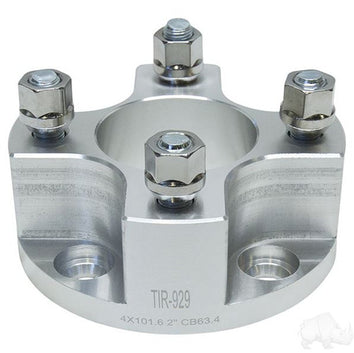
Vendor: 2" Aluminum Wheel Spacers Standard

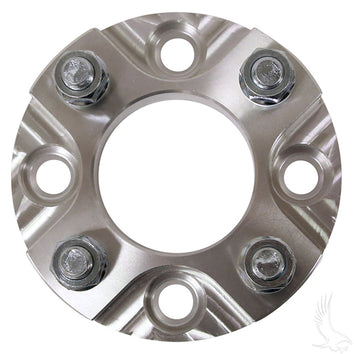
Vendor: Wheel Spacer Hub, 1" w/ Stainless Steel Bolts

Vendor: Chrome ½” x 20 Standard Lug Nuts (16 pack)(Club Car/ EZGO)


Vendor: Black 12mm x 1.25 Metric Lug Nuts (16 pack)(Yamaha)


