


Why 20 Inch Golf Tires are the Goldilocks of the Green
The "Goldilocks" Tire Size: Why 20 Inch Golf Tires Hit the Sweet Spot

20 inch golf tires are the most popular upgrade size for a reason — they deliver noticeably more ground clearance and a bolder stance without forcing most owners into expensive lift kit installs.
Quick answer: Which golf carts fit 20-inch tires without a lift kit?
| Golf Cart Model | Lift Kit Required? |
|---|---|
| EZGO TXT | No lift needed |
| EZGO RXV | No lift needed |
| Yamaha Drive (G29) | No lift needed |
| Yamaha Drive2 | No lift needed |
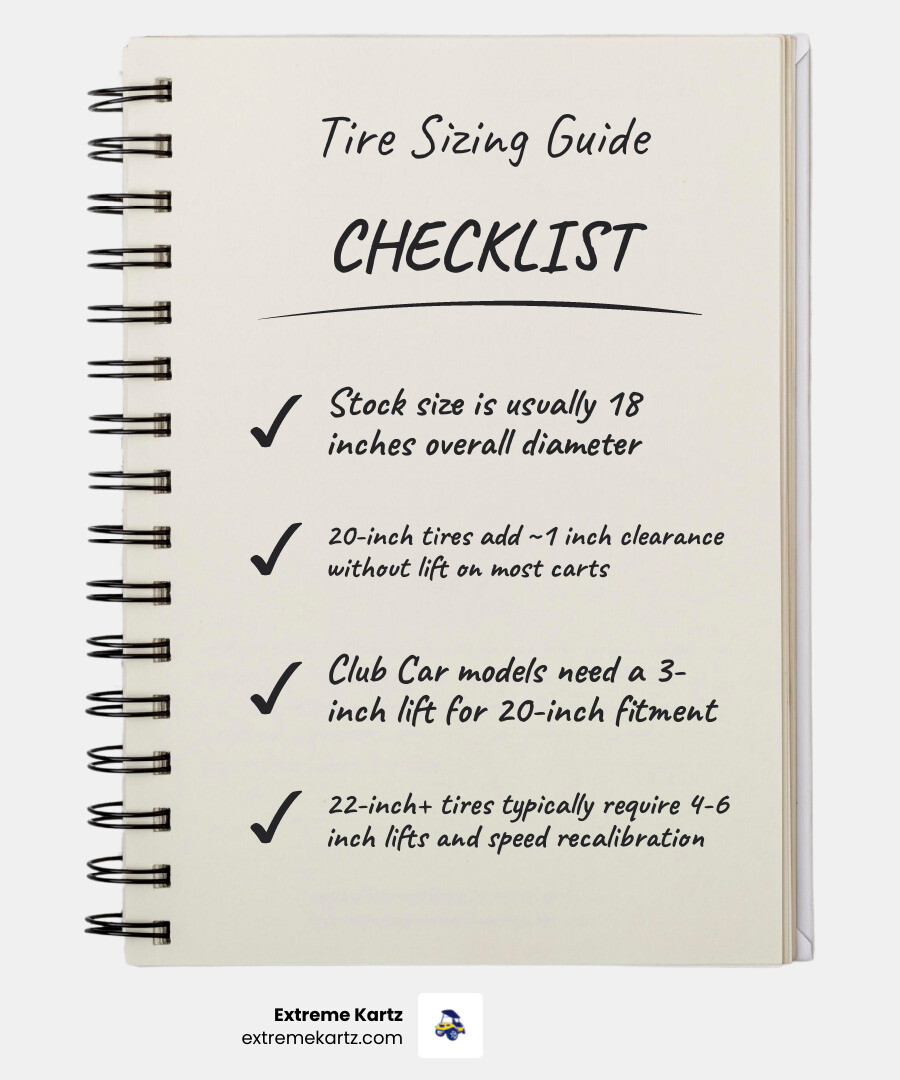
| Club Car DS / Precedent | Minimum 3-inch lift required |
| Yamaha G-Series (G1–G22) | Minimum 3-inch lift required |
Not too small, not too tall — 20-inch tires sit right in the middle of the golf cart tire sizing range. They clear rough terrain better than stock 18-inch tires, but they don't demand the suspension overhaul that 22-inch or 23-inch setups typically require.
That balance makes them a practical first upgrade for everyday cart owners, weekend trail riders, and neighborhood cruisers alike.
I'm Martin Davis, owner of Extreme Kartz, and I've spent years helping cart owners across all 50 states navigate 20 inch golf tires fitment — from non-lifted EZGO builds to Club Car setups that needed the right lift pairing. This guide covers everything you need to choose, install, and maintain the right 20-inch setup for your specific cart.
20 inch golf tires terminology:
Understanding 20 Inch Golf Tires and Fitment Compatibility
When we talk about 20 inch golf tires, we are referring to the total height of the tire from the ground to the very top. This is a significant jump from the standard 18-inch tires that come from the factory. While two inches might not sound like a lot on paper, it completely changes the profile of your cart.
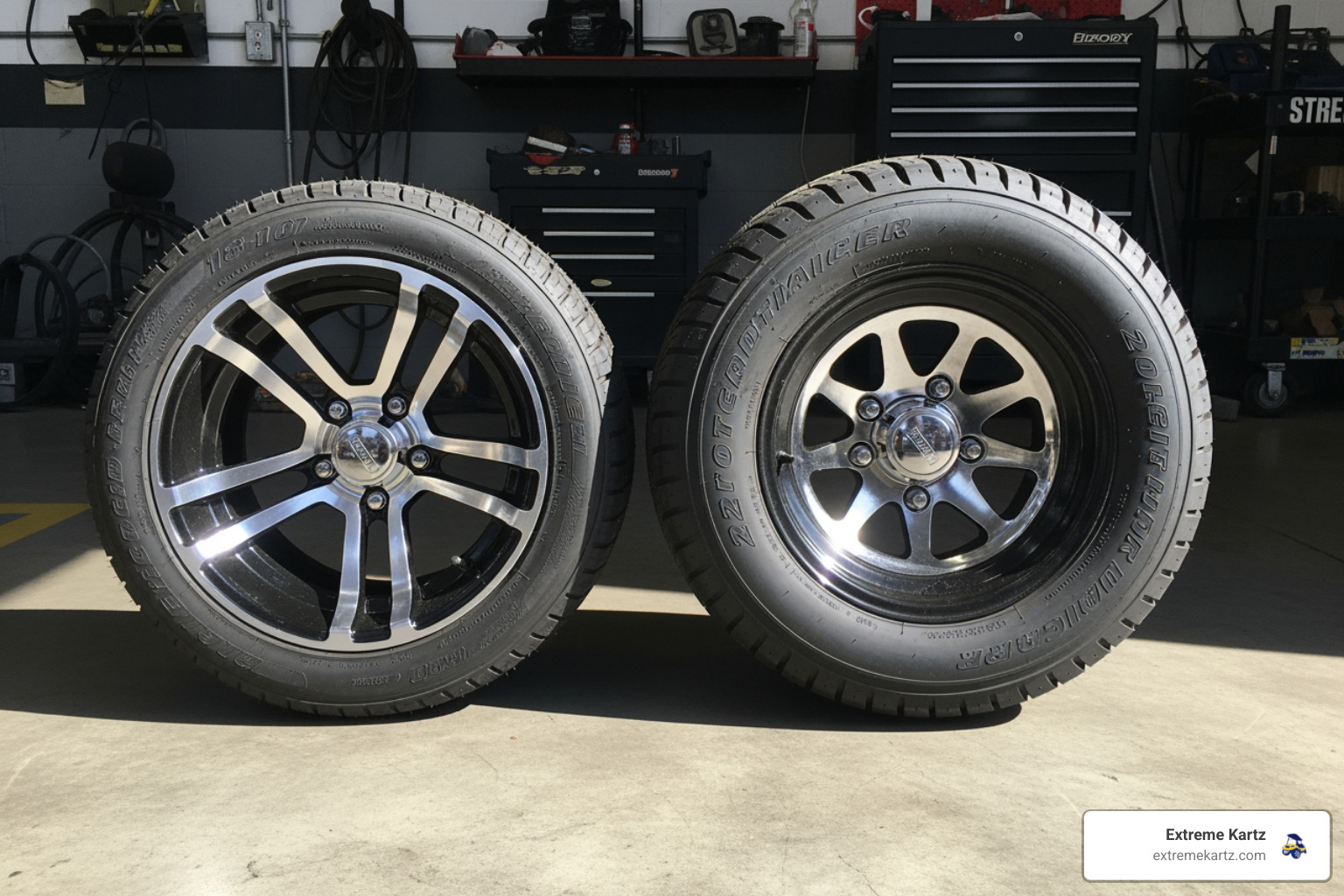
The primary advantage here is the increased sidewall height. For example, when you look at a 20x10-10 golf cart tires complete guide, you’ll see that the 10-inch wheel leaves 5 inches of rubber on each side. This extra "meat" on the tire acts as a natural shock absorber, smoothing out bumps that would feel jarring on smaller tires. If you opt for a larger wheel, such as in our 20x10-12 golf cart tires complete guide, you get a more modern, low-profile look while still maintaining that 20-inch overall diameter.
Lift Kit Requirements for 20 Inch Golf Tires
Fitment is where most owners get tripped up. At Extreme Kartz, we emphasize that "universal" is a myth in the golf cart world. Your lift requirements depend entirely on your cart’s manufacturer and specific model year.
- EZGO TXT & RXV: These models are the champions of the 20-inch tire world. You can generally bolt these on and go. However, if your rear leaf springs are sagging from years of use, you might experience slight rubbing when carrying passengers.
- Yamaha Drive & Drive2: Similar to EZGO, these newer Yamaha models have spacious wheel wells that accommodate a 20-inch tire with no modifications. We do recommend checking your front cowl clearance during sharp turns.
- Club Car DS & Precedent: Club Car builds their carts with tighter tolerances. To run 20 inch golf tires, you will need at least a 1-inch to 3-inch lift kit. Without it, the tires will rub against the wheel wells or the frame during turns.
- Yamaha G-Series (G1-G22): These older Yamaha models require a minimum 3-inch lift kit. Their suspension geometry simply wasn't designed for taller rubber without a bit of help.
Wheel Sizing and Bolt Patterns
Most 20 inch golf tires are paired with either 10-inch or 12-inch wheels. The industry standard bolt pattern is 4x4 (or 4x101.6mm), which fits almost every major brand including EZGO, Club Car, and Yamaha.
One critical technical detail we always check for our customers is the wheel offset. Most custom wheels used for these tires have an "offset" (like ET-15 or ET-25), which pushes the wheel further out from the cart. This wider stance provides better stability and helps prevent the inside of the tire from rubbing against the suspension components.
Additionally, if you have upgraded to hydraulic disc brakes, be careful: some 10-inch wheels will not clear disc brakes larger than 7.9 inches. In those cases, moving up to a 12-inch wheel is mandatory. For a deeper dive into these specs, check out our Golf cart rims and tires guide and our Golf cart rims tires complete guide.
Performance Benefits: Ride Quality, Handling, and Clearance
Upgrading to 20 inch golf tires isn't just about looks; it's a performance overhaul. By increasing the tire diameter, you effectively change the "gear ratio" of your cart. A taller tire covers more ground with every single revolution, which can lead to a slight increase in top-end speed (usually 1-3 MPH).
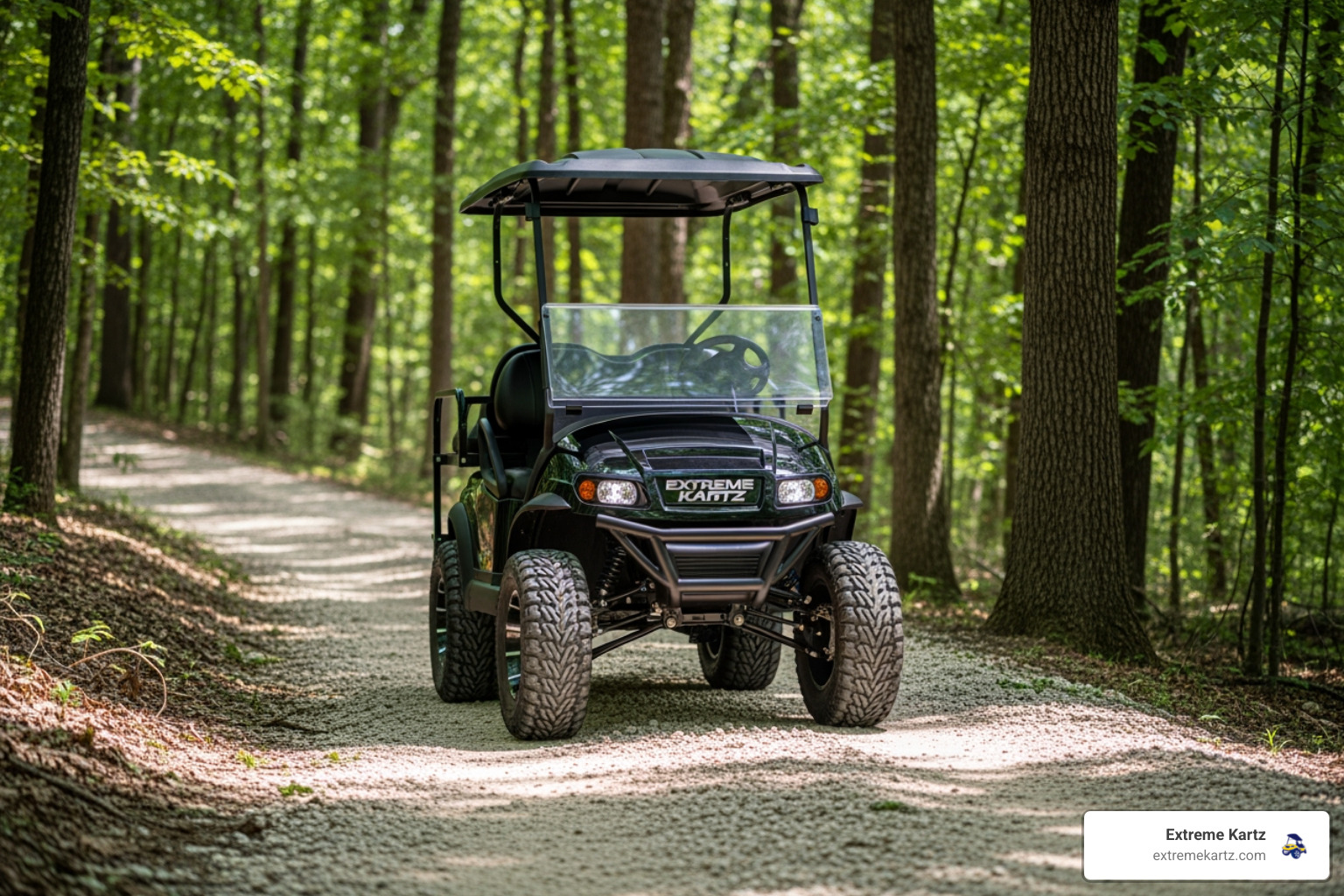
However, there is a trade-off. Taller tires require more effort for the motor to turn, which can result in a minor loss of low-end torque. For most neighborhood drivers, this is barely noticeable. But if you live in a very hilly area or use your cart for heavy towing, you might want to pair these tires with a high-performance controller to maintain consistent acceleration.
Ride quality is where the 20-inch size truly shines. Because there is more air volume in the tire compared to stock sizes, the cart feels more planted and stable. To get the best results, you must maintain the correct pressure. We've put together a Golf cart tire pressure guide and a specific resource on Tire pressure for golf cart tires to help you find that perfect balance between comfort and tire longevity. For general tire construction and safety terminology, the National Highway Traffic Safety Administration tire guide is also a useful reference.
Choosing the Right Tread for 20 Inch Golf Tires
Your choice of tread should be dictated by where you spend 80% of your time.
- Turf/Street Tread: These are the golf-course-friendly options. They feature a shallow, non-aggressive pattern designed to protect the grass while providing a quiet, smooth ride on pavement.
- All-Terrain (AT): The most popular choice for 20-inch setups. AT tires feature deeper grooves and a more aggressive pattern that handles gravel, dirt, and wet grass well without becoming overly noisy on the street.
- Mud Terrain: If you're taking your cart into deeper mud or loose terrain, mud tires offer maximum traction. These will have more road noise on pavement and can wear faster if driven exclusively on hard surfaces.
Many of the 20-inch options we carry are DOT approved, meaning they meet the safety standards for use on public roads in golf-cart-legal communities. You can explore the differences further in our guide to Golf cart tires for every terrain.
Load Capacity and Durability
Strength matters, especially if you have a rear seat kit for extra passengers or a cargo bed for work. Most high-quality 20 inch golf tires come with a 4-ply rating. This means the tire is constructed with multiple layers of material to resist punctures and support heavy loads.
For example, many 20x10-12 all-terrain tires are rated for approximately 800 lbs per tire at 20 PSI. With four tires, that's a total capacity of 3,200 lbs - far more than the weight of the cart and four adults. This durability is essential for long-term safety. For more on heavy-duty applications, see our Tires for golf cart overview.
Installation and Long-Term Maintenance Tips
Installing a new set of 20 inch golf tires and wheels is one of the most satisfying DIY projects you can do in an afternoon. Since most of these come as a "combo" (pre-mounted and balanced), it’s often as simple as jacking up the cart and swapping the wheels.
Pro Tips for a Successful Install:
- Suspension Check: Before you put the new tires on, inspect your rear leaf springs and front bushings. If your suspension is worn out, even "no-lift" tires might rub.
- Heavy-Duty Springs: If you have a rear seat kit, we strongly recommend upgrading to heavy-duty rear leaf springs. This prevents the rear of the cart from squatting under load and hitting the tires.
- Lug Nut Torque: Always use the correct lug nuts (metric for Yamaha, standard for EZGO/Club Car) and tighten them in a "star" pattern to ensure the wheel sits flush against the hub.
Maintenance doesn't stop at installation. To get the most miles out of your investment, you should rotate your tires every 6 months to ensure even wear, especially since golf carts often have slight camber or toe-in settings from the factory. Follow our Golf cart tire rotation guide for step-by-step instructions. For a broader look at keeping your cart in top shape this year, our Golf cart tire guide 2026 is the perfect resource.
Frequently Asked Questions about 20 Inch Tires
Do 20-inch tires require a lift kit on all golf carts?
No. As mentioned earlier, EZGO TXT, RXV, and Yamaha Drive/Drive2 models can usually run 20-inch tires on stock suspension. Club Car models and older Yamaha G-Series carts will almost always require a 1" to 3" lift kit to clear the wheel wells.
Are 20-inch golf cart tires street legal?
Many are, but not all. Look for the "DOT" stamp on the sidewall. If a tire is DOT approved, it meets the Department of Transportation standards for on-road use. This is a must-have if you live in a municipality that allows golf carts on public streets.
How do 20-inch tires affect the speed of my golf cart?
Because the tire has a larger circumference than the stock 18-inch tire, you will typically see an increase in top speed of about 1 to 3 MPH. However, you might notice a slight decrease in "take-off" torque, especially when climbing hills.
Conclusion
At Extreme Kartz, we believe the right upgrade should solve a problem, not create new ones. 20 inch golf tires offer a practical middle ground for owners who want a stronger stance, better clearance, and improved ride quality without stepping into a much taller lifted setup.
Whether you need a set of Golf cart tires for neighborhood use, trail riding, or mixed terrain, our goal is to help you get the correct fit the first time. We focus on system-based solutions, which means we help you evaluate more than just tire size - including wheel offset, suspension condition, rear seat load, and whether heavy-duty springs or other supporting upgrades make sense for your cart.
If you have questions about your specific model's clearance or need help choosing between a 10-inch and 12-inch wheel, reach out to Extreme Kartz for fitment guidance. We are here to help you build a golf cart setup that works reliably for your cart, your terrain, and your driving goals.
Related Products

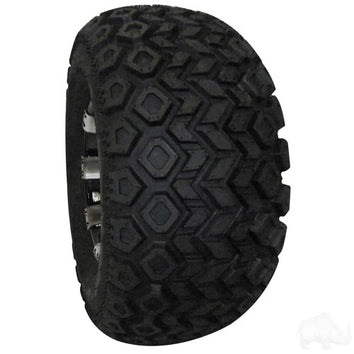
Vendor: RHOX Mojave II 20x10-10 4 Ply

Vendor: RHOX Road Hawk, 20x10R10 Radial DOT, 4 Ply


Vendor: 22x10-10 GTW® Timberwolf A/T Tire


Vendor: 22x11-10 GTW® Predator A/T Tire


