


Lithium vs. Lead-Acid Batteries in Cold Weather: Which Holds Up Better?
When temperatures dip, even the toughest golf carts start feeling sluggish. Acceleration slows, range drops, and charging takes longer. But the real story isn’t just “it’s cold out.” It’s what happens inside your batteries — and how lithium and lead-acid systems handle those conditions very differently.
If you’re deciding whether to upgrade before winter or wondering why your cart feels underpowered on chilly mornings, this guide breaks down how both battery types behave when the mercury falls and which one truly goes the distance.
Why Cold Weather Affects Golf Cart Batteries
Temperature directly affects battery chemistry. When it drops below 50°F (10°C), both lithium-ion and lead-acid cells experience increased internal resistance. Electrons move more slowly, chemical reactions weaken, and power output drops.
At 32°F (0°C):
-
Lead-acid batteries lose 30–50% of available capacity.
-
Lithium batteries retain around 80%, but charging must pause below freezing to prevent lithium plating.
Cold weather doesn’t just affect range; it affects voltage stability, charging efficiency, and cycle life.
Lithium Battery Behavior in Cold Temperatures
Lithium batteries rely on ion movement between the anode and cathode. At low temperatures, this movement slows, reducing discharge power.
However, the structure of lithium iron phosphate (LiFePO₄) chemistry remains stable even under freezing conditions. The battery still delivers usable energy, though with slower charge acceptance.
Below Freezing Performance
-
Voltage remains consistent; discharge curve stays flat.
-
Power drops slightly, but efficiency remains higher than lead-acid.
-
Charging should be disabled below 32°F. Otherwise, metallic lithium can form, permanently reducing capacity.
Battery Management System (BMS)
Modern lithium packs include a BMS that measures cell temperature and voltage. When cold, it automatically prevents charging or activates a heating circuit to restore optimal temperature. This system eliminates most cold-weather risks.
Lead-Acid Battery Behavior in Cold Temperatures
Lead-acid batteries depend on a reaction between lead dioxide, sponge lead, and sulfuric acid. Cold temperatures thicken the electrolyte, reducing ion flow and voltage.
Chemical and Physical Effects
-
Internal resistance rises; voltage drops faster under load.
-
Cranking power decreases; lights dim, and acceleration weakens.
-
Deep discharge in cold conditions can freeze the electrolyte, expanding water crystals and cracking the case.
Long-Term Damage
Repeated low-charge states in winter cause sulfation. It hardened lead sulfate crystals on the plates that block current. Once sulfation occurs, lost capacity is permanent. Regular charging is the only prevention.
Lithium vs. Lead-Acid: Winter Performance Comparison
|
Attribute |
Lithium-Ion (LiFePO₄) |
Lead-Acid |
|
Usable Capacity at 32°F (0°C) |
70–80% |
50–60% |
|
Charging Below Freezing |
Disabled by BMS |
Possible but inefficient |
|
Cold-Start Voltage Stability |
Stable |
Drops quickly |
|
Maintenance |
None |
High (water refills, corrosion checks) |
|
Self-Discharge Rate (Monthly) |
<3% |
~15% |
|
Risk of Freezing |
None |
High if undercharged |
|
Cycle Life |
3,000–5,000 |
500–1,000 |
In short, Lithium maintains usable energy and voltage stability. Lead-acid weakens rapidly and requires constant maintenance.
Protecting Golf Cart Batteries in Winter
Storage & Charging
-
Store batteries fully charged.
-
Keep temperature above 40°F (4°C) when possible.
-
Avoid charging lithium below 32°F unless the BMS has thermal control.
-
For lead-acid, connect to a smart maintainer to prevent sulfation.
Warming Strategies
Use insulated battery blankets or built-in self-heating lithium packs (RoyPow, Lithium Rhino, Eco Battery offer these). Maintaining battery temperature above freezing preserves charge efficiency and range.
When Lithium Is Worth the Upgrade
In climates where winter temperatures regularly drop below 40°F:
-
Lithium batteries deliver stronger voltage, faster recovery, and stable performance.
-
Lead-acid batteries require constant charging, risk freezing, and lose range.
Lithium’s higher upfront cost is offset by:
-
Lower maintenance
-
Longer lifespan (5–10 years)
-
Consistent year-round performance
If you use your golf cart year-round or store it outside, lithium offers measurable gains in both reliability and total cost of ownership.
Top Lithium Battery Brands for Winter Performance
Eco Battery

-
Designed specifically for golf carts, Eco Battery emphasizes maintenance-free use, long life, and integration with modern carts.
-
Their kits are built with LiFePO₄ cells and claim to be “engineered, tuned & tested” for true golf-cart behavior.
-
Especially relevant for cold weather: the lightweight design reduces stress on the drivetrain during cold starts, and the advanced BMS setup means fewer surprises in freezing conditions.
-
Best suited if you want a plug-&-play upgrade that aligns closely with your cart’s factory form-factor.
Bolt Energy

-
Bolt Energy touts “high-output lithium batteries for all brands of golf carts” with full US-based production. Bolt Energy USA+1
-
Their kits are shown with various Ah options (60Ah, 105Ah, 160Ah), offering versatility for cold-weather use where you may want more capacity.
-
Maintenance-free, fast-charging, and backed by strong support. Perfect if you run your cart in winter and want extra reserve capacity.
-
Choose Bolt if you want raw power plus flexibility to increase capacity for extended use in cold weather.
Lithium Rhino

-
Lithium Rhino builds rugged lithium packs designed for real-world use.
-
Every Rhino battery includes a smart BMS, low-temperature cutoff, and reinforced aluminum casing for thermal stability.
-
Unlike generic imports, Lithium Rhino’s systems are optimized for low-temperature discharge, ensuring steady current output during cold starts.
-
Their focus on build quality and protection circuits makes them a reliable mid-tier choice for cold or variable climates.
-
Best for: golf cart owners who want durability and balanced performance without overpaying for premium features.
Epoch Batteries

Epoch Batteries 48 V 60 Ah Kit
-
Epoch Batteries offer lithium solutions with built-in BMS and safe cold-weather operation down to 0°F. Their packs maintain voltage stability in winter conditions and deliver solid cycle life for budget-conscious owners.
-
Best for: owners looking for a cost-effective lithium upgrade that works reliably in winter, without extra bells and whistles.
Quick Brand-Comparison Table (Winter-Optimized)
|
Brand |
Highlights |
Best For |
|
Eco Battery |
Maintenance-free, lightweight |
Users who want a simple upgrade |
|
Bolt Energy |
High capacity options, versatile |
Users needing extra range or power |
|
Lithium Rhino |
Rugged build, smart BMS, great value |
Durable everyday winter use |
|
Epoch Batteries |
Extreme durability, cold/heat rated |
Cost-conscious golf cart users |
Brand-Selection Recommendation (Cold Weather Focus)
-
If your cart sits outside or you use it early mornings when temps are low → go Lithium Rhino or Epoch for maximum cold tolerance.
-
If you store indoors but still want winter performance → Eco offers excellent value.
-
If you use your cart for long hours, hilly terrain, or large yards in cold climates → Bolt Energy gives you an extended range solution.
Final Verdict
In cold weather, lithium-ion batteries outperform lead-acid in every measurable metric. Be it in voltage stability, usable capacity, and lifespan. The only limitation: avoid charging below freezing unless protected by a BMS or integrated heater.
For golf cart owners in cold climates, LiFePO₄ is the superior chemistry. It’s efficient, maintenance-free, and built to handle winter.
Frequently Asked Questions
Related Products


Vendor: Eco Battery 48V 105Ah Thru-Hole Bundle - Select your Cart


Vendor: Bolt Energy 48V 105Ah MINI Golf Cart Lithium Battery Bundle - Professional or Standard Kit


Vendor: Lithium Rhino 48V 105AH Bundle

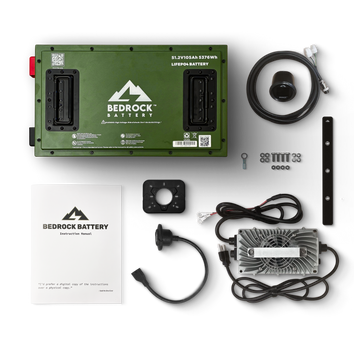
Vendor: Bedrock Battery Slim 48V 105Ah Lithium Conversion Kit


