


AC vs. DC: The Ultimate Guide to Golf Cart Performance
The Core Differences: AC vs. DC Motor Technology
Many golf cart owners ask, "Is a golf cart AC conversion worth it?" The quick answer is often yes, especially if you're looking for significant performance and efficiency gains.
Here's why many consider an AC conversion a valuable upgrade:
- Improved Performance: Experience noticeably higher speeds, increased torque, and quicker acceleration, especially on hills.
- Improved Efficiency: Get more miles per charge and better battery life due to the AC system's superior energy management.
- Reduced Maintenance: AC motors are brushless, meaning fewer moving parts to wear out, leading to greater durability and less upkeep.
- Smoother Driving: Enjoy a quieter operation and a more consistent, refined power delivery than traditional DC systems.
The shift from older DC motor systems to modern AC technology is changing the electric golf cart experience. It offers a powerful upgrade for those seeking to maximize their cart's capabilities.
As Martin Davis, owner of Extreme Kartz, our goal is to provide clear, reliable guidance for golf cart upgrades. With a focus on education and transparency, we aim to help you understand if a golf cart AC conversion worth it for your specific needs.
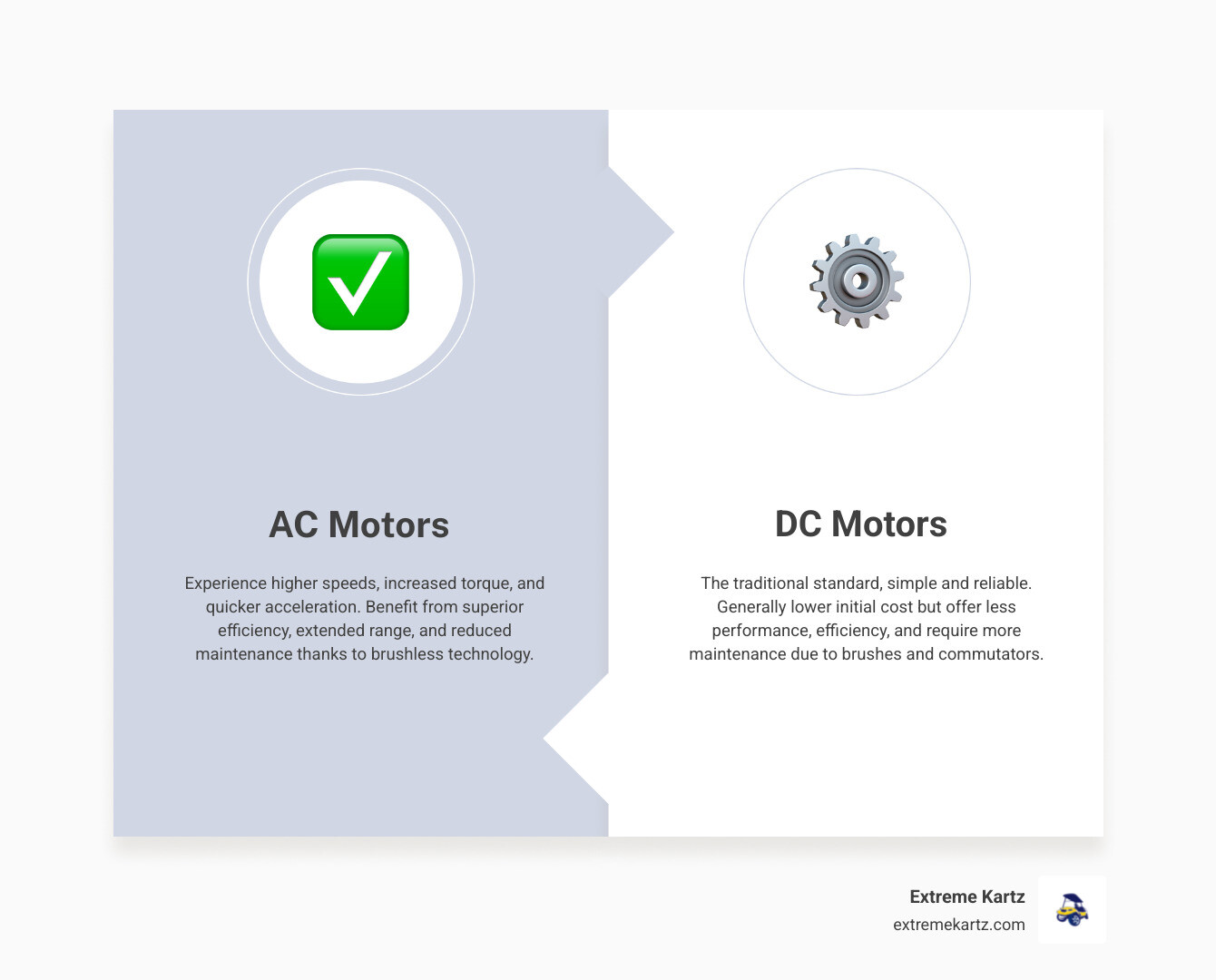
When we talk about electric golf carts, the heart of the system lies in its motor. For decades, Direct Current (DC) motors were the industry standard. However, Alternating Current (AC) motors have emerged as a superior alternative, fundamentally changing what we expect from golf cart performance.
_compressed.webp?alt=media&token=f801ea01-df3b-472a-a96d-27aea99fea24 "side-by-side diagram showing the internal components of an AC motor and a DC motor - golf cart ac conversion worth it")
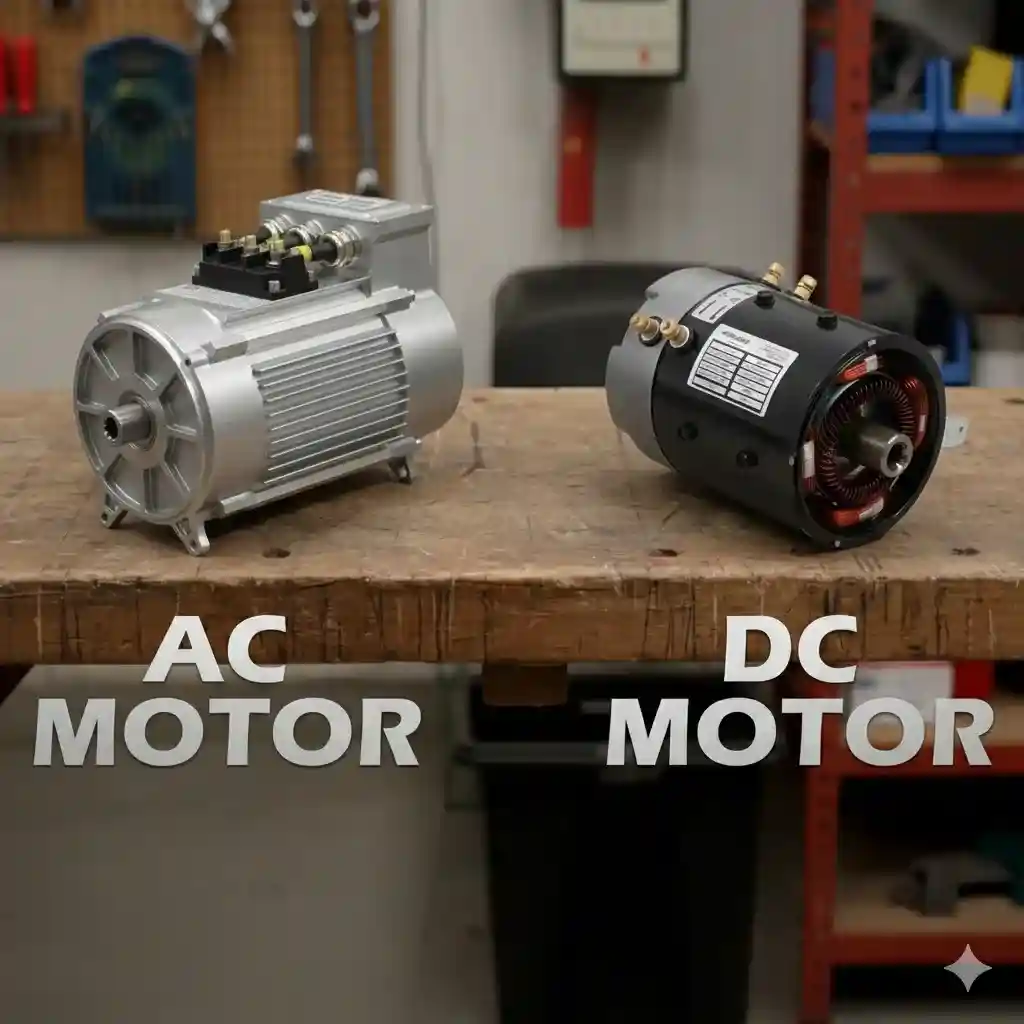
DC vs. AC Motor Design: Traditional DC motors rely on brushes and a commutator to transfer current. These physical components create friction, generate heat, and wear out over time, which limits efficiency and requires regular maintenance. While this design delivers good initial torque, it can struggle to maintain power on hills or under heavy loads. In contrast, AC motors feature a brushless design that uses an electronic controller to power the motor. With no brushes to wear out, AC motors are more reliable, require significantly less maintenance, and have a longer operational lifespan.
Power Delivery and Efficiency: AC motors provide a steadier and smoother power output, excelling at managing varying loads efficiently. This translates to a cart that doesn't lose speed uphill—a common complaint with DC systems. Furthermore, AC motors are more thermally efficient, meaning they run cooler than DC motors. Less heat means less wasted energy, which directly contributes to better overall efficiency, longer battery life, and an extended driving range.
In short, AC motors outperform DC motors in power, efficiency, and durability, offering a more refined and reliable driving experience. For a deeper dive, check out our insights on AC Motors: Why All The Hype? It's The Future. That's Why!.
Opening up Performance: How an AC Conversion Transforms Your Ride
When we talk about a golf cart AC conversion worth it, the most immediate and impactful benefits are seen in how your cart performs. An AC conversion isn't just an upgrade; it's a complete change of your golf cart's capabilities.

Speed, Torque, and Acceleration: One of the first things owners notice is a dramatic increase in top speed, with AC-converted carts often reaching 25-30+ MPH compared to the stock 15-20 MPH when paired with the right controller. More importantly, an AC system delivers sustained speed. It won't lose momentum on hills or when fully loaded, a common issue with DC kits. AC motors also provide significantly higher torque for superior hill-climbing and hauling power, along with smoother, quicker acceleration for a more responsive and enjoyable ride.
Efficiency Gains and Extended Range: Beyond raw power, AC motors operate with remarkable efficiency. They use less energy to do the same work as DC motors, resulting in:
- Longer Battery Life: Less strain on your batteries can extend their overall lifespan.
- Extended Driving Range: More efficient power use means more miles per charge compared to similar DC systems.
- Cooler Operation: AC kits run cooler, and less heat means better efficiency and longevity.
These real-world improvements redefine your golf cart's utility and enjoyment. For more ways to release your cart's potential, explore our Six Proven Tips to Boost Your Golf Cart Performance.
Advanced Control and Regenerative Braking
Modern AC conversion kits, like those from Navitas, offer an impressive level of smart control. The On-The-Fly Programmer is a game-changer, allowing you to adjust top speed, acceleration, and regenerative braking in real-time with the turn of a knob. This lets you tailor the cart's performance to your exact needs, from a leisurely cruise to a challenging trail.
Many kits also feature Bluetooth app control, enabling you to fine-tune settings, monitor performance, and even lock out the system for security via a smartphone. This digital integration offers unparalleled flexibility.
Regenerative braking is another area where AC systems excel. When you decelerate, the motor acts as a generator, sending energy back to the batteries. This extends your range and reduces wear on your mechanical brakes. The regenerative braking in AC systems is typically more consistent and efficient than in DC systems. For a deeper understanding of how these controllers work, refer to our guide on Golf Cart Speed Controllers: A Basic Understanding of Controllers.
Durability and Maintenance: The Long-Term Advantage
When evaluating if a golf cart AC conversion worth it, long-term durability is a key advantage. The primary reason for this is the brushless motor design. By eliminating brushes and commutators—the main wear components in DC motors—AC systems have fewer moving parts that can fail. This simple, robust design leads to:
- Reduced Wear and Tear: Less friction and heat buildup extend the motor's lifespan.
- Lower Maintenance: With no brushes to inspect or replace, upkeep is minimal, saving time and money.
- Increased Reliability: The cooler, more efficient operation of an AC motor puts less strain on the entire powertrain, contributing to the longevity of the controller and batteries.
This long-term reliability is a significant factor that makes an AC conversion a smart investment.
Is a Golf Cart AC Conversion Worth It? A Cost and Value Analysis
The question of whether a golf cart AC conversion worth it inevitably leads to a discussion of cost versus value. It's an investment, and it's crucial to weigh the initial outlay against the long-term benefits.
Cost Breakdown (and DIY Reality Check): An AC conversion involves the kit itself plus either your labor (DIY) or shop labor.
Kit Cost: Most AC conversion kits land around $1,600 to $3,000+ depending on brand, power, and controller features. In many cases, that’s only a few hundred dollars more than a comparable “high performance” DC setup, which is why AC is such a popular next step for performance-minded owners.
Installation Costs (DIY vs. Pro): If you pay a shop, install labor can add several hundred to $1,000+ based on your cart model and local rates.
If you’re a DIYer: this is best thought of as an intermediate-level install, not a simple bolt-on accessory. You’ll want solid mechanical comfort (swapping drivetrain components, aligning parts) and electrical confidence (clean cable routing, proper crimping, correct torque, and verifying connections).Total Investment: With professional installation, many owners end up in the $3,000 to $6,000+ range for a complete, turnkey conversion. DIY can lower the cash cost, but plan for extra time, tools, and small add-ons (connectors, cables, mounting hardware) that often show up mid-install.
Long-Term Value: Despite the upfront cost, an AC conversion offers significant long-term value through improved performance, better efficiency (more miles per charge), reduced maintenance costs, and potentially higher resale value. The advanced technology in AC motors often results in a higher upfront cost. However, the operational expenses are generally lower, and the driving experience is superior. Many find that the benefits far outweigh the initial investment. For more insights into the advantages of this upgrade, you can read our detailed article on Insights on AC conversion advantages.
Convert vs. Buy New: A Cost-Effectiveness Comparison
Many owners wonder if it's better to convert their current cart or buy a new one with a factory AC system. The answer depends on your cart's condition and your budget.
- Converting an Existing Cart: If your cart's frame, suspension, and body are in good shape, a conversion is often the most cost-effective path. It allows you to achieve modern performance that can rival or exceed a new cart, but at a fraction of the price. You also get to keep a cart you're familiar with and may have already customized.
- Buying a New AC Cart: A new cart offers a bumper-to-bumper warranty and the latest integrated features. However, the cost is significantly higher, often starting at $10,000 or more. While a conversion's warranty only covers the new AC components, reputable brands like Navitas and Eco Battery provide excellent product support.
For most, converting a solid existing cart offers the best value, delivering cutting-edge performance without the expense of a brand-new vehicle. For more on parts, see our Aftermarket vs. OEM Golf Cart Parts Guide.
Understanding the investment: Is a golf cart AC conversion worth it for everyone?
While the benefits are undeniable, an AC conversion might not be for everyone. The decision hinges on your specific needs:
- Higher Upfront Cost: If your budget is tight or your needs are basic, a less expensive DC system upgrade might suffice.
- System Complexity: AC systems are more technologically advanced. While this enables superior control, troubleshooting may require more specialized knowledge, which is where expert support from Extreme Kartz is invaluable.
- Battery Power Requirements: To open up an AC motor's full potential, your batteries must be up to the task. Older lead-acid batteries can be a bottleneck, often making a high-output lithium battery upgrade a necessary part of the investment.
- Performance Goals: If you only use your cart for leisurely rides on flat ground, the power of an AC system might be overkill. But if you face hills, carry passengers, tow loads, or simply crave a responsive, high-performance ride, an AC conversion is the ideal solution.
Planning Your AC Conversion: Key Considerations
Once you've decided that a golf cart AC conversion worth it for your needs, the next step is planning the project. This involves choosing the right kit and considering installation. These kits ship in 1-2 business days.
Recommended Kits: At Extreme Kartz, we recommend top-tier AC conversion kits that deliver proven performance and reliability. Three leading options are Navitas, Eco Power, and the Silverwolf Teekon Kit.
- Navitas: Known for advanced controllers and motors, with Bluetooth app control and an On-The-Fly Programmer that lets you fine-tune speed, acceleration, torque, and regenerative braking.
- Eco Power: A strong all-around choice, offering solid performance and efficiency with multiple configurations (for example, 450A or 600A controllers paired with 5kW motors) to match how you use your cart.
- Silverwolf Teekon Kit: A popular AC conversion path for riders who want modern controller tuning and strong power delivery, with a kit-based approach that simplifies matching the motor, controller, and programming to your cart.
DIY vs. Professional Installation: While some modern kits are designed to be "plug-n-play," installation can be complex.
- DIY Installation: This is feasible if you have strong mechanical and electrical skills. However, incorrect wiring can damage components or create safety hazards. Given the complexity and cost of the components, mistakes can be expensive.
- Professional Installation: For most owners, professional installation is the recommended route. A qualified technician has the tools and expertise to ensure the kit is installed correctly, safely, and optimized for your cart.
Choosing the Right Kit for Your Cart
Compatibility is paramount. Kits are designed for specific makes, models, and drive systems.
- Plug-and-Play Kits: For many popular models, kits are designed for seamless integration. However, older carts (e.g., Club Car Series, EZGO PDS, Yamaha G22) may require additional wiring or components.
- Club Car: Excellent candidates include Precedent, Onward, and DS (IQ) models. Specific kits are also available for older Series and resistor carts.
- EZGO: Strong support for TXT, S4, L6, and MPT models. For the EZGO RXV, which often has a factory AC system, a controller-only upgrade is a common path.
- Yamaha: Conversions are available for G29 (Drive) models. For newer Drive2 AC carts, a controller swap can open up more performance.
Knowing your cart's existing controller model (e.g., Curtis, Danaher) is vital for ensuring proper fitment. For a detailed breakdown, see our Golf Cart Controller Comparison: Club Car, EZGO, and Yamaha Upgrades Explained.
The Power Source: Why Battery Upgrades Matter
To truly maximize the benefits of an AC conversion, you must consider your power source. Your batteries are crucial to open uping the full potential of the new system.
Lithium vs. Lead-Acid: Upgrading to lithium batteries is highly recommended. While an AC system can run on healthy lead-acid batteries, they often become a performance bottleneck due to voltage sag under load. Lithium batteries provide the consistent, high-current power an AC motor needs to perform at its peak.
Advantages of Lithium Batteries:
- Consistent Power: Lithium maintains a steady voltage, preventing performance drop-off as the battery drains.
- Lighter Weight: Reducing your cart's weight improves acceleration, speed, and efficiency.
- Longer Lifespan & Faster Charging: Lithium batteries last longer and charge more quickly than lead-acid.
For those looking to get the most out of their AC conversion, a lithium battery upgrade is almost a necessity. It ensures the motor receives the clean power it needs to deliver maximum performance. We have extensive resources on this topic, including our guide to Upgrade to Lithium Golf Cart Batteries and insights into Best Lithium Batteries for Navitas, Alltrax, Silverwolf Controllers: What You Need to Know.
Frequently Asked Questions about Golf Cart AC Conversions
How much faster will my golf cart be with an AC conversion?
With an AC conversion, you can expect a significant increase in speed. While stock golf carts might top out at 15-20 MPH, AC-converted carts can easily achieve speeds of 25-30+ MPH. The key benefit, however, isn't just the top speed, but the consistent power and speed that the AC system maintains, even when climbing hills or carrying a full load. Unlike DC systems that tend to lose speed uphill, an AC kit will yield consistent performance in all applications.
Can I install an AC conversion kit myself?
While possible for individuals with strong mechanical and electrical skills and experience, a DIY AC conversion comes with risks. It requires careful attention to wiring, component compatibility, and often programming. Incorrect installation can lead to damage, performance issues, or safety hazards. For these reasons, professional installation by a qualified technician is highly recommended to ensure safety, proper fitment, and optimal performance of your new AC system.
Do I need to upgrade my batteries for an AC conversion?
To achieve the full performance benefits of an AC system, upgrading your batteries is highly recommended, especially to a high-output lithium battery. While AC conversions can technically work with healthy lead-acid batteries, these older battery types can limit the AC motor's potential due to voltage sag under load and lower usable capacity. A lithium battery provides the consistent, high-current power that an AC motor demands, maximizing speed, torque, efficiency, and range.
Conclusion: Is an AC Conversion the Right Upgrade for You?
So, after exploring the ins and outs of AC conversions, we return to our central question: Is a golf cart AC conversion worth it? For many golf cart owners in the US, the answer is a resounding yes.
The benefits are clear: superior performance with higher speeds, increased torque for hill-climbing, and quicker acceleration. You'll also enjoy improved efficiency, leading to more miles per charge and potentially longer battery life. Add to that the reduced maintenance thanks to brushless AC motors and the improved driving experience with advanced control and regenerative braking, and the value proposition becomes very strong.
The decision rests on your individual performance goals and budget considerations. If you're looking to transform your golf cart into a high-performance, efficient, and durable machine that can tackle any terrain and offer a thrilling ride, then an AC conversion is an excellent investment. The initial cost, while higher than a basic upgrade, often pays for itself in improved enjoyment, reduced long-term maintenance, and increased resale value.
At Extreme Kartz, we are dedicated to being your trusted guide in the golf cart upgrade market. Our expertise ensures you get the right parts and solutions for your specific cart and usage goals. We believe in empowering you with the knowledge to make informed decisions that bring "more smiles per hour."
Ready to open up the full potential of your golf cart? Explore our Golf Cart AC Conversion Kits to find the right fit for your cart, or reach out to us for personalized recommendations. We’re here to help you choose the setup that delivers the performance you’re after.
Related Products

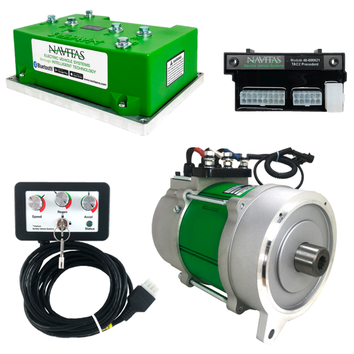
Vendor: Club Car Navitas AC Conversion Kit for Precedent / Onward / Tempo - CAN enabled

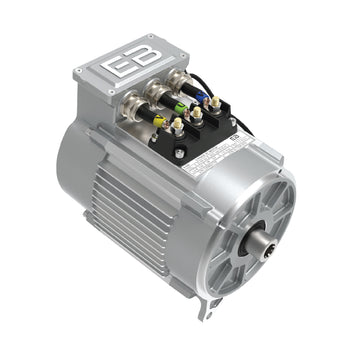
Vendor: Club Car DS EB Power Eco System AC Conversion Kit by Eco Battery
Vendor: Club Car DS Navitas AC Conversion Kit - CAN enabled

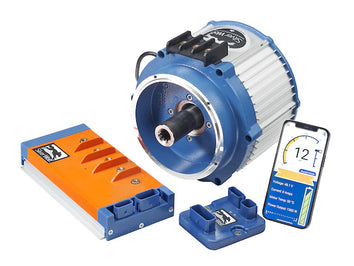
Vendor: TEEKON 9kW AC Conversion Kit for EZGO TXT | 840A Controller | FREE Heavy-Duty Solenoid Included


