



The Yamaha Speed Controller Deep Dive for Faster Laps
Why Yamaha Golf Cart Speed Frustrates So Many Owners — And What You Can Actually Do About It
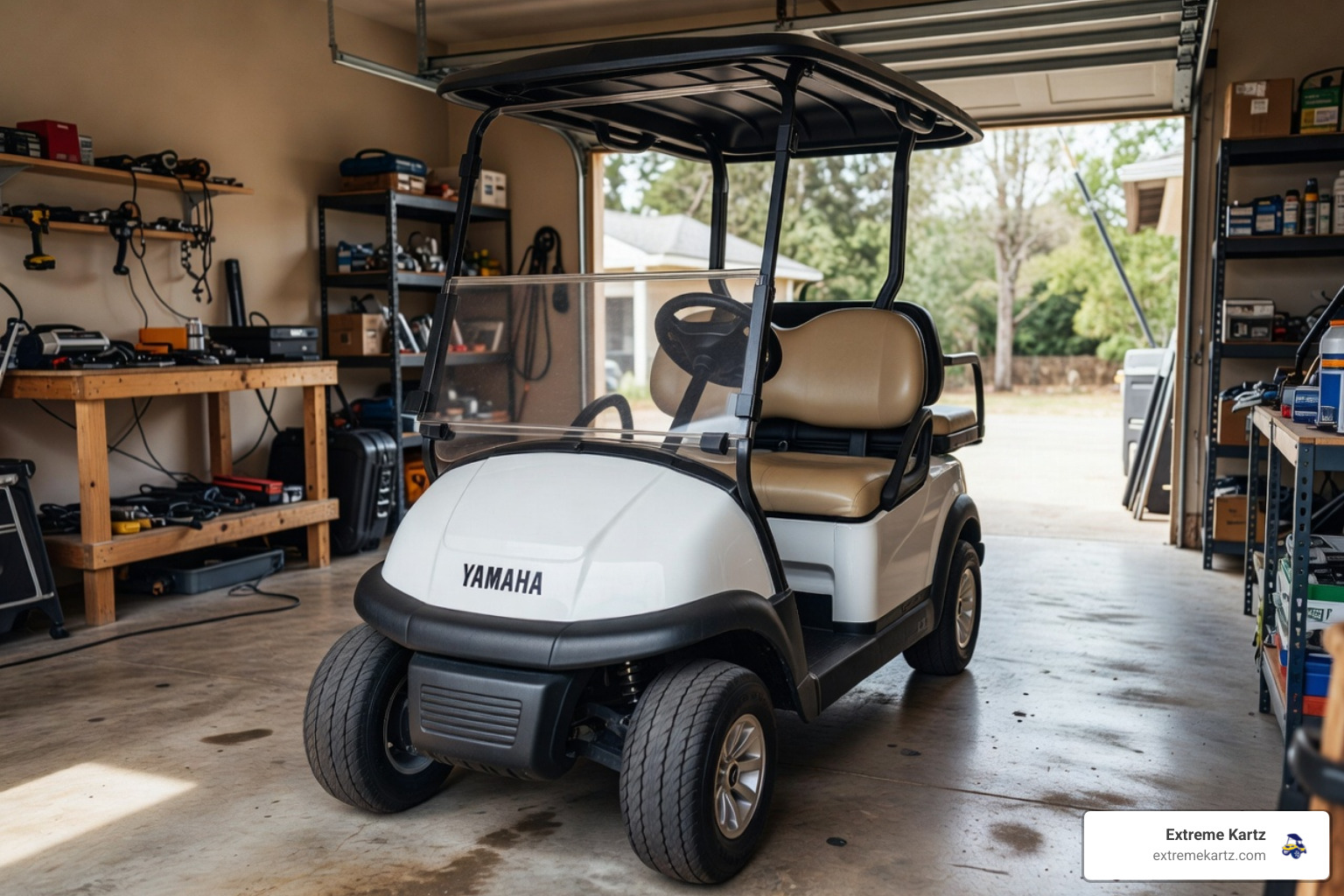
Yamaha golf cart speed is one of the most searched topics among cart owners — and for good reason. Stock Yamaha carts are built for safety and fleet reliability, not performance. That gap between what your cart does and what you want it to do is exactly what this guide addresses.
Here is a quick-reference breakdown of Yamaha golf cart speeds by model:
| Model | Stock Top Speed | Upgraded Speed (PTV/Aftermarket) |
|---|---|---|
| Yamaha G29 / Drive (Electric) | 10-11 mph | 19 mph (PTV code) / 23-25 mph (aftermarket) |
| Yamaha Drive2 Fleet | 15 mph (24 km/h) | Varies with upgrades |
| Yamaha Drive2 PTV (EFI / AC) | 19 mph (31 km/h) | Higher with governor/gear mods |
| Yamaha Drive2 PTV (PowerTech Li) | 15 mph (24 km/h) | Varies with upgrades |
| 2008 Yamaha YDRE (Electric) | 16 mph | 23-25 mph (motor + controller swap) |
The short answer: Most stock Yamaha electric carts top out between 10 and 16 mph. A dealer-installed PTV speed code can push a G29 to 19 mph for around $190-$290 in service costs. For speeds above that, you are looking at aftermarket controllers, motor upgrades, or battery improvements.
The frustration is real. One G29 owner in a Florida retirement community was only getting 8 mph out of a 2014 cart with original Trojan batteries — well below even the stock 10-11 mph spec. That kind of underperformance has multiple causes, and untangling them is exactly what this guide is built for.
This guide walks you through every level of Yamaha speed improvement — from a simple dealer programming visit to full controller and motor swaps — so you can make the right call for your cart, your budget, and your use case. All our performance kits ship in 1-2 business days.
I'm Martin Davis, owner of Extreme Kartz, and I've spent years helping cart owners across all 50 states navigate the real-world tradeoffs of Yamaha golf cart speed upgrades — from PTV programming questions to full AC conversion builds. With that background, this guide reflects what actually works in practice, not just what looks good on a spec sheet.
Optimizing Yamaha Golf Cart Speed: Factory Specs and Performance Limits
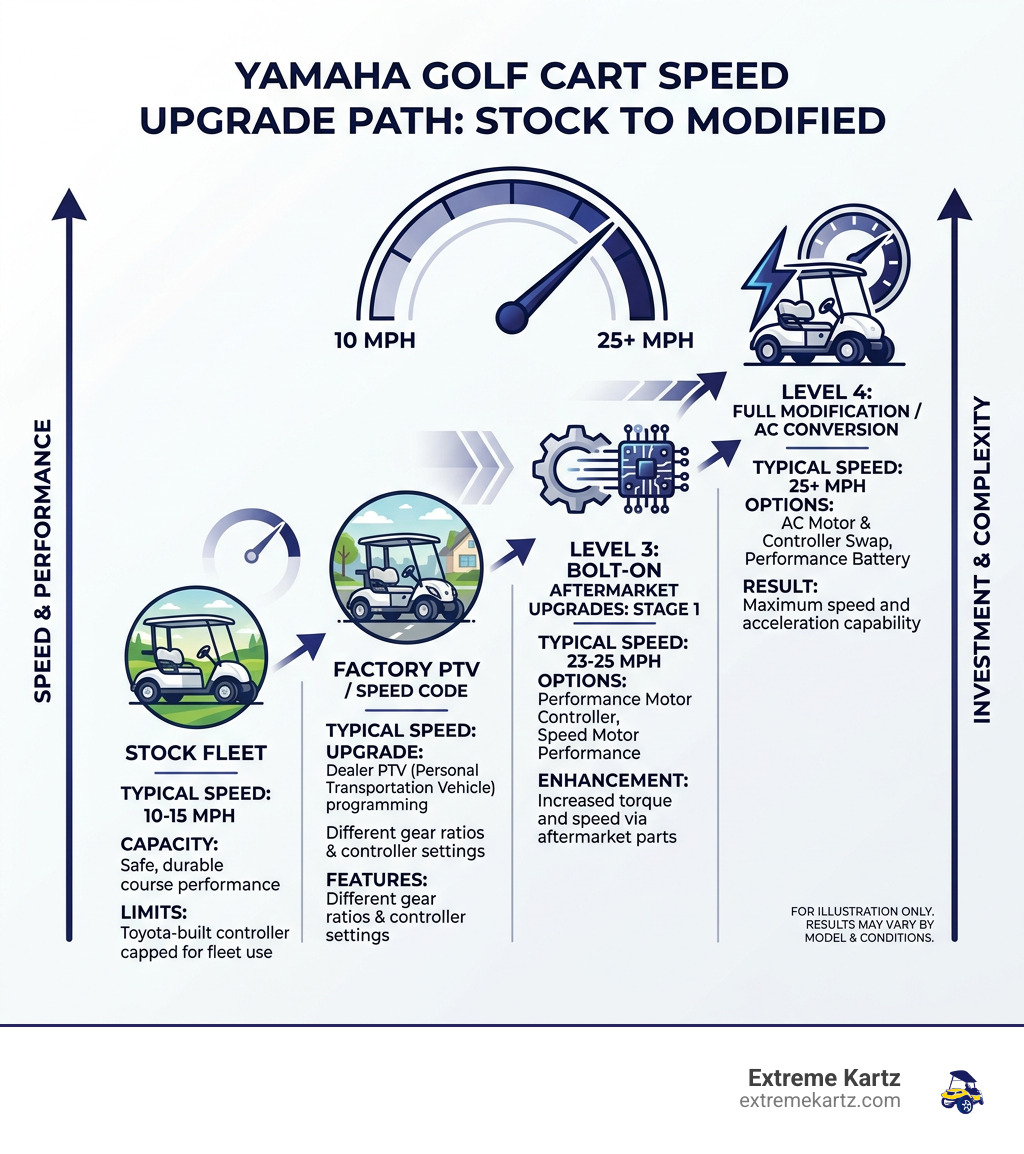
When we look at Yamaha golf cart speed, we have to start with the "Fleet" vs. "PTV" distinction. Yamaha designs their Fleet models—the ones you typically see at a golf course—to be incredibly durable but strictly limited. According to the Yamaha Golf Car Official Site, a standard Drive2 Fleet model is capped at 15 mph. This is a hard limit programmed into the Toyota-built motor controller to ensure safety on the course and longevity of the components.
On the other hand, the PTV (Personal Transportation Vehicle) models are designed for neighborhood use. These models, like the QuieTech EFI (gas) and PowerTech AC (electric), come from the factory with a 19 mph top speed. This is achieved through different gear ratios and controller settings.
Understanding Stock Controller Limitations
The stock controller in a Yamaha G29 or Drive2 is essentially a "gatekeeper." Even if your motor is capable of spinning faster, the controller restricts the electrical flow to keep you within factory RPM limits.
For owners of the G29 (2007–2016), there is an official "PTV Speed Code" upgrade. A Yamaha dealer can request a specific code from Yamaha based on your cart's unique serial number. Once entered into the controller via a handheld programmer, it unlocks a top speed of 19 mph. While this is a reliable "factory-sanctioned" upgrade, it often costs between $190 and $300 (including service calls), and 19 mph remains the absolute ceiling for this method. If you want to hit 23-25 mph, the stock controller simply cannot get you there.
Identifying Your Yamaha Model for Speed Upgrades
Before you buy a single part, we need to know exactly what you’re driving. Yamaha models are often referred to by "G" designations (G2, G9, G16, G22, G29).
- G29 / Drive: Produced from 2007 to 2016. The electric versions are known as YDRE.
- Drive2: The current generation, featuring EFI gas engines or AC electric motors.
Finding your controller is the first step in diagnosing speed issues or planning an upgrade. You can find our detailed guide on golf cart controller location detective: ezgo yamaha and club-car-locations revealed to help you pinpoint exactly where your hardware is hidden.
The Impact of Tire Size on Speed
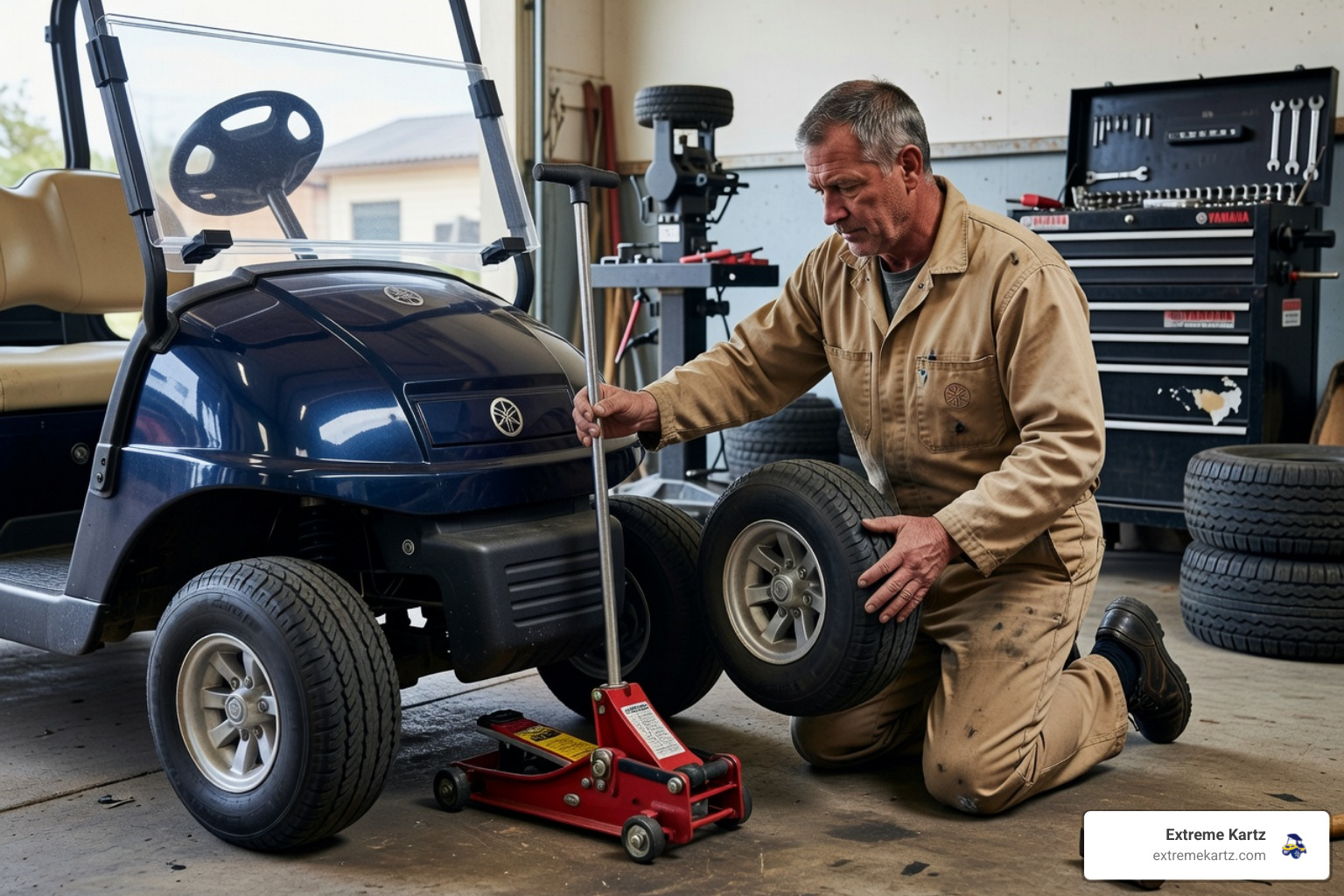
A common "hack" for increasing Yamaha golf cart speed is changing the tire diameter. Most stock Yamaha carts come with 18-inch tires (18x8.5-8). Upgrading to a 20-inch tire, such as a 205/65-10, can provide a 1-3 mph boost without any other modifications.
This works because a larger tire has a greater rolling circumference; for every rotation of the motor, the cart travels further. However, there is a trade-off: torque. Larger tires make the motor work harder to get the cart moving, which can lead to slower acceleration and struggling on hills. To compensate for this, some owners install 8:1 high-speed gears, though this further reduces climbing power.
Upgrading Yamaha Golf Cart Speed with Aftermarket Controllers
If you want to move past the 19 mph barrier, an aftermarket controller is the most effective solution. Brands like Navitas and Alltrax have revolutionized how we handle Yamaha golf cart speed.
These controllers (available in 440 Amp and 600 Amp versions) replace the restrictive factory unit. These kits ship in 1-2 business days. The benefits are massive:
- Bluetooth Programming: Many modern controllers allow you to adjust your top speed and acceleration curves directly from a smartphone app.
- On-the-Fly Programmers: These are physical knobs you can mount to your dash to dial speed up for the street or down for the kids.
- Higher Voltage Support: Most aftermarket units can handle 48V or even 72V systems, paving the way for lithium upgrades.
To understand how these units function as the "brain" of your cart, check out our article on golf cart speed controllers: a basic understanding of controllers.
High-Performance Motor Swaps and AC Conversions
Sometimes, the controller isn't the only bottleneck. Older "Series" motors or early "Regen" motors have physical RPM limits. Replacing a stock motor with a high-performance unit like an Admiral motor can yield a 20-25% increase in torque and peak horsepower of up to 8.0 HP.
For the ultimate performance leap, we often recommend an AC conversion kit. Modern Yamaha Drive2 PTVs use AC (Alternating Current) technology because it is more efficient and powerful than the older DC (Direct Current) systems. Converting an older G29 to an AC system can result in speeds of 25+ mph and incredible hill-climbing torque. You can see how different brands compare in our golf cart controller comparison: club-car ezgo and yamaha upgrades explained.
Upgrading Yamaha Golf Cart Speed via Battery Technology
You can have the best controller in the world, but if your batteries are "sagging," you won't hit your target speed. Lead-acid batteries are heavy and suffer from voltage drop—as you accelerate, the voltage dips, which limits top speed.
Switching to Lithium-ion batteries is a game-changer for Yamaha golf cart speed. Lithium batteries:
- Reduce Weight: You can shave 300+ lbs off your cart, making it naturally faster and more agile.
- Maintain Voltage: Unlike lead-acid, lithium maintains a steady voltage output until the battery is nearly empty, meaning your cart stays fast even at 20% charge.
To see if this is the right move for you, read our deep dive: will lithium batteries make my golf cart faster.
Safety, Maintenance, and Troubleshooting for High-Speed Carts
Before you start chasing 25 mph, your cart needs to be mechanically sound. Increasing speed puts more stress on every component, from the motor to the brakes.
Essential Pre-Upgrade Maintenance Checks
We always recommend a full "health check" before installing a high-amp controller:
- Cable Upgrades: Stock 6-gauge wires are too thin for high-performance controllers. We recommend 2 AWG cable sets to prevent overheating and power loss.
- Run/Tow Switch: Always flip this to "Tow" before touching any electrical components.
- Brake Adjustment: If your cart goes faster, it needs to stop faster. Ensure your rear drum brakes are adjusted and have plenty of shoe life left.
- Tire Pressure: Under-inflated tires increase rolling resistance, which kills your top speed and creates heat.
If you encounter issues during your build, our guide on golf cart controller troubleshooting common problems and how to fix them can help you identify if a problem is a loose wire or a faulty solenoid.
Risks of Excessive Speed Modifications
Speed is addictive, but it comes with risks. The primary enemy of your Yamaha motor is heat. Pushing a stock motor to 25 mph for long periods can lead to "valve float" in gas engines or "armature failure" in electric motors.
Furthermore, a cart traveling at 20 mph has four times the kinetic energy of a cart at 10 mph. This means your stopping distance is significantly increased. Always ensure your cart remains controllable and check local regulations regarding "Street Legal" or LSV (Low-Speed Vehicle) requirements if you plan on driving in public communities.
Frequently Asked Questions about Yamaha Speed
What are the limitations of a stock Yamaha golf cart controller?
The stock controller is programmed with a "speed floor" and "RPM ceiling." On a G29, the factory limit is usually 12-14 mph. Even with the dealer PTV code, you are limited to 19 mph. The internal components are also not designed to handle the high amperage required for high-torque situations like steep hills or heavy passenger loads.
Can I reach 25 mph on a stock Yamaha G29 motor?
It is possible with a high-output aftermarket controller (like a Navitas 440A or 600A), but you must monitor motor heat. While the stock motor can handle 25 mph on flat ground, doing so repeatedly or on hills will significantly shorten its lifespan. For consistent 25+ mph performance, a motor upgrade is highly recommended.
Why does my Yamaha golf cart slow down on hills after a speed upgrade?
This usually happens if you upgraded speed via high-speed gears or larger tires without upgrading the controller or motor. You have essentially "traded" your torque for top-end speed. To maintain speed on hills, you need more amperage, which requires a high-performance controller and heavy-duty battery cables.
Conclusion
Improving your Yamaha golf cart speed isn't just about going faster; it’s about making your cart more capable for your specific lifestyle. Whether you’re looking for a simple 19 mph PTV code update or a full-scale AC conversion with lithium power, the key is a system-based approach.
At Extreme Kartz, we specialize in ensuring fitment accuracy and performance. Don't just buy a part—buy a solution that works. For more ways to get the most out of your ride, check out our six proven tips to boost your golf cart performance.
If you’re ready to stop being the slowest cart in the neighborhood, reach out to us. We’ll help you find the exact controller, motor, or battery system that fits your Yamaha model and your speed goals. All our kits ship in 1-2 business days.


