


A–Z Guide to Golf Cart Speed Controller Options
What Are Golf Cart Speed Controllers — and Which One Do You Need?

Golf cart speed controllers are the brain of your electric cart's drivetrain. They regulate how much power flows from your batteries to your motor, directly affecting acceleration, top speed, hill-climbing ability, and overall ride smoothness.
If you're here to compare options quickly, here's the short version:
| Controller Type | Best For | Typical Amp Range | Approx. Speed Potential |
|---|---|---|---|
| Stock / OEM | Basic replacement | 225A–300A | ~14 MPH |
| Entry Performance (DC Series/Regen) | Street, neighborhood | 400A | 14–22 MPH |
| Mid-High Performance | Off-road, hills, loads | 500A–600A | 20–25+ MPH |
| AC Conversion Kit | Max speed, efficiency | 440A–600A+ | 25–35+ MPH |
The right choice depends on your drive system type (Series or Regen/Sepex), voltage (36V or 48V), and how you use your cart.
Most factory carts leave the dealership running around 14 MPH with a modest stock controller. Upgrading to a 400–600 amp unit — paired with the right motor and voltage setup — can push that number significantly higher while improving torque, throttle response, and battery efficiency at the same time.
This guide covers everything you need to make a confident, compatible buying decision: how controllers work, how to identify your drive type, which amperage fits your goals, and which brands deliver real-world results.
I'm Martin Davis, owner of Extreme Kartz, and I've spent years helping cart owners across all 50 states navigate golf cart speed controllers — from basic OEM replacements to full AC conversion builds. Let's break it all down so you can find exactly what fits your cart and your goals.
Understanding Golf Cart Speed Controllers and How They Work
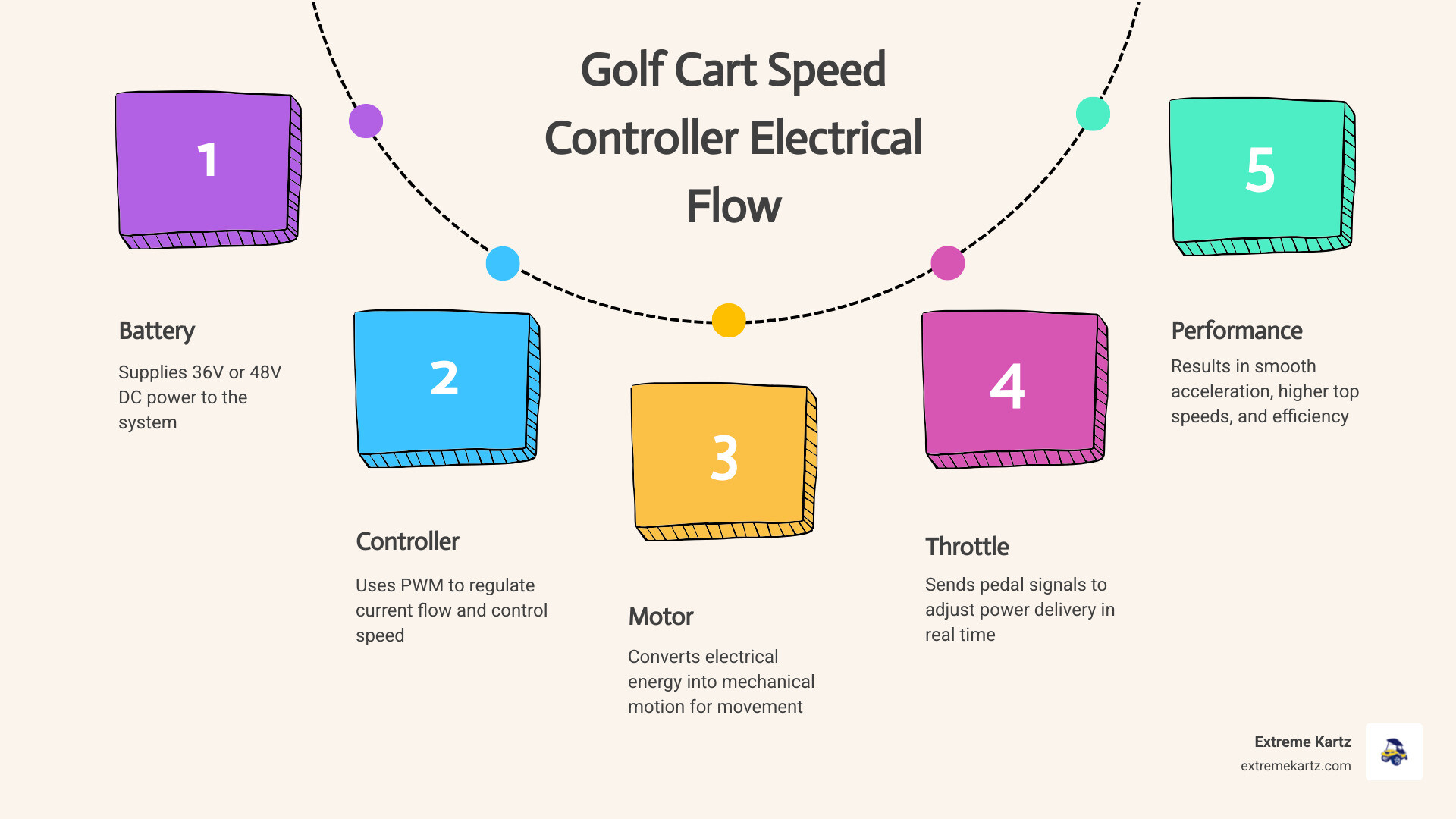
At its core, a golf cart speed controller acts like a high-tech gatekeeper. When you press the accelerator pedal, you aren't just opening a valve; you are sending a signal to the controller to deliver a specific amount of current.
Modern golf cart speed controllers use a process called Pulse Width Modulation (PWM). Instead of simply lowering the voltage (which would waste massive amounts of energy as heat), the controller switches the full battery power on and off thousands of times per second. The longer the "on" pulses, the faster your motor spins. Most high-quality units operate at high frequencies (around 15.6kHz), which eliminates that annoying motor hum and improves energy efficiency.
Beyond just speed, these units provide critical safety and longevity features. Most performance controllers include thermal protection, which automatically throttles back power if the unit gets too hot, and under-voltage protection to prevent you from "killing" your battery pack by drawing it too low. For a deeper dive into these mechanics, check out our guide on Golf Cart Speed Controllers: A Basic Understanding of Controllers.
Identifying Your Drive System: Series vs. Regen
Before you can shop for Golf Cart Controllers, you must know what language your cart speaks. There are two primary DC drive systems: Series and Regen (also known as Sepex or Shunt).
- Series Drive: These are the "tractors" of the golf cart world. They are built for torque and raw pulling power. They do not have regenerative braking (the cart won't slow itself down when you let off the gas).
- Regen / Sepex Drive: These are "people movers." They use a speed sensor to monitor the motor and offer regenerative braking. They are generally easier to program for higher top speeds but traditionally had less low-end torque than series carts.
| Feature | Series Drive | Regen / Sepex Drive |
|---|---|---|
| Tow/Run Switch | No (usually) | Yes |
| F&R Switch Location | Mechanical lever (usually by legs) | Rocker switch (usually on dash) |
| Motor Terminals | 4 large terminals (all same size) | 2 large, 2 small terminals |
| Best Use Case | Heavy hauling, hunting, steep hills | Neighborhood cruising, speed |
| Speed Sensor | No | Yes |
Identifying your setup is the most important step in choosing the right controller. If you buy a Regen controller for a Series cart, it simply will not work.
The Role of Voltage in Controller Performance
Voltage is the "pressure" in your electrical system. Most older carts run on 36V (six 6-volt batteries), while modern or high-performance carts run on 48V (six 8-volt or four 12-volt batteries).
One of the most effective upgrades we see at Extreme Kartz is the 36V to 48V conversion. A 36V motor run on 48V produces a 25-33% increase in torque and speed. This happens because the higher voltage allows the motor to spin faster while actually reducing the amperage draw and heat for the same amount of work.
When selecting golf cart speed controllers, many modern units (like those from Alltrax or Navitas) are "multi-voltage," meaning they can handle both 36V and 48V. This is a huge advantage if you plan to upgrade your battery pack to 48V or Lithium in the future. You can see some of these high-performance options at Plum Quick Motors.
Choosing the Right Amperage for Your Performance Goals
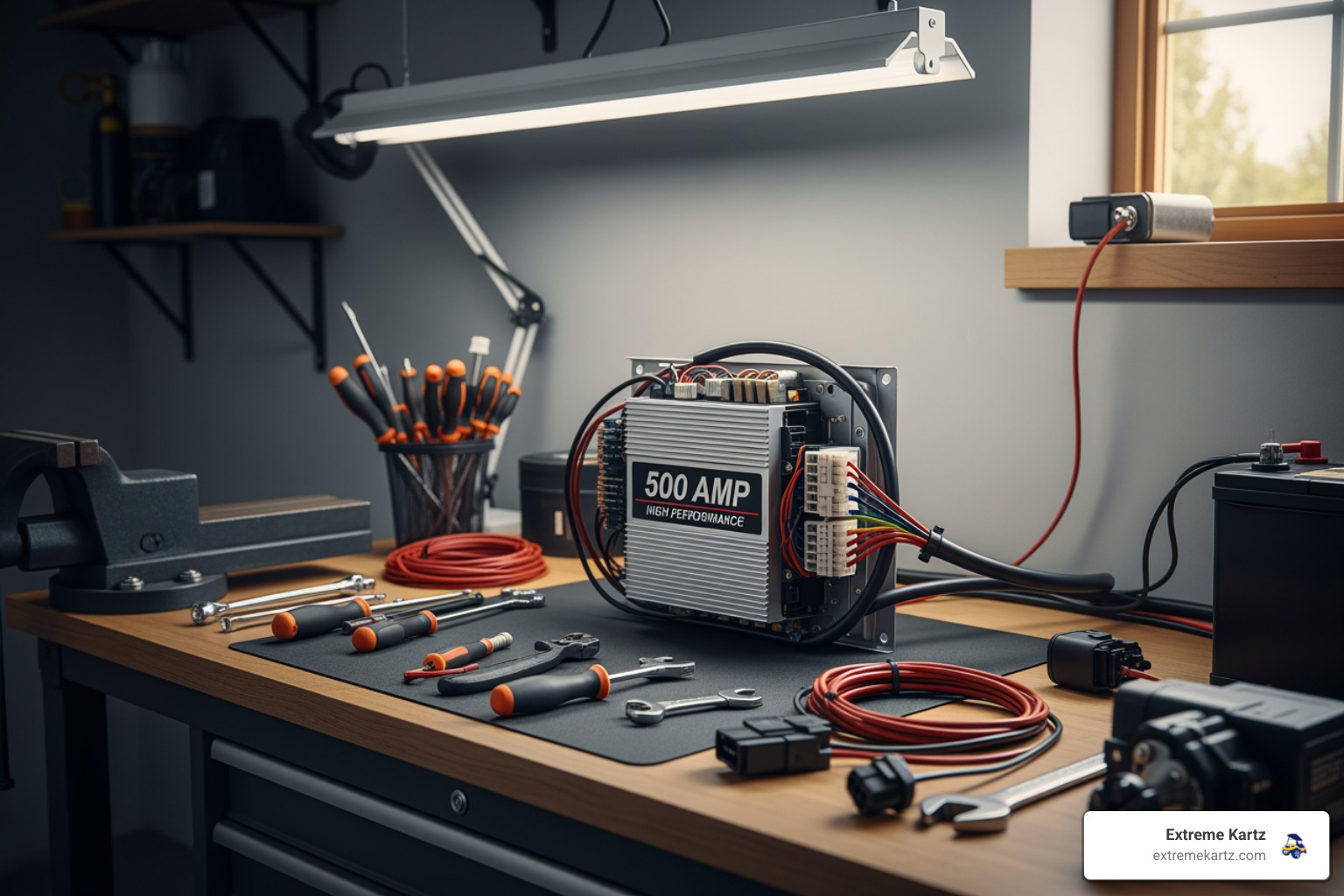
Amperage is the "volume" of electricity. While voltage gives you speed, amperage gives you torque—the "grunt" needed to get a heavy cart moving or to climb a steep trail.
If you have a lifted cart with larger tires, you have effectively changed the "gear ratio" of your cart. Adding larger tires normally adds between 2-3 MPH, but it also puts a much higher strain on the controller. This is why we almost always recommend an amperage upgrade when you add a lift kit and 20"+ tires.
Selecting Amperage for Golf Cart Speed Controllers
Matching the amp rating to your specific use case is the best way to ensure you don't overspend or underperform.
- 300 Amp Controllers: These are essentially stock replacements. They provide standard factory speeds (about 14 MPH) and are ideal for flat pavement and standard-sized tires.
- 400 Amp Controllers: This is the "sweet spot" for most owners. A 400 amp controller will handle most street and campground applications in both 36V carts and 48V conversions. You'll see better hill climbing and a noticeable boost in acceleration.
- 500 Amp Controllers: This is the standard for Club Car Golf Cart Controllers on lifted carts. 500 amps handles the biggest Sepex/Regen drive motors and provides significant torque for carts with rear seats and heavy passenger loads.
- 600 to 700 Amp Controllers: These are reserved for high-performance Series motors or extreme off-road builds. They provide maximum torque (up to a 45% increase) and are necessary for hunting buggies or work carts hauling heavy trailers.
Learn more about these specific ratings in our detailed controller overview.
Supporting Upgrades for High-Amp Systems
You can't just drop a 600-amp controller into a stock cart and expect it to survive. The rest of your "plumbing" needs to handle the increased flow.
- Heavy-Gauge Cables: Factory 6-gauge wires will get hot and melt under high-amp loads. We recommend 4 AWG or even 2 AWG wires for any controller 400 amps or higher.
- High-Amp Solenoid: The solenoid is the heavy-duty relay that clicks when you hit the pedal. A stock solenoid will eventually weld itself shut if forced to pass 500 amps.
- Lithium Batteries: If you are moving to a high-amp controller, a lithium battery conversion is a natural partner. Lithium batteries can discharge higher amounts of current more consistently than lead-acid, allowing your controller to perform at its peak.
Top Brands and Performance Upgrade Options
In May 2026, the market for golf cart speed controllers is dominated by a few key players, each offering unique advantages for Club Car, EZGO, and Yamaha owners. For a side-by-side breakdown, see our Golf Cart Controller Comparison.
- Alltrax: Known for being rugged and "Made in the USA." These controllers are favorites for Series carts and off-roaders because they are incredibly durable and highly programmable via a USB connection to a laptop.
- Navitas: The leader in user-friendly technology. Navitas controllers feature Bluetooth connectivity, allowing you to tune your cart's top speed, regenerative braking, and acceleration curves directly from your smartphone.
- Curtis: The industry standard for OEM replacements. If you want your cart to run exactly like it did the day it left the factory, a Curtis controller is a reliable, "no-fuss" choice.
DC-to-AC Conversion Kits
If you want the absolute pinnacle of performance, you aren't just looking for a controller; you're looking for an AC Conversion Kit.
Standard DC motors use brushes that create friction and heat. AC (Alternating Current) induction motors are brushless, more efficient, and much faster. Converting from a DC system to an AC system (like the Navitas 5KW kits) can take a standard 14 MPH cart and push it to 30-35+ MPH. These kits include both the motor and the controller, providing a perfectly matched system for maximum reliability.
Programmable Features of Modern Controllers
The days of "you get what you get" are over. Modern performance controllers allow you to customize the driving experience:
- On-the-Fly Dash Knobs: Some Navitas units allow you to install physical knobs on your dash to limit speed (great for when the grandkids are visiting) or increase regen braking.
- Lock-Out Modes: You can program a "valet mode" to ensure the cart never exceeds a safe speed when someone else is driving.
- Diagnostics: Instead of guessing why the cart won't move, you can open an app and see real-time error codes, battery voltage, and motor temperature.
Installation, Troubleshooting, and Maintenance

Installing a new controller is what we call a "Level 2" upgrade. If you can use a wrench and follow a diagram, you can do this. Most modern kits are "plug-and-play," meaning they use the same harness connectors as your factory unit.
Signs of a Failing Golf Cart Speed Controller
How do you know if your controller is actually the problem? Look for these symptoms:
- Stuttering or Hesitation: The cart jerks when you take off or feels like it's "missing" at high speeds.
- The "Click" But No "Go": You hear the solenoid click, your batteries are fully charged, but the motor won't turn.
- Decreased Performance: The cart slowly loses its ability to climb hills it used to handle easily.
- Smell or Heat: If you smell burning plastic or the controller case is too hot to touch after a short drive, internal components are likely failing.
For a step-by-step diagnostic guide, visit our Troubleshooting Page.
Diagnostic Steps for Controller Issues
Before buying a replacement, perform these three checks:
- The Multimeter Test: Check the voltage at your battery pack. If it's healthy, check the voltage at the controller's B+ and M- terminals while the pedal is depressed.
- Solenoid Check: If the solenoid doesn't click, the controller might not be getting the "wake up" signal.
- Wiring Inspection: Look for "green crusties" (corrosion) on your terminals. High resistance from a dirty wire can mimic a failing controller.
Frequently Asked Questions about Golf Cart Speed Controllers
Can I run a 36V motor on a 48V controller?
Yes, provided the controller is rated for 48V. Most DC motors are surprisingly resilient. Running a 36V motor at 48V is a common way to get a 25-33% boost in torque and speed. Just be sure to monitor motor heat if you are doing heavy climbing.
Should I repair or replace a damaged controller?
While some minor issues like loose sensors can be fixed, internal failures in a solid-state controller are usually not worth repairing. Modern golf cart speed controllers are sealed units; opening them often compromises their weatherproofing. Replacement with an upgraded unit is almost always the better long-term investment.
How much speed will a high-performance controller add?
On a stock cart, a high-amp controller mostly adds torque and acceleration. To see a significant speed increase (beyond the standard 14 MPH), you usually need to combine the controller with larger tires, a high-speed motor, or a voltage increase. Converting from 36V to 48V typically increases speed by 3-4 mph alone.
Conclusion
Upgrading your golf cart speed controllers is the single most effective way to transform your cart from a sluggish "golf course only" vehicle into a high-performance machine. Whether you are looking for the smartphone tuning of a Navitas unit or the rugged reliability of an Alltrax, the key is ensuring compatibility with your specific drive system.
At Extreme Kartz, we don't just sell parts; we provide system-based solutions. All our kits ship in 1-2 business days, and we want to make sure your controller, motor, and battery setup work in perfect harmony.
Confused about which unit fits your Club Car, EZGO, or Yamaha?
Contact our team for a personalized golf cart controller comparison and fitment recommendation. We’ll help you get the right "brain" for your cart so you can hit the road (or the trail) with confidence.
Related Products

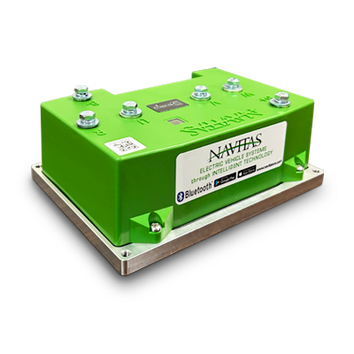
Vendor: EZGO RXV Navitas Controller Kit - 600 amp or 440 amp


Vendor: Navitas 440-Amp 36/48 Volt Series Controller Kit E-Z-GO

Vendor: Navitas TAC2 600 A E-Z-GO L6/S4 72 V Control W/ Module


Vendor: Navitas Controller On-the-Fly Programmer All Models


