


Unleash the Power: A Guide to AC Drive Golf Carts
Why AC Drive Golf Carts Are Changing the Way People Ride
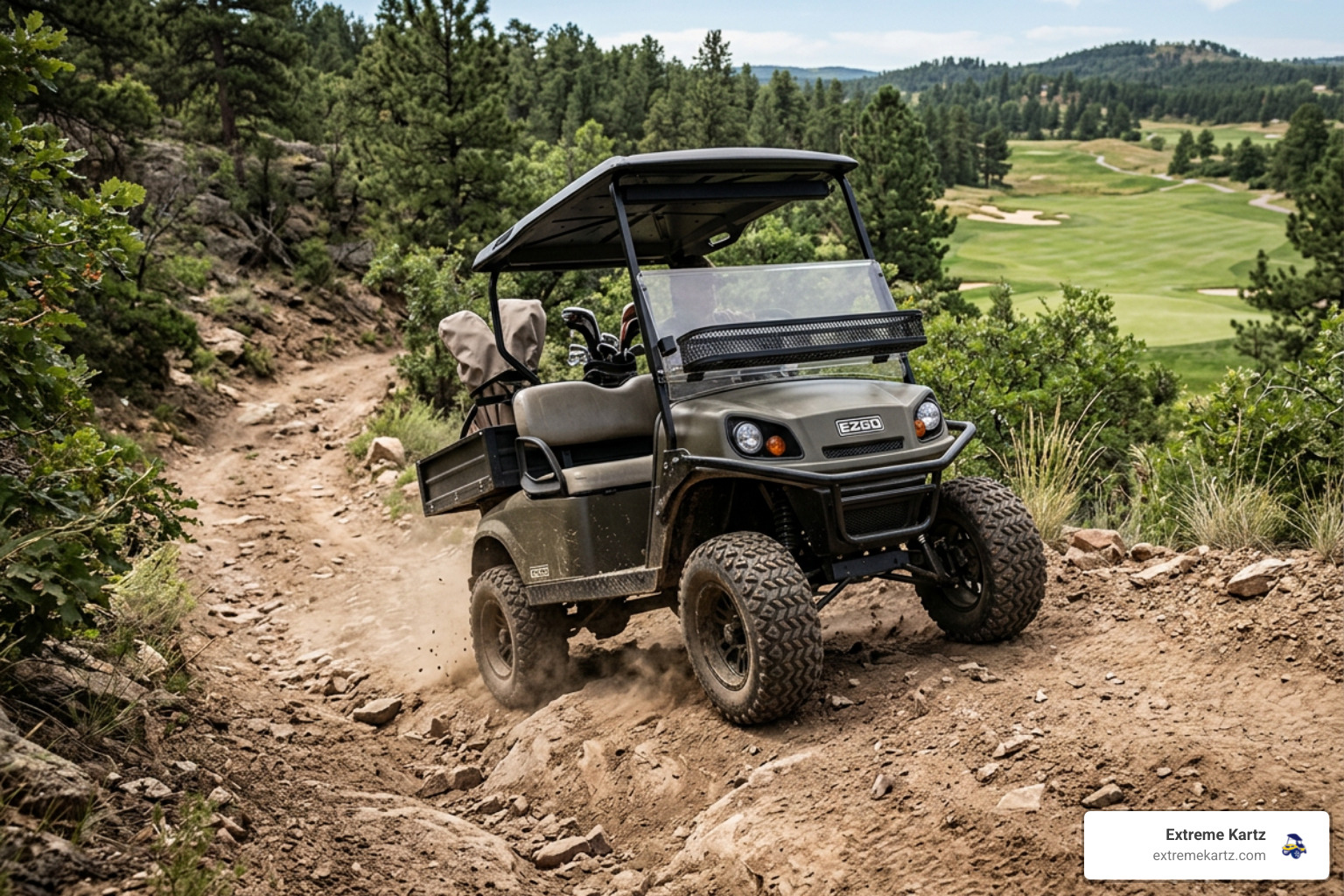
An AC drive golf cart uses an alternating current motor and controller to power the wheels — and it's a significant step up from the traditional DC systems most older carts use.
Here's a quick overview of what that means for you:
| Feature | AC Drive Golf Cart |
|---|---|
| Motor type | Brushless induction (3-phase AC) |
| Typical top speed | 30+ mph with aftermarket controller |
| Torque advantage | Up to 30% more climbing torque vs. DC |
| Regenerative braking | Yes — recovers energy while slowing down |
| Maintenance | Lower — no brushes or commutator to replace |
| Best battery pairing | Lithium-ion (works with lead-acid too) |
| Popular brands | E-Z-GO, Yamaha, Club Car (via conversion) |
If you own a golf cart and want more speed, better hill climbing, or longer battery life, upgrading to an AC drive system is one of the most impactful changes you can make.
DC motors have been the standard for decades. They work. But AC technology — now standard on factory carts from brands like Yamaha and E-Z-GO, and available as aftermarket kits from Navitas, Alltrax, and HPEVS — delivers smoother power, less heat, and more efficiency across the board.
Whether you're navigating steep terrain on your property, cruising a neighborhood, or pushing a cart to its performance limits, the shift to AC changes what's possible.
I'm Martin Davis, owner of Extreme Kartz and a hands-on resource for golf cart owners navigating upgrades like AC drive golf cart conversions, lithium battery installs, and controller replacements. In this guide, I'll walk you through everything you need to know — from how the technology works to which kits fit your specific cart.
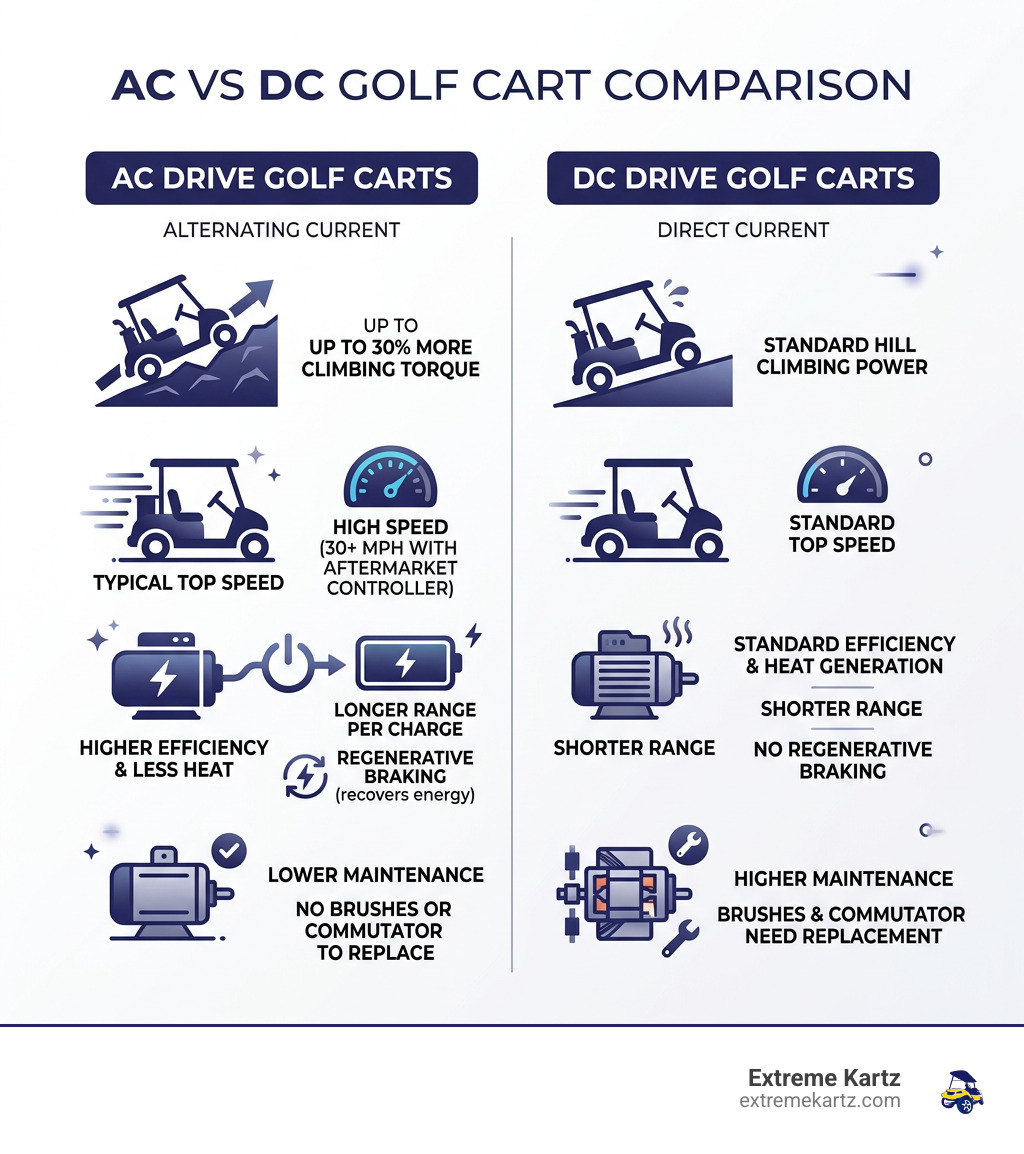
Understanding the AC Drive Golf Cart System
To understand why an AC drive golf cart is so much more capable than its predecessors, we have to look under the seat. For years, the industry relied on DC (Direct Current) motors. While reliable, DC motors are limited by physical friction and heat. AC (Alternating Current) systems utilize a 3-phase induction motor that completely changes the performance profile of the vehicle.
| Specification | Traditional DC Motor | Modern AC Induction Motor |
|---|---|---|
| Power Delivery | Direct Current (Steady flow) | 3-Phase Alternating Current |
| Internal Parts | Brushes and Commutator | Brushless (Stator and Rotor) |
| Efficiency | Lower (Heat loss through friction) | Higher (Lower operating temps) |
| Speed Control | Voltage-based | Frequency-based (More precise) |
| Braking | Mechanical/Friction | Regenerative (Energy recovery) |
The core of the system is the brushless design. In a DC motor, physical "brushes" press against a spinning commutator to transfer electricity. This creates friction, carbon dust, and heat. An AC motor uses a stator (stationary part) and a rotor (rotating part) that interact via electromagnetic fields. No physical contact means no friction, which translates to a motor that stays cooler and lasts significantly longer.
If you are curious about how the electronics manage this transition, you can check out our basic understanding of controllers.
How AC Motors Differ from Traditional DC Setups
The primary difference lies in how the motor handles energy. DC motors are excellent for flat terrain and simple "point A to point B" travel. However, because they rely on mechanical brushes, they have a "ceiling" for performance. As you try to push a DC motor faster or up steeper hills, the friction and heat increase exponentially, often leading to burnt-out components or "limp mode."
The AC drive golf cart eliminates these bottlenecks. By using alternating current, the system can modulate the frequency of the electricity to control speed and torque with surgical precision. This allows for smoother acceleration and, more importantly, much higher torque at low speeds—exactly what you need when you're starting on a hill with four passengers and a cooler.
The Role of the AC Controller in Performance
The controller is the "brain" of the operation. Since batteries provide DC power, the AC controller’s job is to take that DC energy and convert it into 3-phase AC power for the motor. This isn't just a simple conversion; the controller constantly monitors the motor's temperature, RPM, and throttle position to deliver the exact amount of power needed.
Modern units, like the 48V AC systems found in E-Z-GO models, use this technology to provide consistent speed regardless of the terrain. Whether you are going up a hill or down, the controller maintains the set speed, providing a much more "automotive" feel than the jerky response of older carts.
Key Advantages of Upgrading to an AC Drive Golf Cart

Why are so many owners making the switch? It comes down to three things: speed, torque, and efficiency. When we talk about "unleashing the power," we aren't just using a marketing slogan. The physical capabilities of an AC drive golf cart are objectively superior to DC setups in every measurable category. To dive deeper into the technical "why," read our article on why AC motors are the future.
Superior Torque and Hill Climbing Power
Torque is the force that gets the cart moving and keeps it moving under load. Research shows that AC motors provide up to 30% more climbing torque compared to DC systems. This is a game-changer for owners in hilly communities or those using their carts for utility work.
For example, the Yamaha Drive2 AC electric powertrain produces a 4.4 hp (3.3 kW) output rating. While that number might seem modest, the way an AC system applies that power means the cart won't "bog down" halfway up a steep driveway. You get consistent, linear power from 0 mph all the way to your top speed.
Regenerative Braking and Increased Range
One of the coolest features of an AC drive golf cart is regenerative braking. When you let off the accelerator, the motor reverses its role and becomes a generator. It uses the cart's momentum to create electricity, which is then fed back into the batteries.
This does two things:
- Increases Range: You can see a significant boost in how many miles you get per charge.
- Saves Your Brakes: The motor does most of the "braking" work, meaning your mechanical brake pads last much longer.
Systems like E-Z-GO’s IntelliBrake technology even include an automatic parking brake that engages the moment you stop. No more clicking the pedal and hoping it holds! You can find these features on factory models at Yamaha Golf Car.
Popular AC Conversion Kits and Controllers
If you have an older cart, you don't have to buy a brand-new $15,000 vehicle to get AC performance. Aftermarket conversion kits allow us to "gut" the old DC system and install a high-performance AC motor and controller.
Navitas, EB Power, Silverwolf and Alltrax: Leading the Aftermarket
In aftermarket upgrades, four names stand above the rest: Navitas, EB Power, Silverwolf and Alltrax.
Navitas: Known for popular AC conversion kits and controllers, Navitas setups are often chosen for strong acceleration, better hill climbing, and easy tuning. Depending on the motor and controller combination, they can support 30mph+ performance on the right cart. Many kits are designed to simplify installation with model-specific connectors and harness-friendly layouts.
Alltrax: Alltrax AC controllers are built for high peak output and strong off-the-line response. That makes them a solid option for carts that need extra torque for steep terrain, larger tires, or heavier loads. They are also widely recognized for durable construction and performance-focused programming.
EB Power: EB Power AC systems are another option for owners looking for a conversion that balances everyday drivability with upgraded power. These setups are typically aimed at improving throttle response, torque delivery, and overall efficiency compared with older DC systems.
Silverwolf Teekon: Silverwolf Teekon controller systems are often considered by enthusiasts who want more control over tuning and performance behavior. They can be a good fit for custom builds where adjustability, stronger acceleration, and system matching with upgraded batteries are part of the goal.
For those looking for specific brand fitment, check out our comparison of Club Car, EZGO, and Yamaha upgrades.
Customization via Bluetooth and On-The-Fly Programmers
The days of turning screws on a motor to adjust speed are over. Modern AC controllers come with Bluetooth connectivity and smartphone apps (available for iOS and Android).
Through these apps, you can:
- Monitor Battery Life: See real-time voltage and amp draw. (only some applications)
- Adjust Top Speed: Set a "valet mode" or "kid mode" to limit speed to 10 mph, then unlock it to 30 mph for yourself.
- Fine-tune Acceleration: Choose between a "smooth" start for the golf course or a "street" start for maximum "oomph."
- On-The-Fly (OTF) Programmers: Many kits include a dash-mounted knob that lets you adjust speed, regenerative braking, and acceleration while you're actually driving.
Compatibility and Battery Requirements for AC Systems
Before you jump into a conversion, we need to talk about compatibility. Most AC kits are designed for 48V systems, though some high-end setups can handle up to 72V. If you're running an older 36V cart, you'll almost certainly need to upgrade your battery bank and solenoid to handle the increased power of an AC drive golf cart.
Why Lithium Batteries Excel with AC Drive Systems
While AC systems work with traditional lead-acid batteries, pairing them with Lithium-ion is like putting rocket fuel in a jet. AC motors can pull a lot of "amps" (current) very quickly. Lead-acid batteries often suffer from "voltage sag" when you hit the accelerator, which limits the motor's performance.
Lithium batteries, however, can discharge massive amounts of energy without the voltage dropping. This means your cart stays fast even when the battery is at 20% charge. Plus, the 300-lb weight reduction from removing lead-acid batteries further improves the power-to-weight ratio. For a breakdown of which batteries work best with these systems, see our guide on the best lithium batteries for Navitas and Alltrax.
Installation Considerations and Professional Support
Most of the kits we provide at Extreme Kartz are designed for the "handy DIYer." They include mounting plates, harness adapters, and detailed instructions. All kits ship in 1-2 business days. However, because you are dealing with high-voltage electricity and heavy components, some owners prefer professional installation.
Key things to remember:
- Wiring Gauge: You’ll likely need to upgrade to 2-gauge or 4-gauge battery cables to handle the higher current.
- Solenoid: A heavy-duty solenoid is a must to prevent the "welding" of contacts under high load.
- Support: We prioritize fitment accuracy, so if you're unsure if a kit fits your serial number, just ask us!
Frequently Asked Questions about AC Systems
Is an AC drive golf cart conversion worth the investment?
The short answer is: yes, if you value performance. A full DC-to-AC conversion kit typically costs between $1,500 and $2,500. While that's an investment, it effectively "future-proofs" your cart. You get a brand-new motor with no wearable brushes, a modern programmable controller, and a massive jump in resale value. If you're tired of your cart slowing down to a crawl on every hill, the value of an AC conversion is immediately apparent.
Can I install an AC kit on my older golf cart?
Absolutely. We specialize in kits for the "Big Three":
- E-Z-GO: TXT's are prime candidates. Check out our complete guide for EZGO TXT AC conversions.
- Club Car: Precedent, Onward, and Tempo models (specifically those with IQ or Excel systems) have excellent plug-and-play options.
- Yamaha: G29 (The Drive) and Drive2 models can be easily converted, often replacing the stock Moric or Toyota controllers with much more powerful Alltrax or Navitas units.
How an AC drive golf cart impacts battery life and range?
Because AC motors are more efficient (less energy wasted as heat), they generally provide better range than a DC motor of equivalent power. When you factor in regenerative braking—which can "put back" energy every time you slow down—many users see a 10-15% increase in total range. Additionally, because the motor runs cooler, there is less stress on the entire electrical system, which can extend the overall lifespan of your battery pack.
Conclusion
The shift toward the AC drive golf cart isn't just a trend; it's a fundamental upgrade in how these vehicles perform. By moving away from the friction and heat of DC motors, you gain a ride that is faster, stronger on hills, and significantly more efficient.
At Extreme Kartz, we don't just sell parts; we provide system-based solutions. We want to make sure the controller you buy matches your motor, and that your batteries can handle the load. Our goal is to reduce buyer confusion and ensure that when you hit the accelerator for the first time after an upgrade, you have a massive smile on your face.
Ready to upgrade your cart? Explore our AC Conversion Kits and find the right setup for your specific model and performance goals. Whether you want better hill-climbing, quicker acceleration, or more overall efficiency, the right AC system can completely change how your cart drives.
Related Products

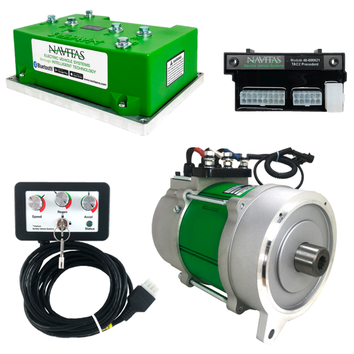
Vendor: Club Car Navitas AC Conversion Kit for Precedent / Onward / Tempo - CAN enabled

Vendor: EZGO TXT 48V Navitas AC Conversion Kit - CAN enabled


Vendor: Yamaha Drive/Drive2 Navitas AC Conversion Kit - CAN enabled

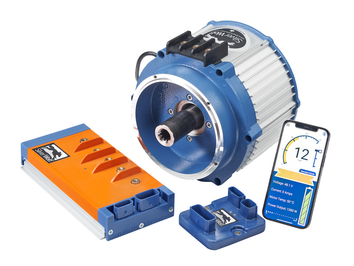
Vendor: TEEKON 9kW AC Conversion Kit for Club Car Precedent, DS & Onward | 840A Controller | FREE Heavy-Duty Solenoid Included


