


48V Lithium Golf Cart Battery: 36V vs 48V vs 72V Compared (2026)
48V Lithium Golf Cart Battery: 36V vs 48V vs 72V Compared (2026)
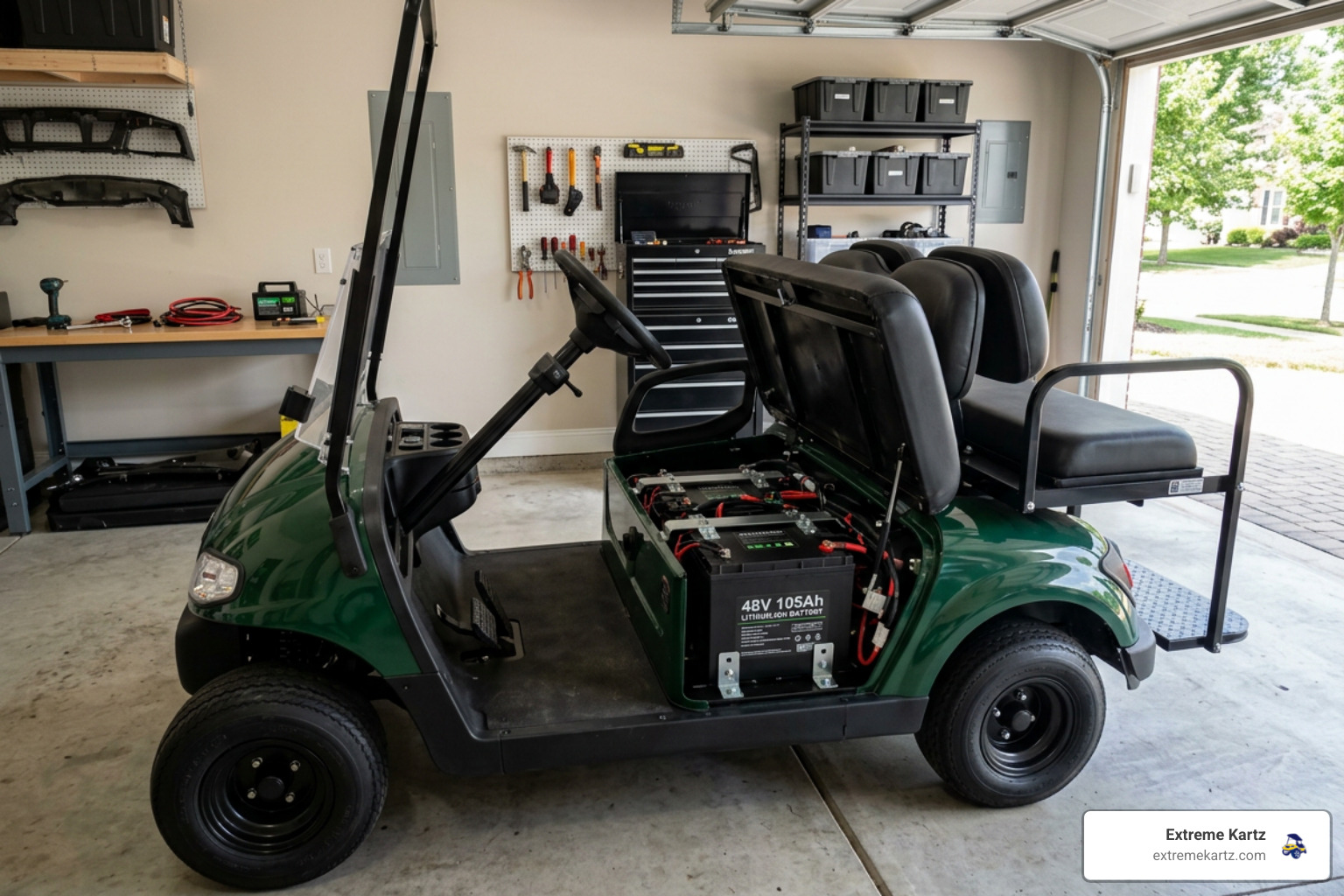
A 48V lithium golf cart battery is the best voltage choice for most modern carts because it gives you the strongest balance of range, torque, efficiency, and cost. A 36V system can still work for older flat-ground carts, and a 72V system makes sense for aggressive performance builds, but 48V is the sweet spot for everyday Club Car, EZGO, Yamaha, ICON, and neighborhood-use carts.
But voltage is not just a label on the battery case. It affects how hard your motor can pull, how efficiently the controller moves power, how much weight you remove during a lithium conversion, and whether the rest of your cart’s electrical system can safely handle the upgrade.
Here’s the quick voltage comparison:
| Voltage | Best For | Typical Range | Key Benefit | Main Tradeoff |
|---|---|---|---|---|
| 36V | Older/legacy carts, flat terrain | 15–25 miles | Low cost, simple setup | Limited hill-climbing and load capacity |
| 48V | Most modern carts, daily use | 30–52+ miles | Best balance of power, range, and efficiency | Requires the right lithium charger and mounting kit |
| 72V | Performance builds, rough terrain | 50–80+ miles | Maximum speed and torque | Higher component cost and compatibility demands |
The short answer: If you own a modern Club Car, EZGO, Yamaha, ICON, or similar cart, a 48V lithium system is almost always the smartest upgrade path. It can cut battery weight by up to 70%, deliver 4,000–6,000+ charge cycles, maintain strong voltage under load, and eliminate watering or acid-corrosion maintenance.
This guide stays focused on voltage selection: how 36V, 48V, and 72V compare, which voltage fits your terrain and driving style, and why 48V lithium has become the clear standard for most cart owners.
I’m Martin Davis, owner of Extreme Kartz, and I’ve spent years helping cart owners across the country navigate 48V lithium golf cart battery conversions — from basic drop-in replacements to full custom builds. Below, I’ll break down exactly what the voltage numbers mean so you can choose the right system before you spend money on batteries, controllers, chargers, or accessories.
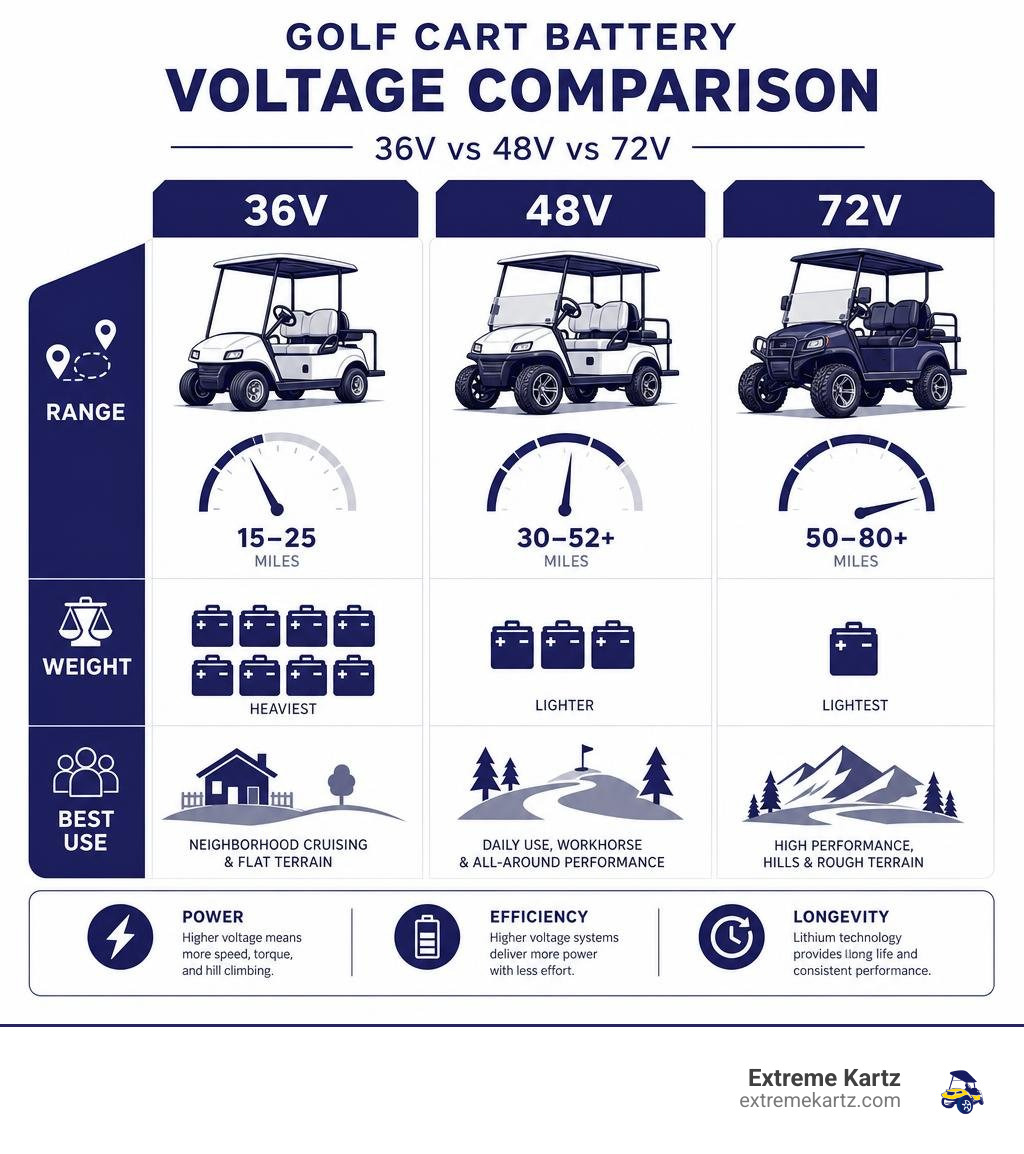
48V Lithium Golf Cart Battery vs 36V and 72V Systems
When we talk about golf cart performance, voltage is the foundation of the entire electrical system. It determines how much electrical pressure is available to move power through the controller and motor, which directly affects acceleration, hill climbing, load handling, and efficiency.
That does not mean “more voltage is always better.” The right voltage is the one that matches your cart’s motor, controller, terrain, passenger load, and budget.
| Performance Metric | 36V Lead-Acid / Lithium | 48V Lithium (LiFePO4) | 72V High-Performance Lithium |
|---|---|---|---|
| Acceleration | Moderate | Fast & responsive | Extreme / instant |
| Hill Climbing | Struggles on steep inclines | Strong, consistent power | Maximum torque |
| Energy Efficiency | 80–85% | 92–98% | 95–98% |
| Typical Battery Weight | ~300–400 lbs lead-acid | ~60–95 lbs lithium | ~120–150 lbs lithium |
| Best Terrain | Flat pavement or golf course paths | Neighborhoods, courses, moderate hills | Steep hills, heavy loads, off-road use |
| Upgrade Complexity | Lowest | Moderate and well-supported | Highest |
36V Systems: Legacy and Light Duty
Historically, 36V systems were the standard for older carts designed for golf courses, short neighborhood trips, and flat paved communities. These systems are usually powered by six 6V lead-acid batteries.
A 36V cart can be perfectly fine if your driving is light: one or two passengers, no steep hills, no oversized tires, and no heavy cargo. The limitation shows up when the cart is asked to pull more current than the system comfortably supports. Add four adults, a rear seat, hills, or soft terrain, and a 36V cart can feel slow quickly.
A 36V lithium upgrade can reduce weight and improve consistency, but it does not turn an older 36V platform into a true 48V or 72V performance cart. If you want stronger acceleration or better hill climbing, stepping up in system voltage usually matters more than simply replacing the same-voltage battery chemistry.
48V Systems: The Modern Industry Standard
A 48V configuration is the standard for most modern golf carts because it offers the best middle ground. You get stronger acceleration than 36V, better hill-climbing under passenger load, and more efficient power delivery without the expense and complexity of a 72V performance build.
When powered by a 48V lithium golf cart battery, this system gets even better. Lithium’s lighter weight and flatter discharge curve help the cart maintain more consistent speed as the battery drains, especially compared with lead-acid packs that sag under load.
For most owners, 48V is the practical answer when the cart is used for:
- Neighborhood cruising
- Golf course driving
- Campgrounds and resorts
- Moderate hills
- Two- to six-passenger setups
- Daily driving where range and reliability matter
72V Systems: High Performance and Extreme Power
A 72V system is for owners who want maximum acceleration, high torque, or specialized off-road performance. These setups are common in heavily modified lifted carts, hunting carts, utility carts, and builds that regularly handle steep terrain or heavy loads.
The upside is power. The tradeoff is that a 72V system requires compatible high-voltage components, including the controller, motor, solenoid, charger, wiring, and battery pack. If those parts are mismatched, the extra voltage can create reliability and safety problems.
For most everyday owners, 72V is more system than they need. For serious performance builds, it can be the right choice — but it should be planned as a complete electrical system, not just a battery swap.
Why 48V Lithium Is the Sweet Spot for Most Golf Carts
The move from traditional lead-acid batteries to lithium technology has changed the golf cart upgrade market. Among the available options, the 48V lithium golf cart battery has become the most practical retrofit choice because it gives owners a major performance gain without pushing them into a full custom 72V build.
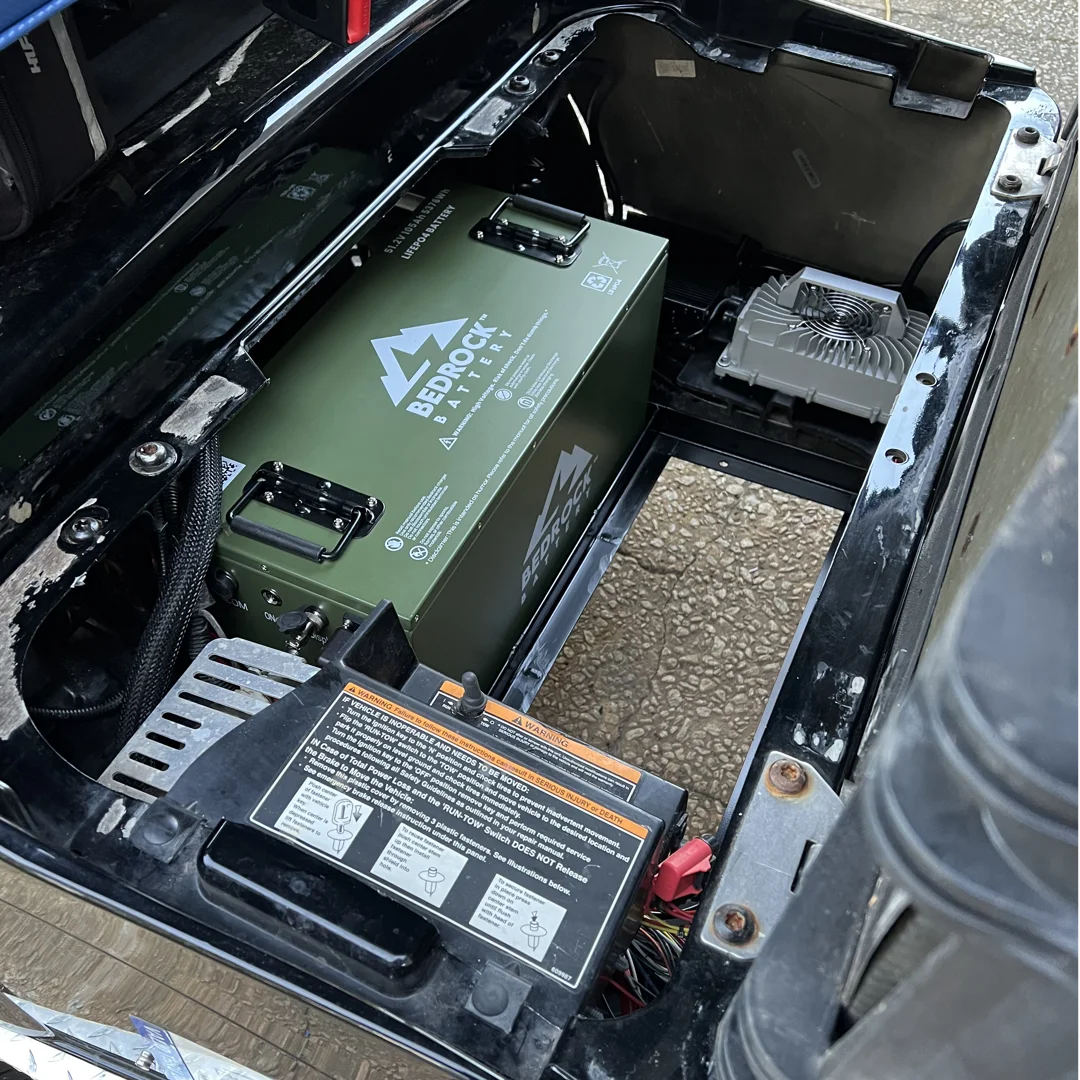
The physical and operational advantages of lithium-iron-phosphate (LiFePO4) chemistry are the reason 48V lithium has become the default recommendation in so many builds:
- Massive Weight Reduction: A standard 48V lead-acid battery bank, typically six 8V or eight 6V batteries, weighs roughly 350 to 450 pounds. A single 48V 105Ah lithium battery pack weighs approximately 95 to 110 pounds. That can reduce overall battery weight by up to 70%, improving braking distance, suspension wear, and maneuverability.
- Superior Energy Efficiency: Lead-acid batteries operate at roughly 80% to 85% energy efficiency, losing significant power to heat during charge and discharge cycles. LiFePO4 lithium batteries operate at roughly 92% to 98% efficiency, allowing you to get more usable range from the energy you charge into the pack.
- Unmatched Cycle Life: Lead-acid batteries typically last 3 to 5 years and deliver roughly 500 to 800 charge cycles before capacity drops off. Premium lithium batteries can deliver 4,000 to 6,000+ cycles at 80% depth of discharge (DoD), often lasting 10 to 12 years.
- Zero Ongoing Maintenance: Lithium batteries are sealed and do not require watering, acid cleanup, terminal corrosion maintenance, or monthly gravity checks.
For a deeper chemistry comparison, read our dedicated guide: Lithium vs Lead Acid: Are Lithium Batteries Better for Golf Carts?. For range expectations, see How Far Do Lithium Golf Cart Batteries Go? Real-World Range Explained.
Which Voltage Is Right for Your Cart and Terrain?
Use this decision guide before you buy batteries:
| Your Cart / Use Case | Best Voltage Choice | Why |
|---|---|---|
| Older 36V cart used on flat ground | Stay 36V or consider a full 48V conversion | Cheapest path if performance needs are light |
| Stock modern cart used around neighborhoods | 48V lithium | Best balance of range, torque, cost, and compatibility |
| Four- or six-passenger cart with moderate hills | 48V lithium with adequate Ah and discharge rating | Handles passenger load without unnecessary 72V complexity |
| Lifted cart with larger tires | 48V high-output lithium or 72V build | Larger tires increase load and amp demand |
| Hunting, utility, or steep-terrain cart | 72V lithium | Maximum torque and sustained power under heavy demand |
| Commercial/resort use | 48V high-capacity lithium or 72V depending on load | Prioritize range, cycle life, and duty cycle |
My practical recommendation is simple: if the cart is primarily a daily driver, start with 48V lithium. Only move to 72V if you have a clear performance reason and are prepared to upgrade the surrounding electrical components.
Key Specifications of a 48V Lithium Golf Cart Battery
When evaluating lithium battery options, voltage is only the starting point. Performance depends heavily on three technical specifications:
- Amp Hours (Ah): This is the battery’s fuel tank. A 48V 60Ah battery is suitable for short neighborhood trips and typically offers roughly 20 to 30 miles of range. A 48V 105Ah battery is the sweet spot for many owners and can provide up to 52 miles of range. High-capacity options like 150Ah or 170Ah are better for commercial use, long-distance driving, or heavier carts.
- Continuous Discharge Rate (Amps): This is how much current the battery can continuously deliver to the motor. A standard cart typically needs at least a 100A continuous discharge rate. Upgraded carts with aftermarket controllers often need 150A to 200A or more.
- Peak Discharge Rate (Amps): This is the short burst of current used for takeoff and hill climbing. A quality 105Ah battery can deliver a peak discharge of 400A for 30 seconds or up to 600A for 3 seconds, which helps the cart accelerate and pull through inclines.
To compare performance tiers, see our Guide: Which Lithium Battery is Good, Better, Best?.
Voltage Differences: 48V vs. 51.2V Nominal Voltage
One of the most common questions I get is why some batteries are labeled “48V” while others are labeled “51.2V.”
In lithium-iron-phosphate (LiFePO4) chemistry, each individual battery cell has a nominal voltage of 3.2V. To build a pack compatible with a standard 48V golf cart system, manufacturers connect cells in series:
- A 48V nominal battery typically uses 15 cells in series: 15 x 3.2V = 48.0V.
- A 51.2V nominal battery uses 16 cells in series: 16 x 3.2V = 51.2V.
Both configurations can be compatible with standard 48V golf cart motors and speed controllers. However, the 51.2V configuration is often favored because it provides a slightly higher voltage floor. That extra voltage can support more consistent top-speed performance and better efficiency as the battery discharges.
We explain this in more detail in Golf Cart Lithium 101: Is 48V and 51V on a Golf Cart Battery Voltage the Same Thing?.
Safety Features and Battery Management Systems
Modern 48V lithium golf cart batteries are safe when they are properly matched to the cart, largely because of the built-in Battery Management System (BMS). The BMS monitors cell voltage, current flow, temperature, and charge/discharge limits.
Key BMS protections include:
- Overcharge and Over-discharge Protection: Prevents the battery from being charged past its safe limit or drained to a damaging low-voltage state.
- Thermal Management and Low-Temp Cutoff: Lithium batteries cannot safely accept a charge if internal temperatures drop below 32°F (0°C). A quality BMS blocks charging in freezing temperatures to prevent lithium plating. Some premium batteries, including select models from Lithium Rhino, include self-heating elements for cold-climate charging support.
- Cell Balancing: Keeps internal cells at an even state of charge, helping maximize usable capacity and long-term lifespan.
This is why I do not recommend choosing a 48V lithium battery on voltage alone. The BMS and discharge ratings matter just as much as the Ah number printed on the case.
Conversion, Compatibility, and Charger Requirements
Converting from lead-acid to lithium is usually straightforward, but this article’s main job is voltage selection — not a full installation walkthrough. At a high level, you will remove the old lead-acid batteries, secure the lithium pack or modular batteries correctly, confirm the cart’s controller and motor are compatible with the chosen voltage, and install a lithium-specific charger.

For 48V carts, the cleanest setup is often one high-capacity lithium pack with proper mounting hardware. Modular 48V batteries can also work when they are wired in parallel to increase amp-hour capacity, but the pack must still meet the cart’s continuous and peak amp requirements.
Brand fitment still matters. Club Car, EZGO, Yamaha, and ICON carts can all be strong candidates for a 48V lithium golf cart battery, but tray shape, mounting brackets, OBC requirements, regenerative braking behavior, and charger ports vary by model. For the full installation path, use our dedicated conversion guide: How to Convert Your Golf Cart to Lithium Batteries: A Step-by-Step Guide.
You will also need a lithium-specific charger with the correct charging profile. Do not rely on an old lead-acid charger unless the battery manufacturer explicitly approves it. For charger selection, see What Charger Do I Need for Lithium Golf Cart Batteries?.
If you are ready to compare purchase options, browse Extreme Kartz’s own 48V lithium golf cart battery collection instead of sending purchase-intent traffic off-site. Inline brand references such as Eco Battery, Bolt Energy, Lithium Rhino, and Bedrock can be helpful, but your shopping path should stay with Extreme Kartz whenever possible.
48V Lithium Cost Takeaway
A premium 48V lithium conversion kit costs more upfront than a replacement set of lead-acid batteries, but the longer cycle life, lower maintenance burden, lighter weight, and better charging efficiency can make lithium the better long-term value. The voltage choice still comes first: most owners should decide whether 36V, 48V, or 72V fits the cart, then compare total cost within that voltage category.
For the full 10-year cost breakdown, read our dedicated guide: The True Cost of Lithium Batteries for Golf Carts: Initial Investment vs Long-Term Savings.
Storage and Cold-Weather Notes for Lithium Voltage Systems
Lithium batteries are close to maintenance-free, but storage and freezing-weather charging still matter. For long-term storage, keep the battery around 30% to 50% state of charge, turn the battery’s physical ON/OFF switch to “OFF” when available, and avoid charging below 32°F (0°C) unless the battery has an integrated self-heating system.
For the full winter-care explanation, read The Truth About Charging Golf Carts in Freezing Weather.
Frequently Asked Questions
Is 48V the best voltage for a golf cart?
For most modern golf carts, yes. A 48V system offers the best balance of acceleration, hill-climbing ability, range, efficiency, and component compatibility. A 36V system is usually best for older light-duty carts, while 72V is best for performance builds or heavy-duty terrain.
Should I upgrade a 36V golf cart to 48V lithium?
If your 36V cart is slow on hills, struggles with passengers, or feels underpowered, a full 48V conversion may be worth considering. If you only drive short distances on flat ground, staying 36V and upgrading to lithium may be enough. The key is to match the battery voltage to the motor, controller, charger, and wiring instead of treating the battery as a stand-alone part.
Is 72V better than 48V for a golf cart?
72V is more powerful, but it is not automatically better. A 72V system can deliver more torque and speed potential, but it also requires compatible high-voltage components and usually costs more to build correctly. For everyday neighborhood and golf course use, a 48V lithium golf cart battery is usually the better fit.
How many lithium batteries do I need for a 48V golf cart?
The answer depends on whether you use one high-capacity pack or multiple modular batteries. A single 48V 105Ah battery can power many carts by itself. If you use modular 48V drop-in batteries, often around 30Ah each, you may need two or more in parallel to reach the required capacity and discharge rating.
We explain the setup options in How Many Lithium Batteries Do I Need for a 48V Golf Cart?.
Will a 48V lithium battery make my golf cart faster?
It can make the cart feel faster and more responsive, especially compared with a heavy lead-acid pack. The main reasons are weight reduction and reduced voltage sag under load. It may not raise the controller’s programmed top-speed limit by itself, but it often improves acceleration, hill climbing, and speed consistency as the battery discharges.
For more detail, read Will Lithium Batteries Make My Golf Cart Faster?.
Conclusion
A 48V lithium golf cart battery is the best voltage choice for most owners because it sits in the practical middle: stronger and more efficient than 36V, simpler and more cost-effective than most 72V builds, and well supported across modern Club Car, EZGO, Yamaha, ICON, and similar carts.
At Extreme Kartz, we specialize in system-based solutions. We do not just sell batteries; we help match the battery, charger, mounting hardware, and supporting components to the way you actually drive.
If you are still choosing between 36V, 48V, and 72V, start with your terrain, passenger load, tire size, and performance expectations. If the answer points to a 48V lithium system, take a look at our expert recommendations in Top 5 Lithium Batteries for Golf Carts in 2026, or contact our team and we will help you choose the right setup the first time.
Related Products

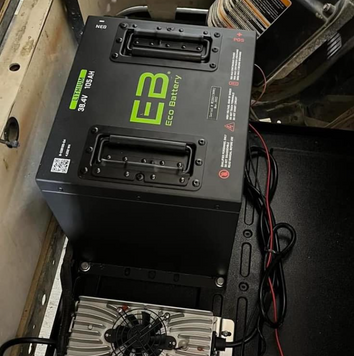
Vendor: Eco Battery 36V 105Ah Lithium Bundle — Club Car DS, EZGO TXT & Yamaha G-Series


Vendor: Eco Battery 48V 105Ah Thru-Hole Bundle - Select your Cart


Vendor: Bolt Energy 48V 105Ah MINI Golf Cart Lithium Battery Bundle - Professional or Standard Kit

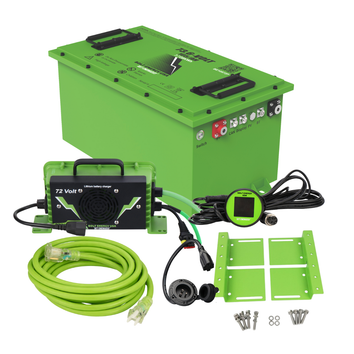
Vendor: Bolt Energy 72V 105Ah POWER Golf Cart Lithium Battery Bundle - Professional or Standard Kit


