


The Truth About Charging Golf Carts in Freezing Weather

When winter hits, one of the most common questions golf cart owners ask is:
“Can I charge my golf cart when it’s cold outside?”
The short answer — it depends on your battery type and the temperature.
Charging in freezing conditions can reduce performance, cause internal damage, and even void your battery warranty if done incorrectly.
This guide explains how cold weather affects charging, the difference between lithium and lead-acid behavior in the cold, and exactly how to protect your system all winter long.
Why Cold Weather Affects Charging
Cold weather impacts battery chemistry — the lower the temperature, the slower the internal chemical reactions become. This applies to both lead-acid and lithium-ion batteries, but with different consequences.
When temperatures drop below 32°F (0°C):
-
Lithium batteries can suffer lithium plating — metallic lithium builds up on the anode, leading to permanent internal damage and reduced capacity.
-
Lead-acid batteries become sluggish, taking longer to charge and delivering less power per cycle.
In both cases, the colder the environment, the longer it takes for the battery to reach full charge.
Why Lithium Batteries Are More Sensitive Than Lead-Acid
Lithium batteries operate within a narrower safe range. While lead-acid batteries can still function in subfreezing temperatures (with reduced efficiency), lithium batteries can not be charged below freezing unless equipped with a self-heating feature.
Charging a frozen lithium battery can cause irreversible damage and shorten lifespan dramatically.
Charging Lithium Batteries in Cold Weather
Lithium batteries like Eco Battery, Bolt Energy, or Allied Lithium systems rely on a Battery Management System (BMS) to prevent unsafe charging and discharging conditions. If the pack becomes too cold, the BMS automatically blocks charging until the temperature rises.
Safe Charging Rules for Lithium Batteries
-
Never charge below 32°F (0°C). Wait until the pack warms up naturally or use a self-heating model that raises its internal temperature before charging begins.
-
Charge indoors or in an insulated garage. Cold air outside can quickly drop battery temperature even while charging.
-
Ideal temperature range: 50°F–70°F for both charging and long-term storage.
-
Verify self-heating activation via your battery’s app or indicator light before plugging in.
-
Avoid overnight outdoor charging if temperatures are expected to freeze — condensation and subzero air can harm connectors.
Pro Tip:
If your lithium battery feels cold to the touch, let it sit indoors for a few hours before plugging it in. Warm cells charge faster and more safely.
Why Your Lithium Battery Won’t Charge in the Cold
If your cart refuses to charge and your charger or app shows an error, the BMS is doing its job. It’s blocking unsafe current until the battery reaches safe operating temperature. Don’t force a charge. Simply bring the cart indoors or use a self-heating feature to gently raise the pack temperature.
You can also check our blog post on winterizing a lithium golf cart.
Charging Lead-Acid Batteries in Cold Weather
Lead-acid batteries handle the cold better but still need proper care to prevent freezing, corrosion, and early failure.
Lead-Acid Cold Weather Best Practices
-
Fully charge before storage. A discharged battery can freeze and crack below 20°F.
-
Use a smart charger — not a basic trickle charger. Smart chargers automatically adjust voltage and prevent overcharging.
-
Check electrolyte levels after charging. Add distilled water if necessary to keep plates submerged.
-
Clean terminals and posts regularly to avoid corrosion buildup that restricts current flow.
-
Store in a cool, dry place, ideally above 32°F, with good ventilation.
Unlike lithium systems, lead-acid batteries don’t have built-in management systems, so human maintenance matters more.
Common Cold-Weather Charging Mistakes
Even experienced owners make these winter errors — and they can cost you a battery replacement:
❌ Charging lithium batteries below freezing.
❌ Leaving the charger outdoors, where connectors freeze or corrode.
❌ Charging in damp, poorly ventilated spaces.
❌ Assuming “plugged in” means “protected” — most chargers don’t monitor temperature.
❌ Failing to warm up the cart after extended outdoor storage.
If your golf cart fails to charge or voltage drops rapidly in cold weather, inspect both charger temperature and battery status first — not just the voltage reading.
Safe Charging Checklist
Cold temperatures add new variables that can shorten battery life or damage internal components.
Use this checklist before plugging in your golf cart during winter — each item directly prevents a specific cold-weather failure.
1. Confirm the Temperature Is Above 32°F (0°C) Before Charging Lithium Batteries

Never start charging a lithium battery when the ambient or cell temperature is below freezing.
At 32°F and lower, lithium ions can plate onto the anode, forming metallic buildup that permanently reduces capacity and increases internal resistance.
If your garage or shed is unheated, use a thermometer or your battery app to check pack temperature before connecting the charger. If it’s too cold, wait until the pack warms naturally or use a self-heating battery to bring it to a safe level first.
2. Use a Smart Charger Compatible With Your Battery Type

Different batteries require different charging algorithms.
-
Lithium chargers regulate voltage precisely and cut off at a fixed point (usually 53V for a 48V pack).
-
Lead-acid chargers need multi-stage profiles that include bulk, absorption, and float phases.
Using the wrong charger can trigger BMS shutdowns, incomplete charging, or cell imbalance.
Always verify your charger’s compatibility label or refer to your battery manufacturer’s specs (Eco Battery, Bolt Energy, Allied, etc.) before connecting.
3. Keep the Charger and Cables Dry and Elevated

Moisture and condensation are the silent killers of golf cart chargers. Water sitting on cold concrete floors or forming under cords overnight can cause ground faults or corrosion at plug connectors.
Keep both the charger and cables off the ground, ideally on a wooden or rubber surface, and avoid extension cords lying in wet areas.
If charging outdoors, use a weatherproof cover or enclosure and ensure proper airflow to prevent overheating.
4. For Lithium Systems, Verify BMS or Heater Activation

Before charging, open your battery’s Bluetooth monitoring app (Eco, Bolt, Allied, etc.) or check the indicator light to confirm that:
-
The BMS is active, and
-
If equipped, the self-heating function is engaged.
This ensures the pack is warming up internally before accepting current.
If the BMS temperature reading is below 32°F, the charger may show no response — that’s intentional protection. Wait for the internal temperature to reach safe limits before retrying.
5. Unplug and Store Charging Cables Properly

Once the charge cycle completes, unplug both the charger and the cart. Leaving cables connected during freezing nights exposes terminals to condensation and frost, which can short out metal contacts over time.
Wrap the cables neatly, keep connectors facing downward to prevent moisture entry, and store them away from cold concrete floors or metal shelving.
Recommended Winter Charging Setup
If Storing in a Garage or Shed:
-
Plug into a GFCI outlet with a grounded extension cord.
-
Keep cords elevated to avoid puddles or frost.
-
Use your battery’s Bluetooth monitoring app (Eco, Bolt, Allied) to track temperature and state of charge.
-
Unplug once fully charged unless your charger includes maintenance or float mode.
If Storing Outdoors:
-
Use a weatherproof charger box or insulated enclosure.
-
Avoid charging during overnight freezes — charge during daylight when temps are higher.
-
If your battery is removable, bring it indoors during extreme cold spells.
For long-term winter storage, aim to keep lithium batteries between 50–80% charge and above freezing temperature to preserve cell health.
Key Takeaway
Cold weather and charging don’t always mix — but with the right setup, you can protect your investment and extend your battery’s life.
For most golf cart owners, the rule of thumb is simple: Warm it up before you power it up.
A few smart precautions — proper temperature, storage, and smart chargers — will keep your battery performing reliably all winter long.
FAQs
Related Products


Vendor: Eco Battery 48V 105Ah Thru-Hole Bundle - Select your Cart


Vendor: Bolt Energy 48V 105Ah MINI Golf Cart Lithium Battery Bundle - Professional or Standard Kit


Vendor: Lithium Rhino 48V 105AH Bundle

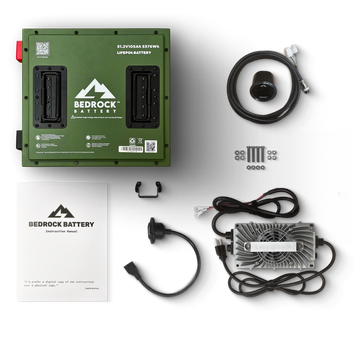
Vendor: Bedrock Battery Compact 48V 105Ah Lithium Conversion Kit


