


The Ultimate Guide to 205/50-10 Golf Cart Tires
The Most Popular Golf Cart Tire Size You Should Know About

205 50 10 golf cart tires are the most widely used tire size for golf carts with 10-inch wheels — and for good reason.
Here's what you need to know at a glance:
| Feature | Detail |
|---|---|
| Tire Width | 205mm (~8 inches) |
| Aspect Ratio | 50% (tire height is 50% of width) |
| Rim Size | 10 inches |
| Overall Diameter | ~18 inches |
| Ply Rating | 4-ply |
| Lift Kit Required | No |
| Compatible Brands | Club Car, EZGO, Yamaha |
| DOT Street Legal Options | Yes |
| Turf Safe | Yes |
| Price Range (single tire) | $52 – $141 |
This size fits most golf carts straight out of the box — no lift kit, no modifications. It works on non-lifted carts and carts with up to a 3-inch lift. Whether you drive on pavement, grass, or both, there's a 205/50-10 tire built for it. All our tire kits ship in 1-2 business days.
I'm Martin Davis, owner of Extreme Kartz, and I've helped thousands of golf cart owners across the country find the right 205 50 10 golf cart tires for their specific setup. In this guide, I'll walk you through everything — sizing, compatibility, top brands, maintenance, and how to choose the right golf cart rims and tires for the way you actually use your cart.
Understanding 205 50 10 Golf Cart Tires Specifications
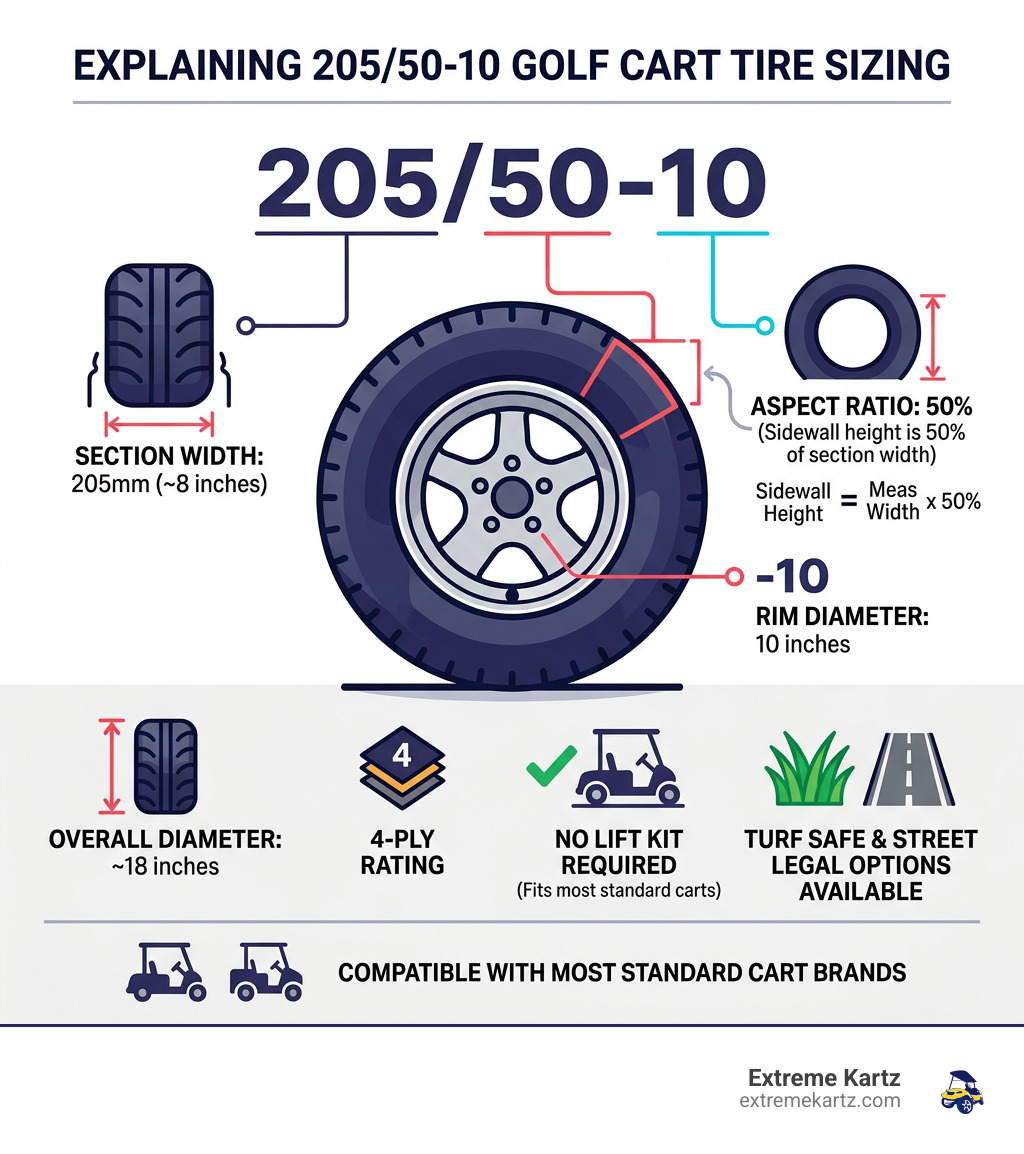
When you see the numbers 205 50 10 golf cart tires, you are looking at a metric sizing system that tells a specific story about how that tire will sit on your cart. At Extreme Kartz, we believe that understanding these specs is the first step toward a successful upgrade.
The "205" refers to the section width of the tire in millimeters. This is the measurement from sidewall to sidewall at the widest point. In standard terms, this is roughly 8 inches wide, providing a nice, stable footprint for your vehicle.
The "50" is the aspect ratio. This is a percentage that tells us the height of the tire's sidewall is 50% of its width. Because this number is relatively low compared to standard 8-inch "balloon" tires, these are categorized as "low-profile" tires. They offer a sleeker, more modern look while keeping the overall height manageable.
Finally, the "10" indicates the rim diameter in inches. These tires are designed specifically to be mounted on 10-inch wheels. Most of these tires are a tubeless design, meaning they don't require an inner tube, which simplifies maintenance and reduces heat buildup during long cruises.
In terms of pricing, the market offers a wide range. You can find entry-level 4-ply tires starting around $52.00, while premium high-traction or specialized turf tires can reach up to $141.00 per tire. Many of our customers opt for DOT-approved street versions, which typically fall in the $56 to $98 range, offering a great balance of safety and value.
Dimensions and Load Capacity of 205 50 10 Golf Cart Tires
While the metric numbers give you the "technical" size, the real-world dimensions are what matter for fitment. Most 205 50 10 golf cart tires have an actual overall diameter of approximately 18 to 18.2 inches. This is a critical measurement because standard golf cart wheel wells are designed to accommodate an 18-inch tall tire without rubbing.
The section width typically sits at about 7.2 to 8 inches, depending on the specific tread design. When it comes to carrying weight, these tires are surprisingly robust. Most models carry a Load Range C rating, with a maximum load capacity of approximately 665 to 677 lbs per tire. When you multiply that by four, you have a total capacity of over 2,600 lbs—more than enough for a fully loaded four-passenger cart or a utility cart carrying light gear.
Tread depth is another factor to consider. Street-oriented tires usually feature a tread depth around 0.34 to 0.37 inches. For more information on how these dimensions compare to other styles, check out our comprehensive guide to golf cart tires.
Ply Rating and Material Quality
The "ply rating" is a measure of the tire's strength and load-carrying capacity. Most high-quality 205 50 10 golf cart tires feature a 4-ply construction. In golf carts, 4-ply is the "sweet spot." It provides excellent puncture resistance against stray thorns or debris while maintaining enough flexibility to offer a comfortable ride.
Some premium options utilize steel-belted radial construction. Unlike traditional bias-ply tires, radials allow the sidewall and the tread to function as two independent features. This results in:
- Better heat dissipation for long-distance driving.
- A larger, more consistent contact patch for better grip.
- Improved durability and a longer lifespan on paved surfaces.
We always recommend 4-ply tires for street applications because they handle the friction and heat of pavement much better than thinner 2-ply alternatives.
Compatibility and Fitment for Major Golf Cart Brands
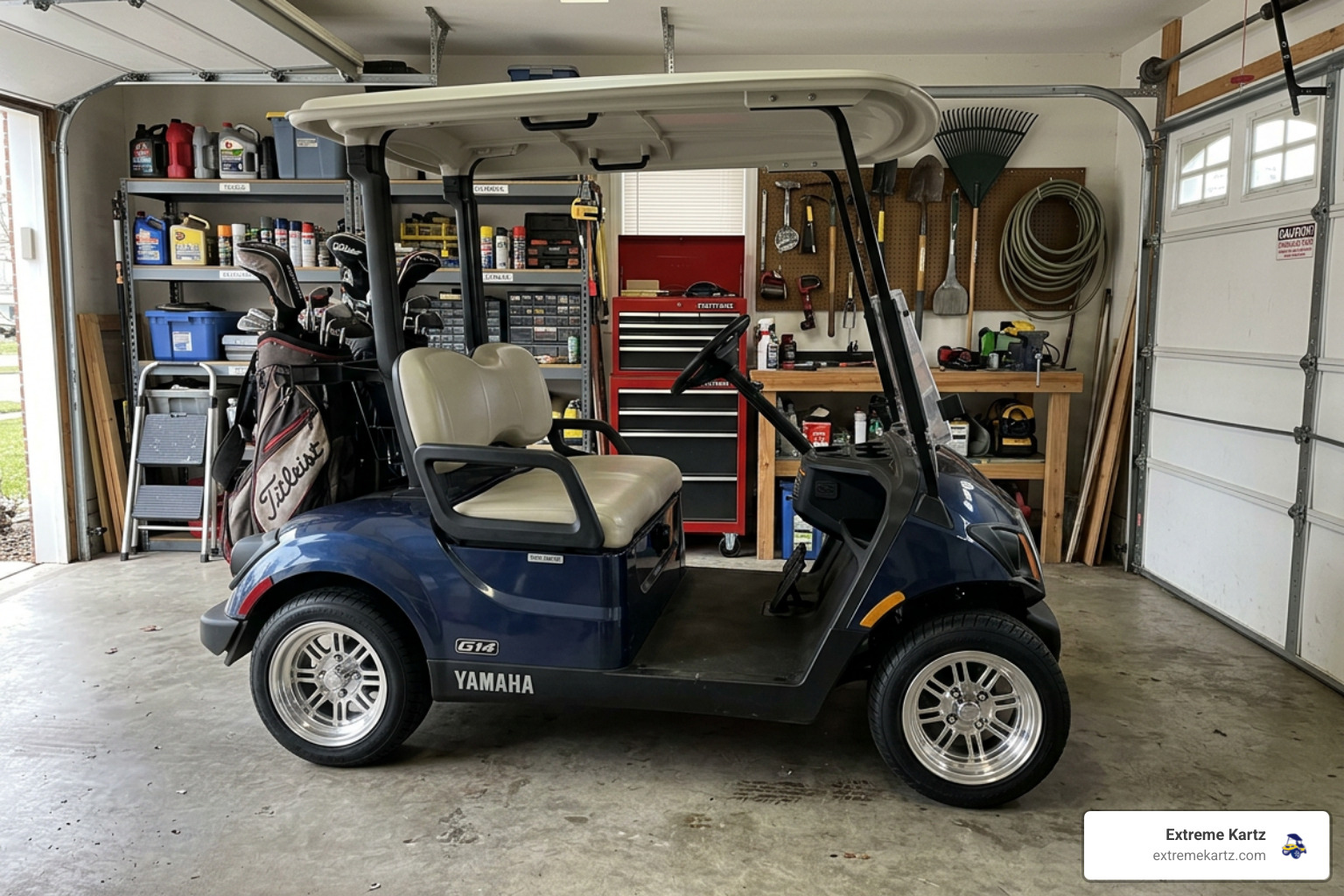
One of the biggest questions we get at Extreme Kartz is: "Will these fit my cart?" The beauty of the 205/50-10 size is its near-universal compatibility. Whether you own a Club Car (DS or Precedent), an EZGO (TXT or RXV), or a Yamaha (G-Series or Drive/Drive2), these tires are almost always a direct fit.
Because the total height stays at or near 18 inches, you don't have to worry about the tires hitting the fender flares or the inner wheel wells when you turn the steering wheel or hit a bump. This makes them a favorite for owners who want to upgrade from basic 8-inch steel wheels to stylish 10-inch aluminum rims without the expense and labor of a lift kit. For a deeper dive into how rims and tires work together, see our golf cart rims and tires complete guide.
Why 205 50 10 Golf Cart Tires Require No Lift Kit
The standard factory tire for most golf carts is an 18x8.50-8. Since 205 50 10 golf cart tires maintain that 18-inch outer diameter, they are a "zero-modification" upgrade. You can simply jack up the cart, swap the old wheels for the new ones, and go.
However, if you are choosing new wheels to go with these tires, you should consider the "offset." Most 10-inch wheels come with a "centered" or "near-centered" offset, which keeps the tire tucked under the body. If you choose a wheel with a "negative offset," the tire will sit slightly further out, widening the cart's stance and providing more stability. This is often preferred for a more aggressive look, even on a non-lifted cart. To learn more about how these combinations affect your ride, visit our page on golf cart tires and wheels.
Fitment for Club Car, EZGO, and Yamaha
While these tires fit all major brands, there are minor nuances to keep in mind:
- Club Car: These carts have tighter tolerances in the rear wheel wells. The 18-inch diameter of the 205/50-10 is perfect because it avoids the common rubbing issues seen with 20-inch tires.
- EZGO: Known for having slightly more room, EZGO carts handle this size with ease. Even with a full load of four passengers, you won't experience bottoming out on the tires.
- Yamaha: The G-series and Drive models have specific suspension geometries. The 205/50-10 maintains proper steering rack alignment, ensuring your cart doesn't feel "darty" at higher speeds.
Performance Benefits: Street vs. Turf Use
The 205 50 10 golf cart tires size is the "chameleon" of the industry. Depending on the tread pattern you choose, it can be a street-legal speedster or a gentle-on-the-grass fairway cruiser.
For those living in "golf cart communities" or using their carts as Neighborhood Electric Vehicles (NEVs), DOT approval is essential. DOT-approved tires have been tested to meet U.S. Department of Transportation safety standards for use on public roads. They feature specialized rubber compounds that resist wear on hot asphalt and tread patterns designed to channel water away, preventing hydroplaning.
If you spend more time on the links, you'll want a "turf-safe" designation. These tires feature a flatter tread profile and rounded shoulders. This design ensures that when you turn the wheel on wet grass, the tire doesn't "dig in" and tear up the turf—something your local greenskeeper will certainly appreciate.
Comparing 205/50-10 to Other Popular Sizes
Choosing the right size often comes down to a trade-off between comfort, looks, and clearance.
| Tire Size | Outer Diameter | Rim Size | Lift Required? | Best Use Case |
|---|---|---|---|---|
| 205/50-10 | 18" | 10" | No | Street/Turf Hybrid; Modern Look |
| 18x8.50-8 | 18" | 8" | No | Traditional Comfort; Maximum Cushion |
| 205/65-10 | 20.5" | 10" | Yes (usually) | Off-Road/Trail; Extra Ground Clearance |
As you can see, the 205/50-10 offers the aesthetic of a larger wheel without the mechanical commitment of a lift kit. It provides a slightly firmer ride than the 8-inch "balloon" tires because there is less sidewall to flex, which actually improves handling and reduces "body roll" in corners.
Tread Patterns and Road Noise
One of the most overlooked aspects of tire selection is road noise. If you do a lot of neighborhood cruising, a "knobby" tire will create a constant hum that can be annoying.
Many high-quality 205 50 10 golf cart tires now feature "variable pitch" tread designs. By varying the size and shape of the tread blocks, manufacturers can cancel out certain sound frequencies, resulting in a much quieter ride.
Additionally, look for a "high land ratio." This means more rubber is in contact with the road at any given time. This not only improves wear resistance but also provides a smoother, vibration-free experience on paved paths.
Maintenance and Longevity Tips
To get the most out of your investment, maintenance is key. Even the best tires will wear prematurely if they aren't cared for.
The most important factor is tire pressure. For 205 50 10 golf cart tires, the recommended PSI (pounds per square inch) usually falls between 12 and 30 PSI.
- Lower Pressure (12-18 PSI): Provides a softer ride and better traction on soft turf or sand.
- Higher Pressure (22-30 PSI): Ideal for street use. It reduces rolling resistance, which can actually help extend your battery life or fuel range, and it ensures even tread wear on pavement.
For a detailed breakdown of how to manage your air levels, see our guide on tire pressure for golf cart tires.
Maximizing Tire Life and Performance
Beyond air pressure, we recommend a few simple habits:
- Alignment Checks: If your cart pulls to one side or you notice the inside edge of your tires wearing faster than the outside, your "toe-in" or "toe-out" is likely off. A quick adjustment can save you from buying new tires every year.
- Rotation: Just like your car, golf cart tires benefit from rotation. Since the rear tires on a gas or electric cart handle the "drive" forces, they often wear differently than the front tires. Check out our golf cart tire rotation guide for a step-by-step walkthrough.
- Storage: If you store your cart for the winter, try to keep the tires off the cold concrete or at least ensure they are fully inflated to prevent "flat-spotting."
Conclusion
At Extreme Kartz, we don't just sell parts; we provide system-based solutions. We know that choosing 205 50 10 golf cart tires is about more than just picking a pretty tread—it's about ensuring your Club Car, EZGO, or Yamaha performs exactly how you need it to, whether that's cruising the neighborhood or finishing 18 holes. All our kits ship in 1-2 business days.
Our focus is on fitment accuracy and helping you avoid the frustration of buying parts that don't work for your specific setup. If you are looking for a significant style upgrade that requires zero mechanical modifications, the 205/50-10 is the gold standard.
Ready to transform your ride? Shop our full collection of high-quality golf cart tires or reach out to our team of experts. We are here to help you find the perfect match for your wheels, your cart, and your lifestyle.
Related Products

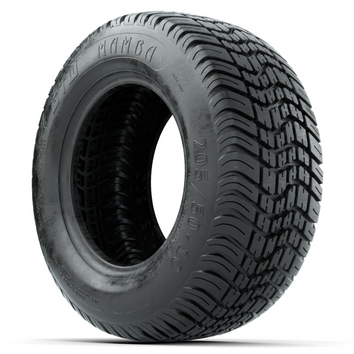
Vendor: 205/50-10 GTW® Mamba Street Tire (No Lift Required)

Vendor: Kenda Pro Tour, 205/50-10, DOT, 4 Ply

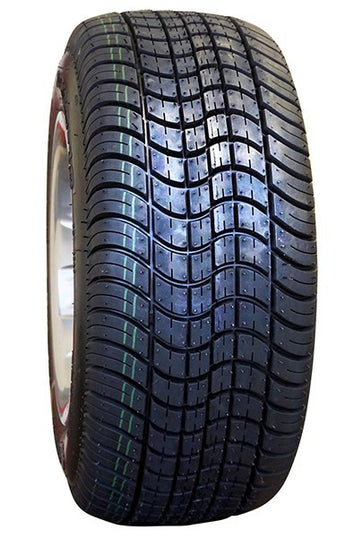
Vendor: RHOX Low Profile Tires 205x50-10 4 Ply


