


A Practical Guide to 72V Lithium Battery Specifications & Comparisons
What Is a 72V Lithium Battery — and Is It Right for Your Golf Cart?
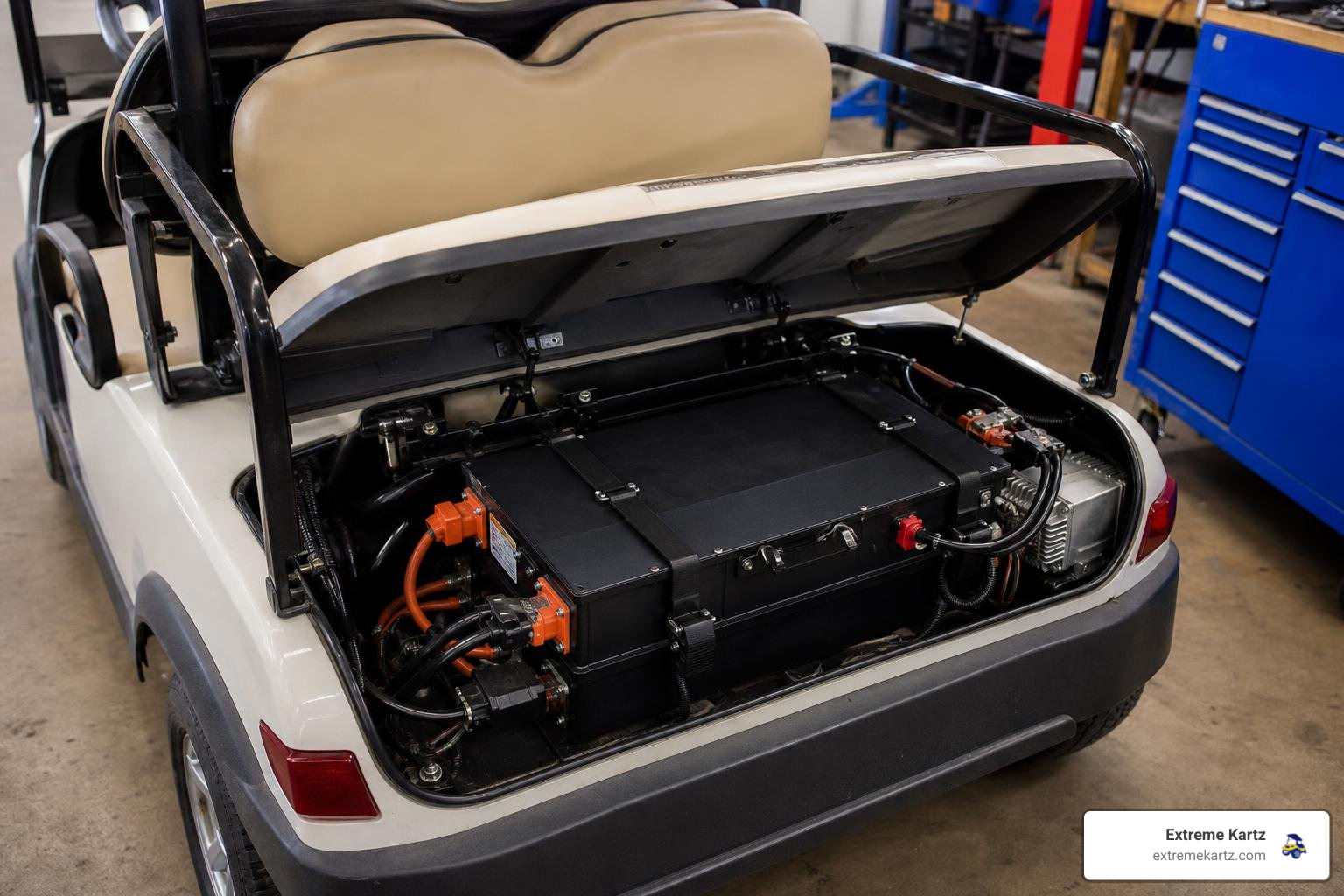
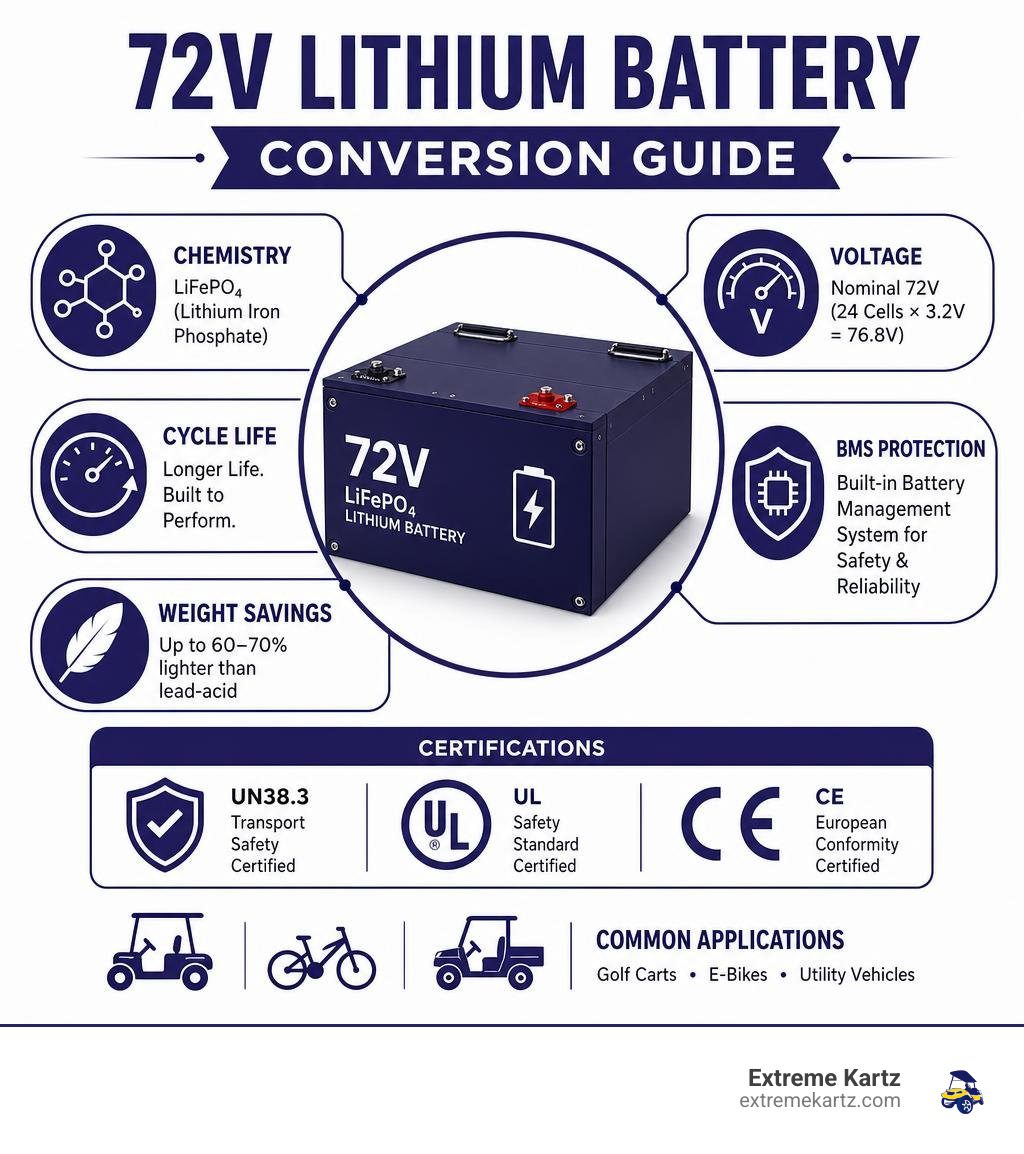
If you're researching a 72V lithium battery, here's a quick-reference breakdown before we dive deeper:
| Feature | What to Know |
|---|---|
| Best chemistry | LiFePO4 (Lithium Iron Phosphate) |
| Actual nominal voltage | Often 70.4V (24 cells × 3.2V) |
| Typical capacity range | 50Ah–105Ah for golf carts |
| Cycle life | 2,000–5,000+ cycles (vs. 300–500 for lead-acid) |
| Weight savings | Up to 60–70% lighter than lead-acid |
| Key safety certifications | UN38.3, UL, CE |
| Common applications | Golf carts, e-bikes, utility vehicles |
Most golf cart owners start looking at a 72V system for one reason: they want more. More speed, more torque, more range — and less time dealing with dying lead-acid batteries that sag under load and limp up hills.
A 72V setup delivers a meaningfully higher voltage platform than the common 48V standard. That translates directly into stronger acceleration and better performance on hills and rough terrain. But it also means more variables to get right — chemistry, capacity, BMS ratings, connector types, and charger compatibility all matter more at this voltage level.
The stakes are real. One forum user described spending money replacing a single lead-acid battery in their cart, only to discover all six batteries in the pack were failing under load. That kind of frustration — and wasted money — is exactly what a well-chosen lithium upgrade is designed to prevent.
I'm Martin Davis, owner of Extreme Kartz, and I've worked closely with manufacturers, technicians, and cart owners across all 50 states to help people make smart, confident decisions about 72V lithium battery upgrades. This guide covers everything you need to choose the right system for your cart and avoid the most common mistakes.
Understanding the 72V Lithium Battery: Chemistry and Cell Configurations
When shopping for a 72V lithium battery, the first and most critical decision is choosing the right chemistry. In the electric vehicle and golf cart world, you will primarily run into two options: Lithium Iron Phosphate (LiFePO4) and Lithium Nickel Manganese Cobalt Oxide (NMC / Lithium-ion).
To understand why this choice matters, let's look at how they stack up:
| Specification | LiFePO4 (Lithium Iron Phosphate) | Lithium-ion (NMC) |
|---|---|---|
| Nominal Voltage (Per Cell) | 3.2V | 3.6V – 3.7V |
| Typical 72V Configuration | 22S (70.4V) or 24S (76.8V) | 20S (72V – 74V) |
| Cycle Life (to 80% Capacity) | 3,000 to 5,000+ cycles | 500 to 1,000 cycles |
| Thermal Stability (Safety) | Extremely high (won't catch fire easily) | Moderate (higher risk of thermal runaway) |
| Weight & Energy Density | Slightly heavier, lower density | Lighter, higher density |
For golf carts and heavy-duty utility vehicles, LiFePO4 is the undisputed industry standard. It offers unmatched thermal stability and a lifespan that can easily exceed 10 years in real-world conditions. When we compare these options directly, the long-term math makes LiFePO4 the clear winner. You can read more about this in our detailed breakdown of Lithium vs Lead Acid: Are Lithium Batteries Better for Golf Carts.
Cell Types: Prismatic vs. Pouch vs. Cylindrical
How the individual cells are built inside the battery pack also plays a major role in performance:
- Prismatic Cells: These are large, rectangular, aluminum-cased cells. They are the gold standard for golf carts because they handle high continuous current draws exceptionally well and are highly resistant to the vibrations of off-road driving. Many industrial setups utilize these robust configurations to handle demanding loads.
- Cylindrical Cells (e.g., 18650 or 21700): These look like oversized AA batteries. They are highly reliable and offer great power delivery, but building a high-capacity 72V pack requires welding hundreds of them together. They are common in e-bikes and smaller electric vehicles.
- Pouch Cells: These are flat, soft-shelled bags. While they are lightweight and save space, they have lower discharge rates (lower C-ratings) and can swell under heavy loads, making them less ideal for demanding golf cart conversions.
Key Specifications to Look For in a 72V System
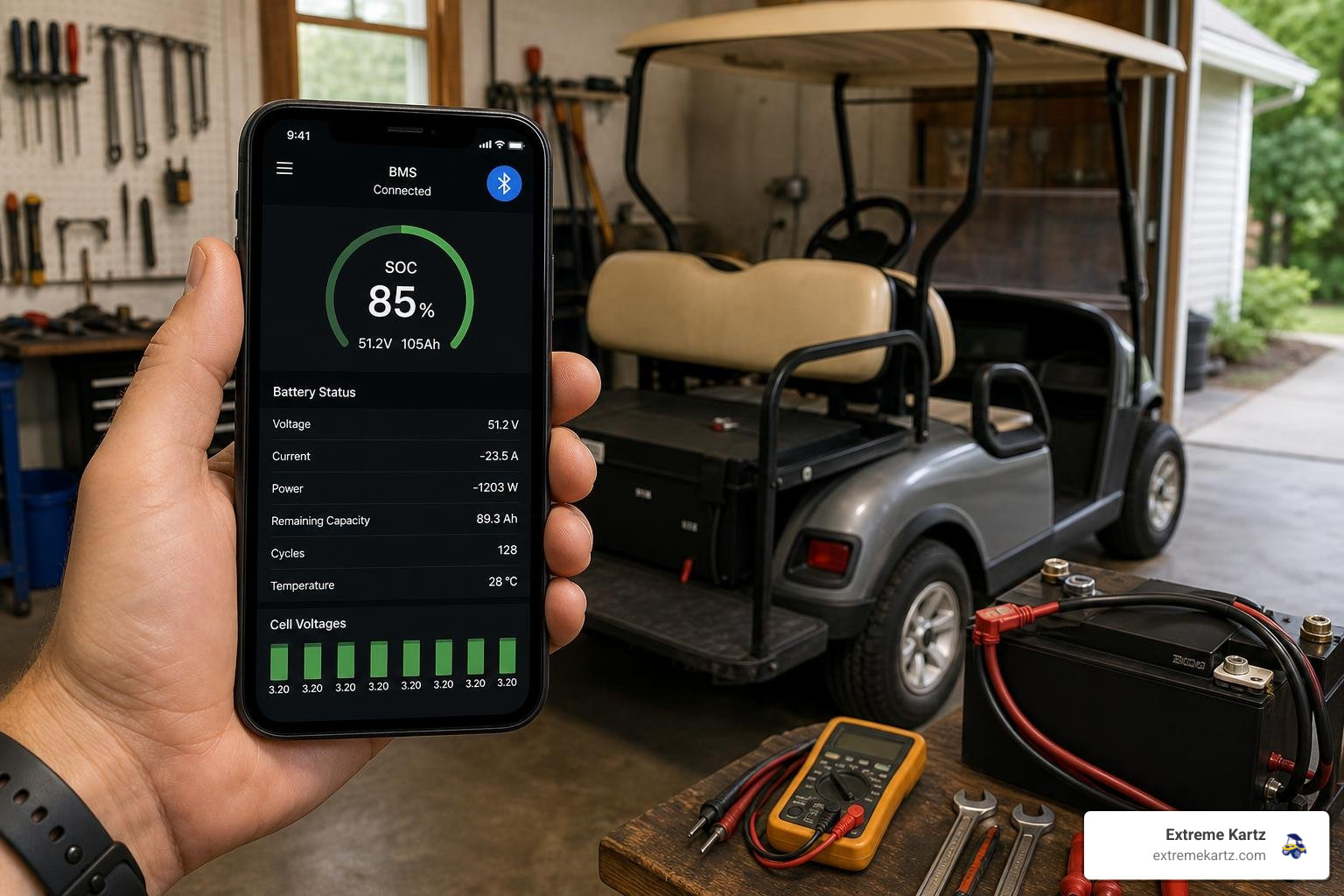
A lithium battery is only as good as the brain controlling it. That brain is the Battery Management System (BMS). The BMS protects the cells from overcharging, deep discharging, short circuits, and extreme temperatures. It also keeps the cells balanced so they drain and charge at the exact same rate.
When upgrading to a high-voltage 72V system, you must pay attention to these key BMS specs:
- Continuous Discharge Current: This is the maximum amperage the battery can safely put out continuously. If you have an upgraded 5kW or 10kW motor and a 500A or 600A high-performance controller, a battery with a weak 50A BMS will constantly trip and shut down. For upgraded carts, look for a BMS rated for at least 150A to 200A continuous discharge.
- Peak Discharge Current: This is the maximum current the battery can deliver for a short burst (usually 3 to 10 seconds) to get the cart moving from a complete stop or up a steep hill.
- Communication Protocols: Premium systems feature smart BMS units with Bluetooth or RS485 communication. This allows you to connect your phone or a physical dash screen to track your real-time State of Charge (SoC), voltage, temperature, and cell health.
To prevent driving blind, many cart owners install dedicated monitors like an IPX7 waterproof battery monitor or an LED battery monitor to keep an eye on real-time voltage and capacity. For a complete understanding of how these electrical metrics affect your ride, check out our guide on Golf Cart Lithium 101: What is the Difference Between Amp Hours and Amperage.
Choosing the Right Capacity (Ah) for Your 72v Lithium Battery Application
Amp-hours (Ah) measure the fuel tank capacity of your battery. The higher the Ah rating, the further you can drive on a single charge. For 72V golf cart lithium conversions, the standard configuration is a single 105Ah high-capacity pack.
- Standard 72V Golf Cart Pack (105Ah): The standard 72V golf cart option is a single 105Ah lithium battery pack. This capacity is designed for lifted carts, 4- or 6-seaters, upgraded controllers, hilly routes, and daily neighborhood or course use where strong current delivery and dependable range matter.
- Use the Correct Native 72V Pack: If you are upgrading a golf cart to 72V, plan around the correct single 105Ah pack instead of trying to piece together other battery configurations.
- Match Capacity to the Full System: Always confirm the battery's BMS rating, controller compatibility, charger profile, wiring, and physical fitment before buying. A 105Ah pack still needs to be matched correctly to the cart's motor, controller, and intended use.
Safety Certifications and Lifespan of a 72v Lithium Battery
Safety should always be your top priority when dealing with high-voltage electrical upgrades. When buying a 72V lithium battery, look for these standard certifications:
- UN38.3: Ensures the battery has passed rigorous safety testing for shipping and transport (including shock, vibration, and thermal testing).
- UL 2580 or UL 1973: Certifies that the battery pack is safe for use in electric vehicles or stationary energy storage.
A certified, premium LiFePO4 battery will easily deliver 3,000 to 5,000+ charge cycles at an 80% Depth of Discharge (DoD). This means if you charge your cart every single day, the battery will still retain the vast majority of its original capacity after 10 years of use.
To guarantee this level of safety, build quality, and long-term warranty protection, we always recommend sticking to trusted, industry-approved brands such as Bolt Energy, Eco Battery, Lithium Rhino, and Bedrock Battery. Many of these premium options feature drop-in physical designs and comprehensive 10-year warranties.
Upgrading Your Golf Cart to a 72V Lithium System
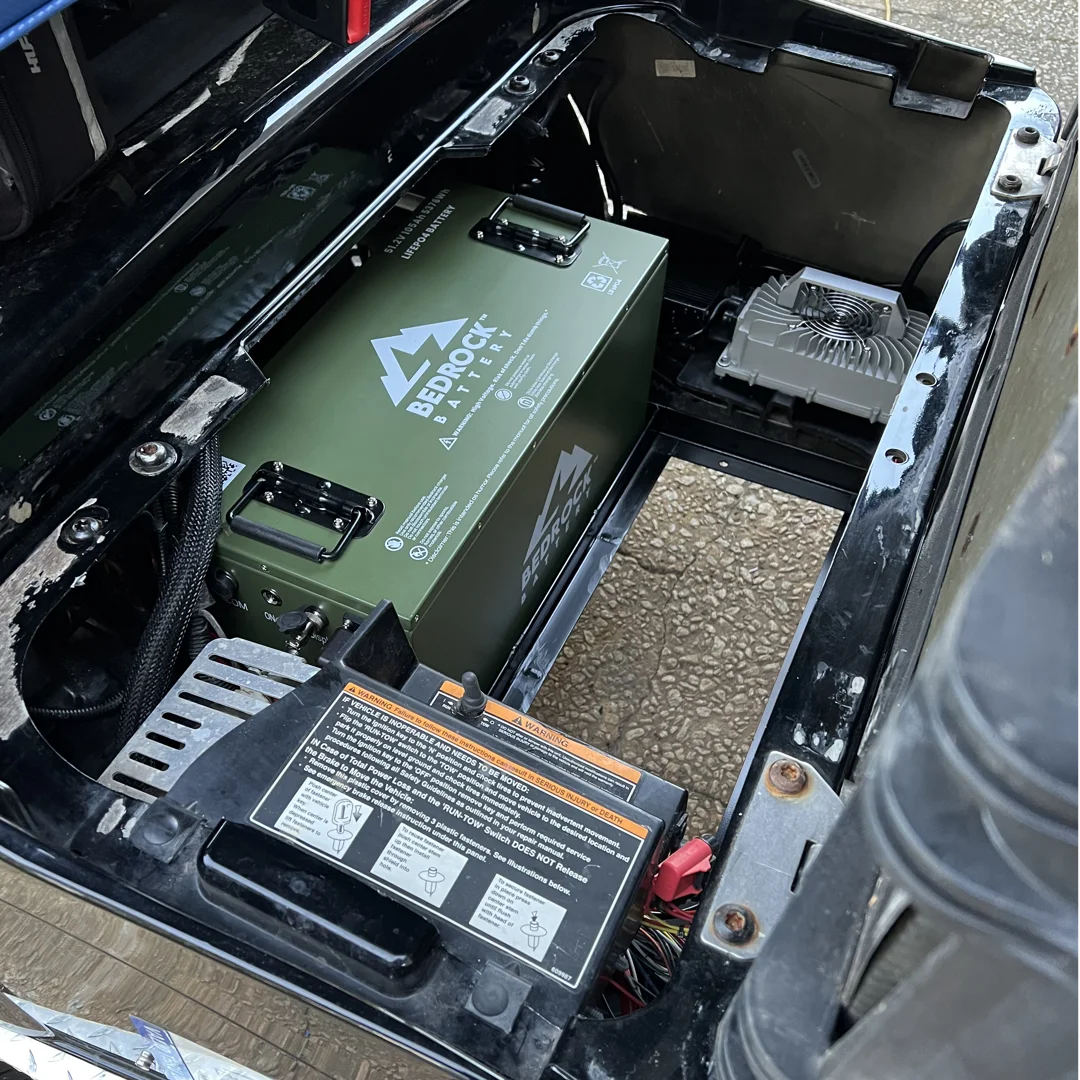
Upgrading your golf cart from a standard 48V lead-acid setup to a high-performance 72V lithium battery is one of the most satisfying modifications you can make. The physical and operational transformation is immediate:
- Massive Weight Reduction: Standard lead-acid batteries can weigh upward of 350 to 450 lbs. A single-pack 72V lithium battery typically weighs between 90 and 120 lbs. Removing over 250 lbs from your cart improves braking distance, saves wear and tear on your suspension, and increases overall efficiency.
- Zero Voltage Sag: Lead-acid batteries suffer from "sag," meaning your top speed and torque drop as the battery drains. Lithium maintains a flat discharge curve. Your cart will run just as fast at 10% charge as it does at 100%.
- Incredible Speed and Torque: Stepping up to a 72V platform increases the rotational speed of your motor, which can boost your top speed past 35 or 40 mph when paired with a matching controller.
If you are ready to make the switch, we highly recommend reading our step-by-step walkthrough on How to Convert Your Golf Cart to Lithium: What You Need to Know. For more details on performance expectations, you can also explore Will Lithium Batteries Make My Golf Cart Faster and our general guide to Upgrade to Lithium Golf Cart Batteries.
To help you calculate the financial side of this upgrade, we have put together two highly detailed resources: The True Cost of Lithium Batteries for Golf Carts: Initial Investment vs Long-Term Savings and How Much Does It Cost to Convert to a Lithium Battery for Your Golf Cart. If you want to see which specific packs lead the market this year, check out our list of the Top 5 Lithium Batteries for Golf Carts in 2026.
Compatibility and Installation of a 72V System
Before you start tearing out your old batteries, you must plan for compatibility. A 72V system operates at a much higher voltage than standard carts, which requires specific components:
- The Controller and Motor: You cannot hook a 72V battery up to a stock 36V or 48V controller. Doing so will instantly destroy the electronics. You must ensure your controller and motor are rated for 72V nominal input (such as upgraded Navitas or Alltrax systems).
- Connectors and Wiring: High-voltage systems require heavy-duty, secure connections. For smaller vehicles, heavy-duty XT90 or XT60 connectors are common. For golf carts, industrial Anderson connectors and heavy-duty 2AWG or 4AWG copper wiring are mandatory to handle the current without overheating.
- Charger Compatibility: Lithium batteries require a dedicated lithium charger with a profile that matches their chemistry. A 72V nominal LiFePO4 battery typically requires an 84V charger to reach full capacity safely. Never use an old lead-acid charger on a lithium battery.
If you are wondering about the physical space requirements and how many individual packs you might need, our guide on How Many Lithium Batteries Do I Need for a 48v Golf Cart explains the differences between single large packs and modular multi-battery setups.
Frequently Asked Questions about 72V Systems
Can I connect two 36V batteries in series to make a 72V pack?
We strongly advise against connecting two separate 36V lithium batteries in series to create a 72V system.
While this was common practice with lead-acid batteries, lithium battery chemistry behaves very differently. Each lithium battery has its own independent BMS. When connected in series, the BMS units cannot communicate with each other. Over time, slight differences in charge levels will cause severe cell balancing issues. If one battery's BMS shuts down due to a low-voltage limit, it can cause massive voltage spikes that damage the BMS in the other battery.
To ensure safety and reliability, always purchase a single, native 72V lithium battery pack.
How does a 72V system compare to a 48V setup?
A 72V setup is the ultimate performance platform, whereas a 48V setup is the standard for daily neighborhood use. Because power (watts) is calculated by multiplying voltage by amperage (V × A), a higher voltage system can deliver the exact same amount of power as a lower voltage system while drawing fewer amps.
This increased efficiency means less heat generation in your motor and controller, less voltage sag under heavy loads, faster hill-climbing speeds, and quicker acceleration. To see if a standard setup is actually a better fit for your daily routine, take a look at our 48v Lithium Golf Cart Battery Guide.
What are the best practices for charging and maintaining a 72V pack?
To get the absolute maximum lifespan out of your new battery pack, follow these simple maintenance rules:
- Never Charge Below Freezing: Charging a lithium battery when the internal cell temperature is below 32°F (0°C) causes permanent damage called "lithium plating." If you live in a cold climate, charge your cart inside a heated garage, or purchase a battery pack with an integrated heating kit.
- Store at 50% to 80% SoC: If you are putting your cart away for winter storage, do not leave it plugged in on a continuous charger, and do not store it completely dead. Charge it to around 50% to 80%, turn off the main battery switch, and store it in a cool, dry place.
- Avoid Complete Discharges: While modern BMS units have low-voltage cutoffs to protect the cells, consistently running your battery down to 0% will shorten its overall lifespan. Try to recharge your cart before it drops below 20% capacity.
Conclusion
Upgrading to a high-performance 72V lithium battery is the single most impactful modification you can make to your golf cart. It completely eliminates voltage sag, slashes hundreds of pounds off your vehicle's weight, and delivers the thrilling speed and hill-climbing torque that standard setups simply cannot match.
While the initial investment is higher than lead-acid, the long-term ROI is undeniable. When you factor in a lifespan of over 10 years, zero maintenance, and the elimination of repeated lead-acid replacements, a premium lithium upgrade easily pays for itself.
At Extreme Kartz, we specialize in helping you navigate these high-performance conversions. We only carry and recommend the absolute best, field-tested lithium brands in the industry: Bolt Energy, Eco Battery, Lithium Rhino, and Bedrock Battery. All of our conversion kits ship in 1-2 business days.
If you want to make sure you get the exact right battery, controller, and wiring setup for your specific cart model, we are here to help. Explore the Extreme Kartz Lithium Knowledge Center for more technical guides, or contact our team of experts today for a personalized fitment recommendation!
Related Products

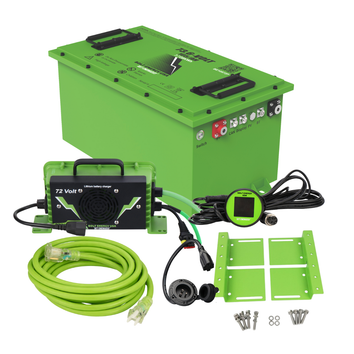
Vendor: Bolt Energy 72V 105Ah POWER Golf Cart Lithium Battery Bundle - Professional or Standard Kit


Vendor: Eco Battery 70V 105Ah Lithium Battery Bundle

Vendor: ChargePlus 72V Universal Battery Charger-Lithium Battery


