



From Slow to Go: Mastering Your Club Car's Speed Controller
Why Club Car Owners Want More Speed

If you're looking to speed up Club Car golf carts, you're not alone. One of the most searched topics by Club Car owners is "how to make my cart faster," and it's easy to understand why. Stock Club Cars typically max out at 13-15 MPH, which feels painfully slow when you're trying to keep up with traffic in your neighborhood, steer a large property, or simply enjoy a more spirited ride.
Quick Answer: Top Ways to Speed Up Your Club Car:
- Upgrade to Larger Tires - Add 1-2 MPH instantly by switching from 18" to 23" tires
- Install Lithium Batteries - Gain 1-2 MPH from reduced weight and consistent power delivery
- Replace the Controller - Achieve 20+ MPH with an Alltrax XCT or Navitas TAC2 controller
- Upgrade the Motor - Reach 20-25+ MPH with a high-speed motor and upgraded controller
- Regular Maintenance - Keep your cart running at peak performance with tune-ups and proper care
The good news? You don't need to be a mechanic or spend thousands of dollars to see meaningful speed gains. Some upgrades, like taller tires or lithium batteries, can be done in an afternoon and provide immediate results. Other modifications, like controller and motor upgrades, require more investment but can transform your cart from a neighborhood cruiser into a legitimate performance machine.
Your Club Car's speed controller acts as the "brain" of your electric golf cart, regulating how much power flows from your batteries to your motor. It's the single most important component when it comes to performance upgrades, which is why we're dedicating this entire guide to helping you understand how to maximize your cart's potential through smart controller choices and complementary upgrades.
Whether you own a Precedent, DS, Tempo, or Onward, this guide will walk you through every upgrade path from simple bolt-on improvements to comprehensive performance systems. We'll cover electric and gas models, explain the technical considerations, and share real-world results from actual Club Car owners who've successfully boosted their speeds.
Understanding Your Club Car's Speed Limitations
Let's face it, a stock electric golf cart rolling along at 13-15 miles per hour isn't going to win any races. This base speed is deliberately set by manufacturers for a variety of reasons, including safety, battery longevity, and compliance with general golf course regulations.
The primary component responsible for this speed regulation in electric Club Cars is the speed controller. Think of your golf cart's speed controller as the conductor of an orchestra – it dictates how much power the motor receives from the batteries based on your input from the accelerator pedal. Without a controller, the motor would simply run at its maximum speed, leading to rapid battery drain and undue stress on components. Its key functions extend beyond just speed regulation; it manages battery voltage and current, protects the motor and itself from overheating, prevents excessive battery discharge, and even smooths out acceleration. Understanding this vital component is the first step to open uping your cart's true potential. You can learn more about this crucial component in our guide to Golf Cart Speed Controllers: A Basic Understanding of Controllers.
For gas-powered Club Cars, the speed limiter comes in the form of a mechanical governor. This device physically restricts the engine's RPMs, limiting the top speed. While seemingly simple, adjusting or removing this governor has significant implications we'll discuss later.
Beyond these built-in limitations, several factors can influence your cart's actual speed. Your battery health, for instance, plays a huge role. Older or poorly maintained lead-acid batteries can suffer from "voltage sag," meaning they can't deliver consistent power, leading to a noticeable drop in performance and speed. The weight your cart is carrying and the terrain you're driving on also impact speed. A heavily loaded cart on a steep incline will naturally be slower than a lightly loaded one on flat ground.
Easy Wins: Simple Upgrades for More Speed
Sometimes, the simplest solutions are the most effective. Before diving into complex electrical upgrades, there are a few "easy wins" that can noticeably speed up Club Car models, often with minimal effort and cost.
Taller Tires: A Simple Gear Ratio Adjustment
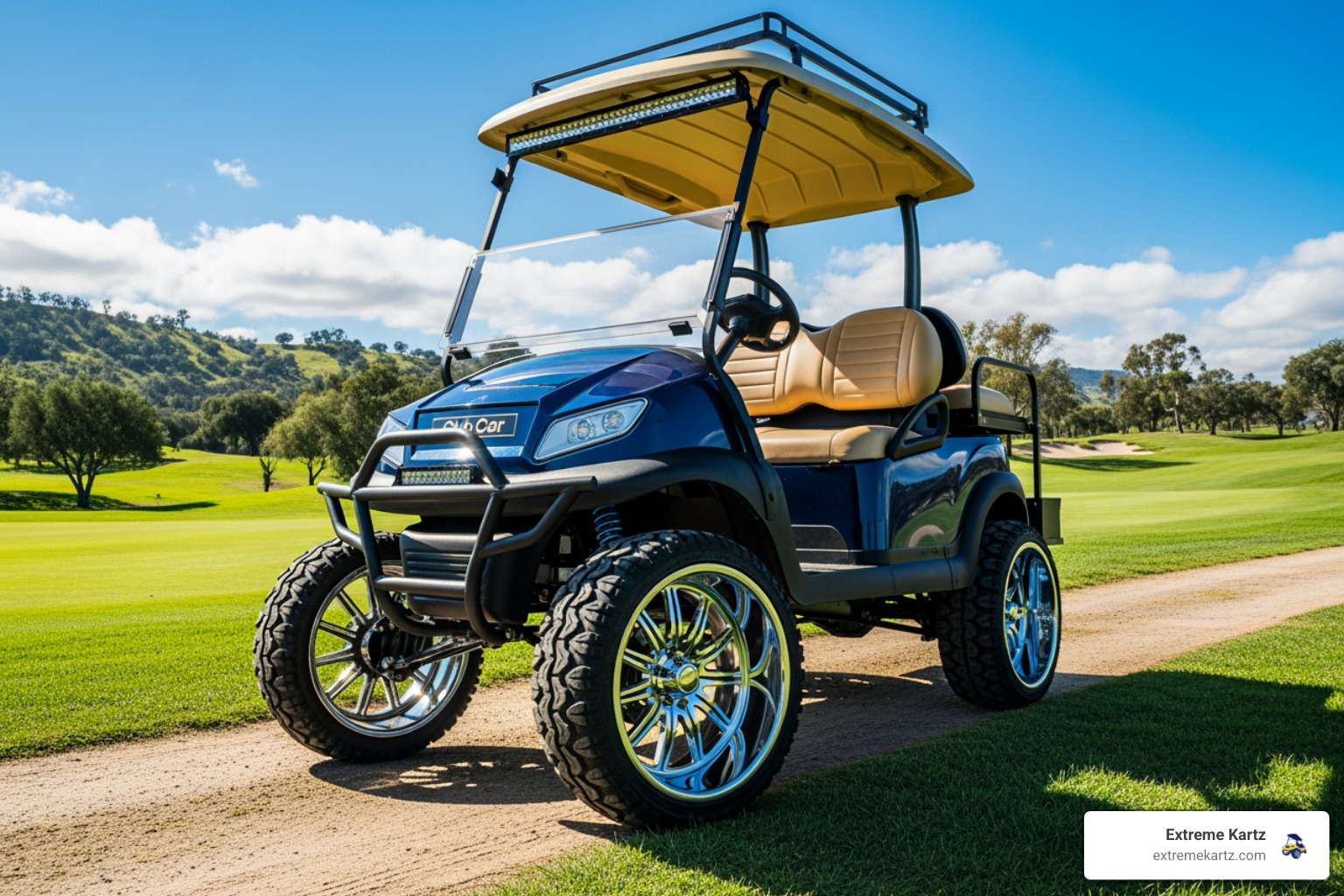
One of the most straightforward ways to increase your top speed is by changing your tires. Most factory Club Car tires are around 18 inches tall. Upgrading to taller tires, say 23 inches, effectively changes your cart's gear ratio. With each rotation, a taller tire covers more ground, directly translating to a 1-2 mph increase in top speed. It's like putting your bicycle in a higher gear – more distance per pedal stroke.
For an even greater edge, consider steel-belted radial golf cart tires. These can add an additional 1-2 mph due to less rolling resistance and superior shape retention, especially at higher speeds. Just remember, if you go significantly taller, you might need a golf cart lift kit to accommodate the larger wheels and prevent rubbing.
Don't underestimate the power of proper tire maintenance either! Keeping your tires inflated to the recommended pressure reduces rolling resistance, making your cart roll more efficiently and slightly faster. It's a small change with a noticeable impact on both speed and battery life. For more tips on this, check out this information on proper tire maintenance.
Lithium Battery Conversion: Lighter, Stronger, Faster
Switching from traditional lead-acid batteries to lithium batteries is a game-changer for speed. Here's why:
- Significant Weight Reduction: Lead-acid batteries can weigh up to 300 lbs more than their lithium counterparts. Removing this excess weight means your motor doesn't have to work as hard, improving acceleration and potentially increasing top speed by 1-2 mph.
- Consistent Power Delivery: Unlike lead-acid batteries, which lose power as their charge depletes, lithium batteries provide full horsepower until they're nearly empty. This means consistent, peak performance throughout your ride.
- Faster Charging & Longer Lifespan: Lithium batteries typically charge in 2-3 hours compared to 8-10 hours for lead-acid, and they last 3-5 times longer, offering excellent long-term value.
We frequently get asked, Will Lithium Batteries Make My Golf Cart Faster? The answer is a resounding yes! This upgrade isn't just about speed; it's about overall performance, efficiency, and convenience.
Weight Reduction Tactics
Beyond batteries, take a critical look at what you're carrying. Every extra pound your cart hauls requires more energy. Removing unnecessary cargo, unused accessories, or even heavy rear seat kits can lighten the load, improving acceleration and top speed. It's a simple, free modification that contributes to better overall performance.
Controller & Motor Upgrades: The Ultimate Guide to Speed up a Club Car
If you're serious about changing your Club Car into a speed demon, upgrading the controller and motor is where the real magic happens. This is where we focus on system-based solutions, ensuring all components work together harmoniously to open up your cart's true potential. An upgraded controller alone can push a factory motor past 20 mph, while pairing it with a high-speed motor can see speeds exceed 30 mph!
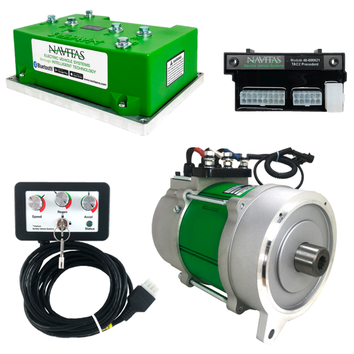
The controller is the cart’s brain and the motor is the muscle and you get real speed when they work together. Think of it like a performance engine: more power only helps if the “management system” can deliver it smoothly, safely, and consistently. That synergy matters even more when you look at DC vs. AC drive systems. DC setups (common on older carts) can be quick, but AC systems (found on many newer Club Car models like the Tempo and Onward) typically deliver smoother acceleration, higher usable RPM, and better long-term durability. If you’re weighing a bigger leap in performance, here’s a practical breakdown of whether switching makes sense: Is a Golf Cart AC Conversion Worth It?.
Choosing the Right Controller Upgrade
When it comes to upgrading your Club Car's speed controller, you'll hear a few names come up consistently: Alltrax and Navitas. These brands specialize in aftermarket controllers that can handle significantly more power than your stock unit, allowing your motor to draw more current and reach higher speeds. For a detailed comparison, check out our Golf Cart Controller Comparison: Club Car, EZGO, and Yamaha Upgrades Explained.
- Alltrax XCT Controllers: Widely popular, an Alltrax XCT 300 Amp controller is often sufficient to get your cart into the low to mid-20s mph. If you frequently steer hilly terrain or carry heavy loads, an Alltrax XCT 400 Amp controller might be a better choice for increased torque and sustained performance. However, higher amperage controllers demand supporting upgrades.
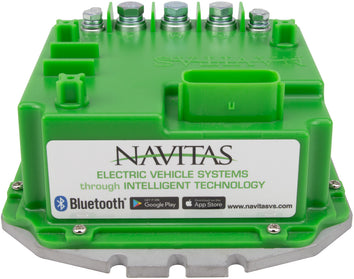
- Navitas TAC2 Controllers: Another excellent option, Navitas controllers are favored by many modification shops for their advanced features and programmability.
Important Considerations for High-Amperage Controllers:
When upgrading to a 400 Amp or higher controller, you absolutely must upgrade your supporting components. The stock solenoid and main power cables (often 6-gauge) simply aren't designed to handle the increased current flow. We recommend upgrading to:
- Heavy-Duty Solenoid: A 400 Amp or higher solenoid is crucial to prevent overheating and failure.
- Thicker Power Cables: Replace all 6-gauge battery and motor cables with at least 4-gauge, or ideally 2-gauge welding cables. This reduces resistance, minimizes heat buildup, and ensures maximum power delivery.
Many aftermarket Navitas controllers also offer "On-The-Fly" programming, allowing you to adjust speed, acceleration, and regenerative braking settings with a dash-mounted switch or app – perfect for customizing your ride on the go!
Motor Upgrades: The Key to Torque and Top-End Speed
While a controller upgrade can open up the potential of your stock motor, a dedicated high-speed motor is designed from the ground up for maximum velocity and often improved torque.
Can a stock motor handle a 440 Amp controller? Yes, a stock GE motor on a Club Car Precedent can often handle a 300-440 Amp controller. This is a common and effective upgrade, allowing your cart to reach 20 mph or more with the factory motor. However, for sustained high speeds, aggressive hill climbing, or simply to ensure longevity, a motor upgrade is highly recommended. The stock motor, while capable, might run hotter and experience increased wear over time at these higher performance levels.
Performance Gains with High-Speed Motors:
- FSIP High-Speed Motors: These are a popular choice. We've seen real-world results where an Alltrax XCT300 paired with a 200 Amp solenoid and an FSIP high-speed motor on a 2014 Club Car Precedent achieved 27 mph on stock tires. Another example saw a 2011 Precedent with an FSIP high-speed motor, XCT400 controller, 2-gauge wires, and an upgraded solenoid also hit 27 mph.
- Motor-Only Upgrades: Surprisingly, a motor-only upgrade can also yield impressive results even with the stock controller. With a high-speed motor and upgraded 4-gauge battery leads, some Club Cars have achieved 26-27 mph with a noticeable torque gain, all while retaining the factory controller. This is a testament to the power potential hidden within the system.
The best combination depends on your goals. For extreme speeds exceeding 25 mph, a high-performance motor paired with a robust controller and heavy-gauge wiring is essential.
How to Speed up a Club Car Gas Model: Governor & RPM Mods
For those with gas Club Cars, the path to more speed involves bypassing or adjusting the mechanical governor. While this can increase speed, it comes with significant risks.
Understanding the Governor: The governor's function is to limit the engine's RPMs (revolutions per minute) to a safe operating range, typically preventing it from exceeding 3700-3900 RPM. This protects the engine from over-revving and potential damage.
Risks of Bypassing the Governor: Removing or disabling the governor allows the engine to rev much higher. While exciting, this can quickly lead to engine damage, reduced lifespan, and even catastrophic failure if not carefully managed. The safe RPM range for a stock Club Car gas engine is generally considered to be between 4200-4400 RPM. Exceeding this consistently can cause excessive wear on internal components, overheating, and premature breakdown.
RPM Limiter Removal: Many gas Club Cars also have an electronic RPM limiter that grounds out the coil if RPMs go too high. Disabling this, often by disconnecting a specific brown wire, allows for even higher RPMs but pushes the engine further into the "danger zone."
Adjusting Throttle Cable and Pedal Linkage: You can gain better acceleration and responsiveness by correctly adjusting the throttle cable and pedal linkage. Ensure the gas pedal engages the starter within about an inch of travel and that the carburetor's butterfly valve opens fully when the pedal is depressed. This optimizes the existing power delivery without necessarily increasing top speed beyond the governor's limit.
Microswitches: Gas Club Cars have microswitches on the control box. One typically releases the ground to the coil, and the other controls the relay to the solenoid. They are crucial for starting and stopping the engine correctly. Modifying them without understanding their function can lead to starting issues.
Regular Maintenance: For gas models, don't overlook the basics. Regular maintenance, such as changing spark plugs, air filters, and fuel filters, ensures your engine runs efficiently and at its peak power. A dirty air filter or old spark plugs can significantly reduce your cart's power and speed. For a visual guide on some of these adjustments, you might find this video helpful: Make Your Gas Club Car Faster (Step-by-Step Guide).
Model-Specific Speed Upgrade Paths
Club Car has produced several popular models over the years, and each one has its own quirks and best path to more speed. While the fundamentals are similar, getting results is easier when you start by identifying your exact model and setup. For electric carts especially, a smart first move is locating your speed controller so you know what you’re working with before you plan upgrades. Here’s a helpful guide to find it: Golf Cart Controller Location: Detective EZGO, Yamaha, and Club Car Locations Revealed.
How to Speed up a Club Car Precedent: From 13 to 25+ MPH
The 2014 Club Car Precedent is a popular model often targeted for upgrades. The simplest way to speed up Club Car Precedent from its stock 13 MPH to 20+ MPH is a controller upgrade.
- Controller first: An Alltrax XCT300 amp controller is a popular “best first upgrade” because it can unlock a big speed jump with the stock motor (often pushing a Precedent into the 20+ MPH range, depending on batteries/tires). If you live in hilly areas or haul heavier loads, stepping up to an XCT400 can make sense, but plan on supporting upgrades like a stronger solenoid and thicker main power cables (at least 4-gauge, with 2-gauge being a common choice for higher current setups).
- Stock motor compatibility: The stock GE motor on many Precedents can typically tolerate a 300-400 amp controller upgrade. It’s not magic, though: more amps can mean more heat, so it’s smart to monitor performance and avoid long, full-throttle hill climbs until you’re confident the setup is running cool and consistent.
- High-speed motor pairing: If your goal is sustained higher speed (not just a quick burst), the best results usually come from treating the cart like a system: controller + solenoid + cabling + motor. Pairing an upgraded controller with a purpose-built high-speed motor is a common path to the mid-to-high 20 MPH range when everything is matched correctly.
- Lithium batteries: A lithium conversion can help your cart feel faster by delivering more consistent voltage under load (and it reduces maintenance compared to lead-acid). If you’re deciding which pack makes sense for your build and budget, use this guide: Guide: Which Lithium Battery Is Good, Better, Best.
Making Your Club Car DS Faster
The Club Car DS, a classic workhorse, has both gas and electric variants, each with unique speed upgrade paths.
- Gas DS Models: For gas DS carts, a tune-up kit (including new spark plugs, air filter, and fuel filter) can restore lost power and speed. Beyond that, the governor and RPM limiter adjustments discussed earlier apply, but always with caution.
- Electric DS Models: For electric DS models, upgrading the controller and motor is key. While many DS models came with DC motors, significant speed and torque can be achieved by upgrading to a high-performance controller (like an Alltrax or Navitas) and a high-speed DC motor. For older models, converting to an AC drive system can be a transformative upgrade, allowing for speeds of 25 mph or more with the right motor and controller combination. For more ways to customize your DS, check out Club Car DS Brush Guards.
Boosting Your Club Car Tempo or Onward
The Tempo and Onward models represent Club Car's more modern offerings, often featuring sophisticated AC drive systems from the factory.
- Controller Programming: These carts often have excellent motors that are simply limited by factory controller programming. An aftermarket controller (like a Navitas TAC2 or Alltrax XCT) can open up this potential, easily pushing these carts to 20+ mph, sometimes even 25 mph, with the stock motor.
- Lithium Battery Benefits: Pairing these modern carts with lithium batteries further improves their performance, providing consistent power, reduced weight, and improved range.
- Integrated Systems: These newer models are designed with more integrated systems, making it even more important to choose compatible, system-based upgrades rather than individual parts. If you're looking for other ways to personalize your cart, explore options like Club Car Golf Cart Body Kits.
Advanced Tuning & Safety Considerations
Once you've made the primary upgrades to speed up Club Car models, there are a few more advanced tuning options and, crucially, safety considerations to keep in mind.
Regular Maintenance: The Unsung Hero of Speed
This can't be stressed enough: consistent, regular maintenance is the bedrock of optimal performance and speed. This includes:
- Battery Care: Keeping terminals clean and corrosion-free ensures smooth electricity flow. For lead-acid, proper watering and charging are vital.
- Tire Health: Maintaining proper tire pressure and checking for wear reduces rolling resistance and ensures consistent contact with the ground.
- Brake Adjustments: Properly adjusted brakes are not just for safety; dragging brakes can significantly slow your cart down.
Gear Ratio Adjustments
The gear ratio in an electric golf cart plays a significant role in its speed and acceleration. While changing tire size is a simple way to alter the effective gear ratio, you can also opt for specialized high-speed gears within the transaxle. This modification can optimize your cart for faster acceleration or higher top speeds, depending on your preference. However, it's a more involved process and requires careful consideration to ensure compatibility. Understanding the role of gear ratios will help you make an informed decision.
Aerodynamic Modifications
While a golf cart isn't exactly a sports car, aerodynamics can still play a role. Reducing drag can incrementally improve speed and efficiency, especially at higher velocities. Modifications like adding a front air dam, a rear spoiler, or even using aerodynamic wheels can make your cart more streamlined. These small changes contribute to a smoother, slightly faster ride and improve energy efficiency. For more on how aerodynamics works, check out this article on streamlined and faster golf carts.
Safety and Regulatory Considerations
Increasing your golf cart's speed comes with increased responsibility. A cart designed for 15 mph will handle very differently at 25 mph or even 30 mph.
- Braking: Your stock brakes might not be adequate for significantly higher speeds. Consider upgrading to disc brakes if you plan to push your cart's limits.
- Suspension: Improved speeds put more stress on your cart's suspension. An upgraded Club Car Golf Cart Suspension System will provide better stability, handling, and comfort.
- Street-Legal Status: If you intend to drive your faster cart on public roads, you must understand and comply with local and state regulations for street-legal golf carts. These often include requirements for headlights, taillights, turn signals, seatbelts, mirrors, and sometimes even specific speed limits. Always prioritize safety and legal compliance to avoid fines or accidents.
Frequently Asked Questions about Club Car Speed
What is the simplest way to get my Club Car Precedent from 13 MPH to over 20 MPH?
The simplest method to speed up Club Car Precedent models to over 20 MPH is a controller upgrade. An Alltrax XCT300 or Navitas TAC2 440A controller can achieve speeds of 20+ MPH with the stock motor and tires, providing a significant boost with a single component swap.
Can the stock Club Car motor handle a controller upgrade?
Yes, in most cases. The stock GE motor on a Club Car Precedent can handle a 300-440 amp controller upgrade, which opens up its hidden potential. This can achieve speeds of 20 mph or more. However, for sustained high speeds, aggressive hill climbing, or simply to ensure the longest possible lifespan, pairing the upgraded controller with a high-speed or high-torque motor is recommended for optimal performance.
Is it safe to remove the governor on my gas Club Car?
Removing or bypassing the governor on a gas Club Car is a common modification but carries significant risks. It allows the engine to exceed its designed safe RPM range (typically 4200-4400 RPM for a stock engine), which can lead to excessive wear, overheating, and potentially catastrophic engine failure. If you choose to adjust it, using a tachometer to monitor RPMs is essential to prevent damage, and we strongly advise against completely disabling it if you value your engine's longevity.
_compressed.webp?alt=media&token=5a000604-2063-4de1-8e45-09d01d2e41ac "user-inserted")
Conclusion
Changing your Club Car from a leisurely cruiser to a more spirited ride is entirely achievable. We've explored numerous ways to speed up Club Car models, from simple and cost-effective modifications like taller tires and weight reduction to more comprehensive system upgrades involving controllers, motors, and lithium batteries.
Speed is a system. Each upgrade you make impacts other components. For the best results and long-term reliability, it's crucial to consider how these parts work together. Define your goals first: are you looking for a modest boost for neighborhood cruising, or do you crave maximum velocity for competitive use?
At Extreme Kartz, we pride ourselves on being an authoritative educational resource and a trusted guide for golf cart owners. We focus on system-based solutions, ensuring compatibility and optimal performance for your specific Club Car model. We're here to help you make informed purchasing decisions, clearly explaining what works, what doesn't, and which upgrades are appropriate for your usage goals.
Whether you’re making small tweaks or planning a full performance overhaul, you can find the right components to do it the smart way. Browse our Club Car performance upgrades, dig into our resources (like Six Proven Tips to Boost Your Golf Cart Performance), and reach out if you want help choosing parts that actually match your speed goals. Let’s get your Club Car running at its peak.
Related Products

Vendor: Alltrax 48V 500A Club Car IQ/Precedent/Excel Controller

Vendor: Club Car Navitas AC Conversion Kit for Precedent / Onward / Tempo - CAN enabled

Vendor: Club Car Precedent / Onward / Tempo / IQ Navitas Controller Kit - 600 amp or 440 amp


