


Indoor vs. Outdoor Golf Cart Storage: Which Is Better for Winter (2025 Guide)

When temperatures drop and golf season slows down, your cart needs a safe place to rest. But that raises the question every owner eventually asks:
“Should I store my golf cart indoors or outdoors for the winter?”
Both can work — but the right choice depends on your climate, available space, and how much protection you’re willing to invest in.
At Extreme Kartz, we’ve helped thousands of owners prepare their carts for freezing weather, and here’s what we’ve learned: winter storage isn’t about where you park — it’s about how you protect.
Why Proper Storage Matters
Leaving your cart idle for months without preparation can silently cause damage. Cold weather, humidity, and lack of airflow can lead to:
-
Battery discharge and corrosion
-
Cracked seats and faded paint from temperature swings
-
Condensation in wiring and frame joints
-
Mold and mildew from trapped moisture
A proper winter storage setup — whether in a garage, shed, or driveway — keeps your cart clean, dry, and ready to roll by spring.
Learn more in our complete Golf Cart Winter Storage Guide.
Indoor Golf Cart Storage

If you have access to a garage, barn, or enclosed shed, indoor storage is hands-down the best way to preserve your golf cart’s condition and value. It minimizes exposure to every major threat — from extreme temperatures to theft — while keeping your batteries and components in top shape year-round.
Benefits of Indoor Storage
✓ Temperature Stability
Indoors, your cart avoids freezing temperatures that shorten battery life and cause vinyl or plastic parts to become brittle.
✓ UV & Weather Protection
You’re shielded from sun damage, rain, and snow — meaning your paint, dashboard, and upholstery stay in great shape.
✓ Reduced Rust & Corrosion
Without moisture exposure, your metal frame and electrical connections remain corrosion-free through the off-season.
✓ Better Security
Storing indoors keeps your cart safe from theft, vandalism, and falling debris.
Indoor Storage Best Practices
1. Fully Charge and Disconnect the Batteries
Before parking your cart for the season, make sure your batteries are fully charged. A half-drained battery can freeze or sulfate during long storage, permanently reducing its lifespan.
After charging, disconnect the cables or switch off the main breaker to prevent slow discharge from onboard electronics. If you have power access in your garage, plug in a battery maintainer (also known as a trickle charger). It keeps the charge level stable without overcharging — ideal for lead-acid or lithium setups.
Pro Tip: Label your battery cables before disconnecting them so you can easily hook them back up in spring.
Learn more about: How to Store Golf Cart Batteries for Winter.
2. Use a Breathable Indoor Golf Cart Cover
Even in a closed garage, dust and condensation can settle on exposed surfaces. A breathable indoor golf cart cover blocks dust while allowing air to circulate, preventing mold, mildew, and moisture buildup on seats and dashboard components.
Avoid plastic tarps — they trap humidity and can cause corrosion or vinyl cracking over time.
Pro Tip: Look for lightweight covers with vented side panels or cotton-lined interiors to avoid scuffing your paint or windshield.
3. Protect the Tires from Flat Spots
When a golf cart sits in one position for months, the tires can develop flat spots — especially in cold conditions where the rubber stiffens. To prevent this:
-
Inflate the tires to the recommended PSI before storage.
-
Roll the cart forward a few inches every few weeks.
-
For long-term storage, place the cart on tire savers or jack stands to remove pressure from the tires altogether.
Pro Tip: Clean the tires before lifting the cart to prevent dirt or salt from corroding the rims during storage.
4. Control Humidity and Moisture
Moisture is the silent enemy of stored golf carts. In humid regions, even indoor air can cause surface rust or musty odors inside the cabin. Place a few moisture absorbers or desiccant packs under the seat and in the storage compartments.
If your garage is especially damp, consider using a small dehumidifier to regulate humidity below 50%.
Pro Tip: Leave your cart’s seat slightly lifted to improve airflow underneath, where condensation often forms first.
Outdoor Golf Cart Storage
 If indoor space isn’t an option, you can still keep your golf cart in good condition outdoors — but it takes extra care and the right protective setup. Before parking it outside for winter, be aware of the main challenges you’ll need to manage:
Challenges of Outdoor Storage
-
Weather Exposure: Rain, snow, and ice cause oxidation and mildew.
-
UV Damage: Sunlight fades seats and dashboard materials.
-
Wind and Debris: Can lift loose covers or scratch paint.
-
Condensation: Moisture trapped under a cover can lead to rust or odor.
Outdoor Storage Solutions
If you don’t have a garage or enclosed space, outdoor storage demands a little more diligence. Rain, snow, and UV rays are your golf cart’s biggest enemies—but with the right protection setup, you can keep it looking new for years.
1. Use a Heavy-Duty Waterproof Golf Cart Cover
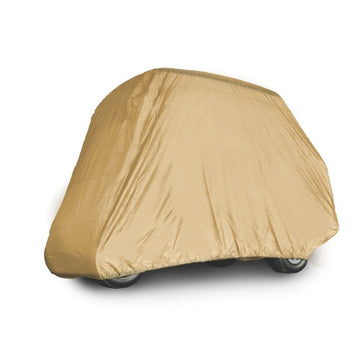
A standard tarp won’t cut it. Invest in a 600D or 400D Oxford polyester cover with PU or PVC coating, UV resistance, and dual air vents for breathability. These materials block water penetration, prevent fading, and stop mildew from forming under trapped moisture.
Make sure to tighten the straps or buckles beneath the chassis—especially if you live in a windy area—to avoid the dreaded “parachute effect” that can lift or tear cheaper covers.
Check our guide for Best Golf Cart Covers for 2025 — our tested recommendations for every budget and cart model.
2. Park Under a Carport or Portable Shelter
Even partial overhead protection dramatically reduces damage from direct sunlight, bird droppings, and tree sap. A metal carport, portable canopy, or golf cart storage tent shields your cart from the elements while maintaining airflow to prevent condensation.
If you live in areas prone to snow or heavy rain, choose a slanted roof shelter so water can drain naturally without pooling above your cart.
3. Elevate Your Tires
Avoid letting your tires sit directly on damp ground for months. Wood planks, rubber mats, or tire savers help keep them dry and prevent flat spots. If you’re storing for winter, inflate your tires slightly above the recommended PSI, since air pressure tends to drop in cold temperatures.
4. Lubricate Moving Parts Before Long Storage
Outdoor exposure accelerates rust, especially on brake cables, hinges, suspension joints, and steering columns. Apply silicone spray or light multi-purpose grease to protect these parts. Avoid over-lubricating—it should coat, not drip.
5. Inspect After Heavy Storms
After each major weather event, check the integrity of your cover and shelter. Retighten any loose straps and look for pooled water on the roof. Early intervention prevents mold, corrosion, and cover tears from worsening unnoticed.
Outdoor Storage Checklist
✓ Fully charge & disconnect the battery
✓ Apply corrosion protection on terminals
✓ Cover tightly with weatherproof fabric
✓ Avoid parking near trees or sprinklers
✓ Check periodically after snow or wind
Indoor vs. Outdoor Storage: Head-to-Head Comparison
|
Feature |
Indoor Storage |
Outdoor Storage |
|
Weather Protection |
Excellent |
Moderate (with cover) |
|
UV Exposure |
None |
High without UV protection |
|
Battery Preservation |
Optimal |
Requires maintenance |
|
Security |
High |
Medium |
|
Cost |
May require garage/shed space |
Free or low-cost |
|
Maintenance |
Minimal |
Regular checks required |
Verdict:
-
If you have access to an enclosed space — indoor storage wins for long-term preservation.
-
If not, outdoor storage is fine as long as you use a quality cover and perform monthly inspections.
Final Recommendation
Your storage decision should balance convenience, climate, and care.
-
For northern climates or long winters: prioritize indoor storage + battery maintenance.
-
For milder southern states: outdoor storage with a premium weatherproof cover works great.
Whichever route you take, remember:
Proper preparation protects your cart’s value, performance, and appearance — season after season.
Frequently Asked Questions
Related Products

Vendor: Storage Cover, Golf Cart with 80" Top and Rear Seat , Black

Vendor: Red Dot Cart Cover for 4 Passenger w/ 54" Top Tan

Vendor: DoubleTake Enclosure for 4 Passenger, 80" Top (Valance included)


