


The Ultimate Guide to Golf Cart Turn Signal Kits
Standalone Golf Cart Turn Signal Kit vs. Full LED Light Kit

When looking to upgrade your cart's lighting, it helps to understand the difference between adding a standalone golf cart turn signal kit and purchasing a complete golf cart light kit.
A standalone turn signal kit is designed for carts that already have working headlights and tail lights. It provides the switching control, flasher relays, and wiring necessary to make those existing light assemblies flash directionally. A full LED light kit, on the other hand, comes complete with front headlights, rear tail lights, the complete main wiring harness, and all mounting hardware.
If you are building or updating a cart with custom body shells, fitment details become even more important. For example, DoubleTake Spartan, Titan, Phantom, and Phoenix light kits are required accessories specifically designed for DoubleTake body kits rather than standalone light kits for factory-body carts.
| Standalone Turn Signal Kit | Full LED Light Kit | |
|---|---|---|
| What's included | Turn signal switch, flasher relay, wiring, brake switch, and horn | Headlights, tail lights, the full main harness, and mounting hardware |
| Needs existing head & tail lights? | Yes — it adds signaling to lights you already have | No — the lights come with the kit |
| Best for | Carts that already have working lights and a 12V source | Carts with no lights, or a full lighting rebuild |
| Typical Extreme Kartz price | ~$85–$250 | ~$210–$480 |
| Street-legal on its own? | No — see your state's requirements | No — see your state's requirements |
Basic Switches vs. Deluxe Bundles
Turn signal kits generally fall into two categories: basic control switches and deluxe upgrade bundles.
- Basic 3-in-1 Switches: These compact column-mounted units combine the turn signal lever, a hazard flasher switch, and an integrated horn button into a single housing. They plug into an existing 9-pin harness on compatible light setups.
- Deluxe Upgrade Bundles: These comprehensive packages expand your control capabilities significantly. For instance, the Ultimate upgrade kit for Precedent, RXV, and Drive/G29 is not a light kit and contains no lights; instead, it adds a turn signal switch, steering column cover, brake switch, and horn to an existing MadJax basic light kit.
Deluxe kits integrate street-ready amenities into a unified electrical framework — heavy-duty horn assemblies, mechanical brake pad switches, column covers that hide unsightly wiring, and integrated flasher relays. Some top-tier setups add even more: the Club Car Precedent MadJax Ultimate Plus kit lists high/low-beam headlights, daytime running lights, self-canceling turn signals, a mechanical brake switch with timer, and dual USB ports (though it does not list a horn). Understanding exactly what components are included in each kit prevents surprises during your installation.
Choosing the Right Golf Cart Turn Signal Kit for Your Model
Golf carts differ significantly across manufacturers and model years when it comes to frame structure, cowl shapes, and factory wiring. Ensuring complete compatibility before purchasing a golf cart turn signal kit keeps your installation smooth and hassle-free.
EZGO TXT & RXV Turn Signal Kits
The EZGO TXT (1995–present) typically uses a standard bucket-harness setup, so a plug-and-play switch and flasher drop in cleanly on carts that already have a compatible light harness. The RXV is a different animal: it has unique dash contours and an electronic park-brake circuit, so it needs a dedicated harness rather than a universal one. Browse fitment-matched options in our EZGO light kits and turn signals, or go straight to the RXV-specific turn signal kit.
Club Car Precedent & DS Turn Signal Kits
The Club Car Precedent (2004–present) runs its wiring through a central channel beneath the floorboard, which changes the harness lengths and relay placement compared with the older DS platform. Because a DS and a Precedent can look similar, decode your serial number before ordering so you get the right harness the first time. See the fitment-matched choices in our Club Car turn signal kits.
Yamaha Drive / G29 & Drive2 Turn Signal Kits
The Yamaha Drive (G29, 2007–2016) and the newer Drive2 (2017–present) have distinct cowl angles and factory light cutouts, so harness length and switch mounting have to match the exact model. Start with our Yamaha turn signal kits to find the right fit.
Whatever you drive, verify your cart's model year and serial number before ordering. All specs and prices in this guide are accurate as of the publish date — confirm the details on the individual product page for your cart before you buy.
Wiring Harnesses and 9-Pin Plug Compatibility
The backbone of any reliable turn signal retrofit is the wiring harness. Most modern aftermarket light kits rely on a standardized 9-pin plug connection. This multi-pin quick disconnect consolidates the power, left turn, right turn, brake, horn, and hazard flasher circuits into a single neat junction point.
Many kits also use a 7-wire harness design within the steering column bundle. This configuration allows standard dual-filament or multi-function LED tail lights to serve double-duty as both running lights and directional brake indicators. Standardized plug-and-play connectors eliminate the need for cutting, splicing, or guessing wire colors.
Key Features for Street-Legal Golf Cart Conversions
Transforming a recreational golf cart into a street-legal Low-Speed Vehicle (LSV) requires adhering to specific equipment standards mandated by state and local regulations.
Important: adding turn signals, a horn, and hazards does not by itself make your cart street-legal. Street-legal and Low-Speed Vehicle requirements — registration, insurance, VIN, DOT-approved equipment, and where you are allowed to drive — vary by state and municipality. Always confirm your local rules before driving on public roads.
Essential Components: Horn, Brake Pad Switch, and Hazard Controls
To navigate resort communities and municipal roads safely, your directional light package should include three major secondary control elements:
- Integrated Horn: A loud horn that is clearly audible to nearby traffic gives you an acoustic warning device for safety.
- Mechanical Brake Pad Switch: Mounted directly to the brake pedal assembly, this switch immediately activates your rear tail lights as bright brake indicators whenever the pedal is depressed.
- Hazard Flasher Controls: A dedicated pull-knob or rocker switch initiates simultaneous four-way flashing lights to alert surrounding drivers during roadside emergencies or slow travel.
Power Requirements and Voltage Reducers
Standard golf cart accessories operate on 12-volt Direct Current (12V DC). However, electric golf carts run on higher-voltage battery packs, typically 36 volts or 48 volts. Connecting a 12V turn signal harness directly across a 36V or 48V battery bank will quickly burn out the 12V flasher relays, horn, and bulbs.

To operate your lights safely, you must step down your battery pack's main voltage to a stable 12V output using a quality voltage reducer from our voltage reducers collection.
Some advanced lighting packages remove this requirement entirely. MadJax Ultimate Plus kits include a built-in voltage reducer and operate on 12–48V, so they do not require a separate converter.
Step-by-Step Installation for a Golf Cart Turn Signal Kit

Installing a directional light system is one of the most rewarding DIY projects you can undertake on your golf cart. How long it takes depends on which kit you choose: a basic plug-and-play kit — where your cart already has a compatible light harness — is usually a 1–2 hour job. A full street-legal kit that adds a horn, brake switch, and voltage reducer (and may require drilling cowl cutouts) is an intermediate install, typically 4–7 hours.
DIY vs. Professional Installation
Most plug-and-play turn signal kits do not require professional electrical skills. However, evaluating your comfort level with basic vehicle maintenance helps set proper expectations:
- DIY Installation: If your cart already features a 9-pin compatible main light harness, installing a turn signal arm is simply a matter of clamping the switch to the steering column, routing the harness down through the dash, plugging in the 9-pin connector, and mounting the brake switch and horn.
- Professional Installation: If you are building a custom electrical setup from scratch, installing custom rocker switches, or retrofitting non-standard wiring on older carts, consulting a qualified 12V technician ensures clean routing and protection against short circuits.
Additional Accessories for Street-Legal Setups
A complete street-legal conversion involves more than just directional switches. To create a comfortable, fully equipped vehicle, consider adding these complementary upgrades:
- Side Mirrors with Integrated Turn Signals: Side-view mirrors equipped with forward-facing LED turn indicators significantly improve visibility to oncoming traffic.
- Custom Dash Assemblies: Upgrade your interior storage and mounting space by installing a custom dash. If you are shopping for dashboard solutions, check out our golf cart dashboard ultimate guide 2026 to find options tailored to your cart model.
Price Ranges and Buying Considerations
Understanding price points and hardware features helps you select a lighting solution that fits both your budget and your functional requirements.
| Price Tier | Typical Cost | What You Get & Who It's For |
|---|---|---|
| Switches & Add-On Kits | ~$85–$110 | A universal or model-fit turn signal switch (turn, hazard, and horn), flasher relay, brake pad switch, and wiring harness. Best for carts that already have working head and tail lights and a 12V source. |
| Model-Specific & Self-Canceling Kits | ~$170–$250 | A model-matched harness, self-canceling switch, heavy-duty horn, column cover, and brake switch — some with built-in voltage reduction. Best for clean model-specific installs and street-legal builds. |
Prices are current as of the publish date — always confirm the exact price on the product page for your cart before ordering.
The Importance of User Ratings and Fitment Reviews
When comparing turn signal options, customer review counts and star ratings offer real-world feedback on physical fitment, wire harness lengths, and long-term switch durability. Look for kits that consistently receive high ratings for clear instructions and plug-and-play compatibility with major brands like EZGO, Club Car, and Yamaha.
Frequently Asked Questions About Golf Cart Turn Signal Kits
Can I install a turn signal kit on a 36V or 48V electric golf cart?
Yes, you can install a turn signal kit on a 36V or 48V electric golf cart, but you must supply 12V power to the kit. Unless your lighting setup (such as a MadJax Ultimate Plus kit) features an integrated 12–48V converter, you must connect the system to a 36V-to-12V or 48V-to-12V voltage reducer to protect the 12V flasher relays, horn, and light bulbs.
Do turn signal kits include the actual LED headlight and tail light assemblies?
No. Standalone turn signal kits include the steering column switch unit, wiring harness extensions, flasher relay, brake switch, and horn, but do not include the front headlights or rear tail light housings. LED lights must either already be installed on your cart or purchased separately as part of a complete light kit.
Why do turn signal kits use a plug-and-play wiring harness?
A plug-and-play wiring harness consolidates the turn, brake, horn, and hazard wiring — along with power and ground — into a single quick-connect junction. This standardized design simplifies installation and prevents incorrect wiring connections, so there is no cutting or splicing.
Conclusion

Upgrading your cart with a reliable golf cart turn signal kit improves driver safety, increases visibility during twilight and night driving, and moves your vehicle one step closer to full neighborhood street readiness. By choosing a kit that matches your cart's make, model year, and voltage requirements, you can enjoy a clean, hassle-free installation.
At Extreme Kartz, we specialize in helping golf cart owners select the right upgrades for their specific builds. Explore our wide range of lighting solutions and custom golf cart accessories today. If you ever have questions about harness compatibility or choosing the right voltage reducer for your electric cart, reach out to our expert team — we are always here to help you make the right choice the first time.
About the Author — Martin Davis, Owner of Extreme Kartz
Martin Davis is the owner of Extreme Kartz, a golf cart parts and accessories retailer based in Tyrone, GA. Martin and the Extreme Kartz team work with cart owners every day on lighting upgrades, street-legal conversions, and fitment across E-Z-GO, Club Car, and Yamaha models, and keep a certified lithium technician on staff for electrical questions. Every kit and voltage reducer recommended here is based on hands-on installations and direct customer support — not spec sheets alone. If you are unsure which turn signal kit or voltage reducer fits your cart, reach out and the team will help you get it right the first time.
Related Products

Vendor: SGC Kit for Deluxe Light - (Brake, Horn, Turn signal and Harness)


Vendor: RHOX Self-Canceling Plug and Play Turn Signal Kit

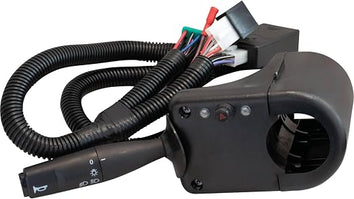
Vendor: Rhox Platinum Turn Signal Kit 12V

Vendor: Universal Turn Signal, 12V


