


The Complete Guide to Diagnosing a Club Car Battery Light Flash
Why a Club Car Battery Light Starts Flashing

A club car battery light flashing usually means the cart has reached a critically low calculated state of charge, often near 10% while driving. It does not always mean the entire battery pack is dead, but it does mean the cart is seeing a voltage drop serious enough to warn you to stop, recharge, and investigate.
| What you see | What it commonly means |
|---|---|
| Solid amber battery light on the dashboard | The battery pack is low, often around 20% state of charge. |
| Flashing amber battery light on the dashboard | The pack voltage is dropping under load and the cart sees a critically low charge level, often around 10% or less. |
| Red, yellow, or green lights flashing on the charger | This is a charger or charging-system signal, not the dashboard low-battery warning. The exact meaning depends on the charger model. |
A flashing dashboard light can happen when aged lead-acid batteries lose capacity, a weak cell sags under acceleration or hills, terminals are corroded, or old and new batteries have been mixed in one series pack. A cart can show a reasonable resting voltage after a drive yet still flash the warning light because the controller responds to voltage under load, not just the number on a meter when parked.
On older Club Car systems, the On-Board Computer (OBC) can also affect charging behavior. If the charger flashes red, then yellow, then green but does not deliver current, the issue may be charger communication rather than the dashboard battery indicator. The first step is always to identify which light is flashing and test the pack before replacing parts.
I’m Martin Davis, owner of Extreme Kartz, where I work with technicians and cart owners on dependable upgrades, including lithium conversions and charging-system compatibility. In this guide, I’ll help you narrow down a club car battery light flashing issue before you spend money on batteries, a charger, or electrical work you may not need.

Understanding Dashboard Indicators vs Charger Light Signals
Before turning a single wrench or pulling out a multimeter, we need to clarify which light is flashing on your golf cart setup. A frequent mistake cart owners make is confusing a light on the vehicle dash with diagnostic LEDs located on the external charger.

Dashboard Warning Lights vs Charger LEDs
The light mounted directly on your dashboard (typically near the key switch or state-of-charge gauge) is connected directly to the motor controller or On-Board Computer (OBC). Its job is to give you real-time feedback while driving. When this dashboard indicator turns solid amber or begins flashing, it indicates that system voltage is collapsing during operation.
On the other hand, LEDs located on your off-board charger, such as Club Car ERIC chargers or legacy PowerDrive units, signal communication states, AC power input issues, or internal charge cycle errors. If you see LED activity on the charger cabinet, identify the charger model and count the flashes before testing the battery pack.

Primary Causes of a Club Car Battery Light Flashing on the Dashboard
When the dash warning light begins flashing while driving, your Club Car controller has detected that the battery pack can no longer sustain required voltage levels under load.
| Dashboard Light Status | Estimated State of Charge (SOC) | Typical Controller Trigger Condition |
|---|---|---|
| Solid Amber | ~20% SOC remaining | Voltage drops to standard operational low threshold under baseline driving conditions. |
| Fast Flashing Amber | ~10% or less SOC remaining | Severe voltage sag detected under active acceleration, incline, or heavy payload. |
What a Club Car Battery Light Flashing Means for State of Charge
Club Car motor controllers (such as Curtis units installed on Precedent and Tempo models) do not rely merely on static voltage. Instead, they calculate State of Charge (SOC) dynamically based on current draw and real-time voltage response.
When your battery pack drops to approximately 20% SOC, the controller illuminates the amber dash light solid. If discharge continues and calculated SOC plunges to 10% or lower, the controller triggers a fast flashing pattern. This serves as an immediate warning that continued driving risks damaging flooded lead-acid battery plates or stranding you on the course.
Diagnostic Voltage Thresholds When a Club Car Battery Light Flashing Occurs
To diagnose why your light flashes, you need to measure pack voltage under dynamic conditions rather than relying solely on resting values:
- Fully Charged Baseline: A healthy fully charged 48V lead-acid pack reads in the low-51V range after resting.
- Dynamic Voltage Sag: Under acceleration, hill climbing, or heavier passenger loads, a weak battery can pull the entire series pack below the controller’s usable-voltage threshold even when the resting pack reading looks acceptable.
- Resting Voltage Deception: A degraded pack might show a reasonable resting voltage when parked, but the moment you press the accelerator pedal, a weak battery cell can drop sharply, causing the overall voltage to crash and triggering the flashing warning light.
To verify this, test individual battery voltages with a digital multimeter both at rest and while applying throttle. A single weak battery can drag down the entire 48V series string, so compare each battery’s behavior under load rather than relying only on the total pack reading.
The Impact of Mixing Old and New Lead-Acid Batteries
Never combine new flooded lead-acid batteries with older units in the same battery bank. Old batteries exhibit higher internal resistance and lower capacity.
Mixing old and new lead-acid batteries in one series pack forces the newer cells to work harder to compensate for the weaker batteries. That imbalance can accelerate wear across the whole bank and bring back the flashing battery warning sooner than expected.
How to Perform an On-Board Computer (OBC) Reset and Bypass
Club Car models produced between 1995 and 2014 utilize an On-Board Computer (OBC) mounted inside the cart to monitor charge energy and regulate internal charging logic.

Step-by-Step OBC Reset Procedure
If your dashboard battery light flashes erratically or refuses to reset after a full charge, the OBC memory bank may have experienced a logic glitch. You can clear temporary memory errors using this sequence:
- Turn the key switch to OFF and place the Tow/Run switch under the seat into TOW mode.
- Disconnect the main negative battery cable from the battery pack.
- Put the cart into REVERSE and flip the key switch to ON.
- Press the accelerator pedal. The reverse buzzer should sound or click briefly, then fade as internal controller capacitors drain completely.
- Leave the vehicle in this state for at least 10 to 15 minutes.
- Return the key switch to OFF, place the selector back in NEUTRAL, and reconnect the main negative battery cable.
- Switch the Tow/Run switch back to RUN mode.
If you are also powering 12V lights or accessories directly, make sure your electrical routing incorporates a dedicated voltage reducer for golf cart setups to prevent uneven battery drain across individual cells.
Bypassing the OBC on 1995-2004 vs 2004+ Models
When upgrading to modern high-frequency smart chargers or resolving persistent OBC failures, an OBC bypass may be considered advanced diagnostic and repair work rather than a first step.
Bypassing the OBC removes its amp-hour-tracking safety function, and any 12-gauge wiring or splicing should be completed by a qualified technician.
- 1995–2004 Club Car Models: Run a minimum 12-gauge jumper wire directly from the main negative terminal of the battery pack (the final negative terminal in series) directly to the backside of the charger receptacle charger port pin.
- 2004+ Club Car Models: Locate the black wire coming out of the back of the receptacle port. Cut this wire, leaving approximately a 4-inch stub attached to the receptacle. Cap off the wire leading back into the OBC loom, then splice a 12-gauge wire from the 4-inch receptacle stub directly to the main negative battery terminal.
For additional receptacle diagnostics, confirm the charger model, receptacle wiring, and pack voltage before changing the charging circuit.
Charger LED Troubleshooting and Flashing Light Codes
If the issue stems from your charger rather than the dash light, evaluating charger flash codes will isolate the root cause.
ERIC Charger Flash Codes and Red Light Troubleshooting
Modern Club Car Tempo, Onward, and late-model Precedents use the ERIC (Efficient Reliable Intelligent Charging) system. When error codes appear on an ERIC charger, count the flashing sequences on the red fault triangle:
- 1 Red Flash: Battery pack voltage is below the required wake-up threshold (typically 32V to 36V on a 48V system). Smart chargers will lock out and refuse to start.
- 2 Red Flashes: Safety timer timeout. The charger ran for 16 consecutive hours without detecting charge completion, usually caused by a shorted or dead cell in one battery.
- Flashing Yellow / Amber: Normal bulk charging under 80% capacity, or low AC wall input voltage (e.g., using an undersized extension cord).
Bypassing OBC Communication Failures for Smart Chargers
A classic symptom of an active OBC interfering with an aftermarket charger is when the charger status lights cycle red, then yellow, and then go solid green without actually transferring current to the batteries. The charger attempts an initial handshake, but the legacy OBC blocks the signal. Performing the 12-gauge OBC bypass described above restores direct connection between the charger and the battery bank.
Resolving Persistent Flashing Lights with Lithium Battery Conversions
If you are tired of dealing with battery watering, heavy terminal corrosion, voltage sag, and premature flashing warning lights on older lead-acid packs, converting your Club Car to a drop-in lithium battery system is the ultimate upgrade.
Eliminating Voltage Sag and OBC Dependability
Upgrading your cart to a LiFePO4 (Lithium Iron Phosphate) pack solves low-voltage issues at the source:
- Zero Voltage Sag: Unlike lead-acid batteries that experience rapid voltage drops under load, lithium maintains continuous voltage stability right up to full depletion.
- Major Weight Savings: Removing six heavy 8V lead-acid batteries can cut total vehicle weight by up to roughly 250 pounds, improving speed, acceleration, and handling.
- Integrated Battery Management System (BMS): Modern lithium packs feature an internal BMS that actively manages cell balancing, thermal safety, and voltage cutoffs, eliminating dependence on legacy Club Car OBC units.
When selecting a high-performance lithium pack for your Club Car, we recommend trusted, industry-proven brands such as Eco Battery, Bolt Energy, Lithium Rhino, and Bedrock Battery.
If you are installing street accessories or custom lighting alongside a new power system, check out our guide on selecting a complete golf cart light kit.
Frequently Asked Questions
Why does my Club Car charger flash red, yellow, then green without charging?
This sequence typically indicates that an active On-Board Computer (OBC) or internal communication line is blocking the handshake with an aftermarket smart charger. Bypassing the OBC with a dedicated 12-gauge negative receptacle jumper allows the charger to detect pack voltage directly and start charging.
Can a weak battery cause the light to flash even if resting voltage reads high?
Yes. A degraded battery can show a healthy static resting voltage (e.g., 8.2V on an 8V battery) when parked. However, under heavy load—such as climbing an incline or carrying four passengers—internal resistance causes its voltage to collapse. The motor controller detects this dynamic drop and triggers the dashboard battery warning light.
Does flipping the Tow/Run switch reset the On-Board Computer?
Flipping the Tow/Run switch cycles power to the motor controller and can temporarily clear dashboard light indicators, but it does not perform a complete OBC memory reset. To clear the OBC completely, disconnect the main negative battery terminal, place the cart in reverse with the key ON, and allow internal capacitors to discharge fully for 10 to 15 minutes before reconnecting.
Conclusion
A club car battery light flashing is your golf cart’s way of requesting immediate diagnostic attention. Whether the issue stems from temporary voltage sag under acceleration, mixed battery ages, an OBC communication failure, or an ERIC charger fault code, systematic testing with a multimeter will quickly isolate the problem.
At Extreme Kartz, we specialize in helping golf cart owners solve complex electrical issues and select the right performance upgrades. Our team includes a certified lithium technician on staff ready to help you evaluate fitment, system compatibility, and conversion requirements for your specific Club Car model.
All product specs and pricing are accurate as of publication; please check individual product pages for current details. We offer free ground shipping on orders over $100 within the continental United States, with a published handling time of 1–3 business days and typical shipping transit times of 3–7 business days (oversized items shipping via LTL freight have lead times confirmed directly at checkout).
Ready to eliminate battery warning lights and upgrade your ride? Explore Club Car Parts and Upgrade Solutions at Extreme Kartz today, or reach out to our team for expert fitment recommendations!
About the Author
Martin Davis is the owner of Extreme Kartz, where he works with technicians and cart owners on dependable golf cart upgrades, including lithium conversions and charging-system compatibility. Extreme Kartz has a certified lithium technician on staff to help evaluate fitment and conversion requirements.
Related Products

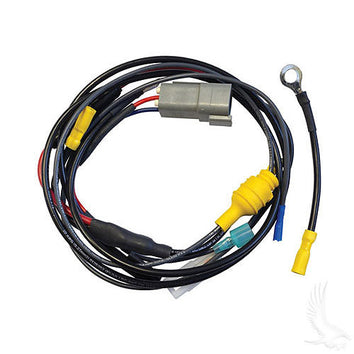
Vendor: Admiral Club Car IQ On Board Computer Bypass


Vendor: SG-720 Charger, CC 48V PowerDrive

Vendor: DC Receptacle, Club Car Precedent 48V 08+


Vendor: Eco Battery 48V 105Ah Thru-Hole Bundle - Select your Cart


