


Golf Cart Controller Amperage Chart and Upgrade Guide
Choose Controller Amps That Your Whole Golf Cart Can Handle

A golf cart controller amperage chart helps you choose a controller, solenoid, cables, and battery system that work safely together. As a quick starting point:
| Build goal | Typical controller range | Common supporting hardware |
|---|---|---|
| Stock replacement | 225-350A | Factory solenoid and cables in good condition |
| Mild torque upgrade | 400-440A | Heavy-duty 400A+ solenoid and 2/0 gauge copper cable |
| High-performance build | 500A+ | Heavy-duty solenoid matched to peak current and 2/0 gauge copper cable or heavier |
More controller amps can improve low-speed torque and acceleration, especially on hills or with larger tires. But the controller cannot create power that the batteries, BMS, motor, solenoid, and cables cannot deliver. Match the controller to the motor type and system voltage first, then size the rest of the power path for the controller's peak current rating.
A 500A controller, for example, may be rated for that output only during short bursts. Its lower continuous-current rating matters for long climbs, heavy loads, hot weather, and repeated acceleration. Battery voltage, motor RPM, gearing, and programming also affect top speed, so higher amps alone do not guarantee a faster cart.
I am Martin Davis, owner of Extreme Kartz. With a certified lithium technician on staff, our team works directly with manufacturers, technicians, and cart owners on lithium conversions and performance upgrades, including helping customers match controllers, solenoids, cables, and batteries. The sections ahead break down the ratings, motor types, and supporting parts so you can plan an upgrade with clear expectations.

Golf Cart Controller Amperage Chart: Specs and Ratings
When planning an electric powertrain build, relying solely on guesswork or peak output numbers leads to overheated components and unexpected shutdowns. A comprehensive reference chart helps match controller amperage to the proper supporting electrical components.
| Upgrade tier | Controller rating | Solenoid | Main cable gauge | Typical use |
|---|---|---|---|---|
| Stock replacement | 225A to 350A | Factory solenoid in good condition | Factory cables in good condition | Flat pavement, neighborhood cruising, stock tires |
| Mild upgrade | 400A to 440A | Heavy-duty solenoid rated 400A or more | 2/0 gauge copper minimum | Moderate hills, larger tires, rear seat with passengers |
| High performance | 500A and up | Heavy-duty solenoid rated 400A or more, matched to the controller's peak current | 2/0 gauge copper minimum (heavier may be warranted) | Steep hills, lifted carts, heavy hauling |
For specific build parameters, cross-referencing your battery voltage, motor configuration, and intended terrain ensures you choose the proper amperage band.

How to Read a Golf Cart Controller Amperage Chart
Understanding the amperage bands on a chart requires looking at what each level accomplishes in the real world. A standard factory controller delivering 225A to 350A is sized for flat terrain, stock tire sizes, and light passenger loads.
When you increase tire size or add a rear seat kit, the rolling resistance and rotational mass rise significantly. Upgrading to a 400A to 440A controller supplies the motor with enough extra current to overcome this load without bogging down. To understand how pulse-width modulation regulates this current, review our guide on speed controller operation fundamentals.
Moving into the 500A-and-up range delivers maximum low-end torque for aggressive hill climbing and towing. However, high-current flow generates substantial heat, making thermal management and proper conductor sizing essential.
Peak vs. Continuous Current Ratings
Controller nameplates feature two distinct ratings:
- Peak Amperage (Burst Current): The maximum current the controller can output for a limited time window listed on the manufacturer's spec sheet. This rating dictates off-the-line acceleration and the initial punch needed to conquer steep obstacles.
- Continuous Current (Duty Cycle): The sustained amperage the controller can deliver indefinitely without tripping internal thermal cutoff protections.
When matching contactors and wiring, you must size them to withstand the controller's peak rating, while the continuous rating dictates how the cart performs during extended uphill runs or heavy towing in hot summer weather.
Matching Motor Types and Voltage to Controller Amperage

A controller must match the electrical design of your drive motor. A controller built for a different motor type will not run the cart correctly and can damage the motor or the controller.
For series-motor builds, the Alltrax SR Series 500-amp controller delivers heavy-duty current across 12V to 48V systems. For a matched motor and controller on a Club Car IQ, which uses a SepEx motor, see the Alltrax motor-controller combo for Club Car IQ 04+ or browse all DC motor-controller kits.
Series DC vs. SepEx vs. AC Induction Systems
- Series DC Motors: Stator and rotor windings are wired in series. All current passes through both windings simultaneously, creating exceptional raw low-end torque. They do not support regenerative braking and require heavy-duty mechanical forward/reverse switches or contactors.
- SepEx (Separately Excited, often called "shunt") DC Motors: Field and armature circuits are powered and controlled independently. This enables electronic speed regulation, regenerative braking, and smooth deceleration down steep grades.
- AC Induction Motors: Powered by three-phase alternating current converted from the DC battery pack via an internal inverter. AC systems typically offer better efficiency, regenerative braking, and strong performance at higher RPM.
To explore converting an older DC cart to AC, read our complete Navitas AC conversion guide. If your cart already runs AC, browse Navitas AC controllers for more current headroom and programmable drive profiles.
Replacing a Factory Curtis Controller
Curtis Instruments builds many of the factory controllers found in Club Car and E-Z-GO carts. Ratings vary by model number, so read the label on your existing controller before you order a replacement. Direct-fit options include the Curtis 36/48V 225A Club Car PMC 1204-410 and the E-Z-GO Medalist / TXT 350-amp Curtis controller.
Component Matching: Solenoids, Heavy-Duty Cables, and Battery Limits

Upgrading to a high-amperage controller without addressing the supporting components creates electrical bottlenecks. High current generates resistive heat across undersized wiring and low-amp contactors, causing voltage drops and accelerated component wear.
When upgrading with high-output units such as the Alltrax XCT 500-amp programmable controller, the solenoid and main power cables must be upgraded simultaneously.
Preventing Solenoid Failure and Cable Bottlenecks
The solenoid acts as the main high-current switch between the battery bank and the controller. If a 500A controller draws peak current through a factory solenoid, the internal copper contact plates can arc, pit, and eventually weld shut or fail to close.
Always pair controller upgrades with heavy-duty components:
- 400A to 440A controllers: Install a heavy-duty solenoid rated 400A or more and 2/0 gauge copper main cables. Browse battery cable sets.
- 500A and up: Use the same 2/0 gauge minimum (heavier cable may be warranted), a heavy-duty solenoid matched to the controller's peak current, and a precharge resistor. Also confirm your forward/reverse switch is rated for the load.
For E-Z-GO DCS carts, which use a SepEx motor, the Alltrax XCT 400-amp DCS controller is a programmable upgrade. If you are installing a Navitas TSX3.0 controller instead, the Navitas TSX3.0 DCS harness provides plug-and-play wiring.
Battery Pack and Lithium BMS Current Limits
A controller cannot output more current than the battery pack provides:
- Lead-Acid Packs: High-amperage draws trigger severe voltage sag under load, reducing torque and running down lead plates prematurely.
- Lithium (LiFePO4) Packs: Lithium packs from the brands we carry, including Eco Battery, Bolt Energy, Lithium Rhino, and Bedrock Battery, greatly reduce voltage sag, but their output is limited by the Battery Management System (BMS). For example, if a 500A controller tries to pull 450A from a lithium battery with a BMS continuous limit of 100A and peak limit of 200A, the BMS can trip into overcurrent protection and cut power to the cart. Check your battery's continuous discharge rating before you size a controller. For reference, the Bedrock Battery 48V 105Ah is rated for 250A continuous. For more on how amps differ from amp-hours, see our guide to amp hours vs. amperage.
For the most peak power on a stock lithium RXV, the Navitas 600-amp TAC2 controller upgrade is built for E-Z-GO RXV Elite carts with factory Samsung lithium batteries. Programmable controllers such as the Alltrax XCT are set up with the Alltrax Toolkit software; when you pair one with a lithium pack, keep its settings within your battery's BMS limits. For XCT owners running lithium, see the Alltrax Bluetooth module for XCT controllers and BMS lithium systems.
How Controller Amps Impact Torque, Acceleration, and Top Speed
A common misconception is that a higher-amperage controller will make a cart much faster on its own. In electrical drivetrains, distinct rules govern torque and velocity:
- Amperage = Torque and Acceleration: Higher amperage increases rotational force at the motor shaft. This delivers swift acceleration off the mark and preserves momentum up steep hills without stalling.
- Voltage and RPM = Top Speed: Top speed is determined by system voltage, maximum motor RPM, gear ratios in the transaxle, tire diameter, and motor field weakening parameters.
While a larger controller can increase speed slightly by maintaining motor RPM on grades, higher top speeds generally come from higher system voltage, taller gearing, larger tires, or motor and controller tuning rather than from more amps alone.
On Alltrax XCT controllers, a dash mount performance on-the-fly knob lets you switch between preset modes, for example to limit top speed for neighborhood cruising or add torque for off-road trails. Programmable controllers let you balance acceleration against battery life; browse our Navitas DC controllers to compare options.
Frequently Asked Questions about Golf Cart Controller Amperage
Will upgrading controller amperage automatically increase top speed?
Not significantly on flat ground. Higher amperage increases torque, allowing the cart to accelerate faster and maintain speed uphill or with heavy loads. Top speed is dictated primarily by battery pack voltage, motor RPM limits, transaxle gear ratios, tire size, and controller field weakening maps.
What happens if I upgrade to a 500-amp controller with stock cables and solenoid?
Stock solenoid contacts can arc, pit, or weld together under peak load. Undersized stock cables will build up severe heat and cause voltage drops, leading to sluggish motor performance or triggering the controller's thermal shutdown.
Do AC golf cart motors require different controller amperage than DC motors?
Yes. AC controllers convert the pack's DC power into three-phase AC for the motor, and they are usually rated in phase current, which is not directly comparable to a DC controller's battery-current rating. Compare controllers only against others built for the same motor type, and size the solenoid, cables, and battery to the current the controller draws from the pack.
Balancing Your Golf Cart Upgrade
Upgrading your electric golf cart’s controller transforms torque, acceleration, and load-carrying capacity. However, a reliable powertrain relies on system-wide balance. Always verify that your controller amperage, motor type, continuous solenoid rating, copper cable gauge, and battery discharge limits are aligned.
For an extensive side-by-side analysis of make-specific drivetrains, explore our comprehensive golf cart controller upgrade comparison. If you have questions about matching components for your build, our team at Extreme Kartz is here to help you select the ideal setup.
Related Products

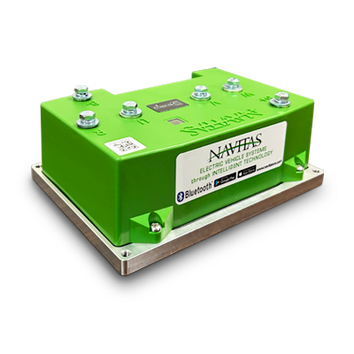
Vendor: EZGO RXV Navitas Controller Kit - 600 amp or 440 amp

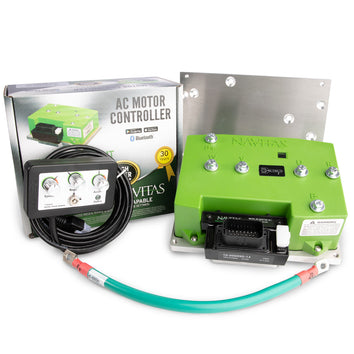
Vendor: Icon / Advanced EV Navitas TAC2 Controller Kit - 600 amp or 440 amp - for NEOS controller replacements

Vendor: Alltrax 48V 500A Club Car IQ/Precedent/Excel Controller

Vendor: Alltrax 48 Volt 500 Amp EZ-GO TXT48 Controller


