


How to Identify Your Yamaha Golf Cart Model and Year
Yamaha Golf Cart Model Year Identification: Serial Number, Generation, and Year

For accurate Yamaha golf cart model year identification, start with the serial number stamped on the chassis frame, then confirm the generation by what you can see on the cart. Unlike Club Car and E-Z-GO, Yamaha does not publish a simple year code inside its serial numbers. The serial points you to the model family, the headlights and powertrain tell you the generation, and the owner's manual, the title, or a Yamaha dealer pins down the exact year.
Check these common locations first:
- Under the driver-side floorboard, stamped into the frame rail or the front frame crossmember.
- Near the accelerator pedal, on the frame member just above and behind the pedal (some G-series carts).
- On a separate data plate riveted to the frame or firewall behind the dash (some carts).
Write down the entire number, and take a photo of it, before you shop for parts. If a character is hard to read, such as O versus 0 or I versus 1, send us the photo instead of guessing.
Knowing the correct year is more than trivia. It helps you confirm whether a cart began life as gas or electric, identify its generation, and narrow down compatible batteries, chargers, controllers, body parts, and accessories. Since prior owners may have changed electrical systems or other components, use the serial number as your starting point and verify the cart's current drivetrain and battery voltage before buying an upgrade.
I am Martin Davis, owner of Extreme Kartz, where I work with technicians and manufacturers to help owners make confident fitment decisions. My experience with Yamaha golf cart model year identification centers on practical upgrades, especially battery conversions and electrical-system compatibility.

Where to Find Your Yamaha Golf Cart Serial Number

On most Yamaha golf carts the serial number is stamped directly into the steel chassis frame, and some carts also carry a separate data plate. Whether you are restoring a vintage ride and need Yamaha G1 through G11 replacement keys or planning an electrical overhaul, finding this stamp is your starting point.
Under the Driver-Side Floorboard
This is the first place to look on G-series, Drive (G29), and Drive2 carts. Lift the driver-side floor mat or rubber floorboard. The serial is stamped into the frame rail visible through the floorboard cutout, or into the front frame crossmember. On some years the stamp sits inside the frame rail channel, so bring a flashlight.
Near the Accelerator Pedal
On some G-series carts, the stamp is on the frame member just above and behind the accelerator pedal. Lift the floor mat on the pedal side to see it.
On the Data Plate Behind the Dash
Some Yamaha carts also have a data plate riveted to the frame or firewall area behind the dash. It may repeat the serial number or list the model designation separately.
If the Stamp Is Hard to Read
Yamaha frames are steel, so older carts often have surface rust over the stamp. Clean the area gently with a wire brush, then rub chalk or a white paint pen across the stamp to make the characters stand out.
Comprehensive Guide to Yamaha Golf Cart Model Year Identification

Because the serial number alone does not give you the year, the reliable method combines three checks: the serial, the generation you can see, and one trusted source for the exact year.
Step 1: Record the Full Serial Number
Copy every character exactly as stamped, including any hyphen, and photograph it. The opening characters can point to the model family. Parts suppliers publish model-family reference lists, but Yamaha has not released a public reference that confirms an exact year from those characters, so treat them as a strong lead rather than proof, and never order a year-sensitive part on those characters alone.
Step 2: Confirm the Generation by Sight
The headlights settle the most common mix-up. Dual round headlights mean a Drive (G29), built 2006 through 2016. A single integrated headlight pod with a wider, sculpted front means a Drive2, built 2017 and later. The Drive and Drive2 share no body panels, lift kits, or front-end accessories, so confirm this before ordering parts like the Yamaha Complete Front Bumper for the G29/Drive or a Yamaha Drive tinted folding windshield. Older G-series carts (G1 through G22) have a smaller, boxier steel body.
Step 3: Identify the Powertrain
The powertrain narrows the year range inside a generation:
- Drive (G29) gas: carbureted 2006 through 2011 (look for a carburetor and a mechanical throttle cable), fuel-injected (EFI) 2012 through 2016 (look for a throttle body, a fuel injector, and an ECU).
- Drive (G29) electric: 48V DC 2006 through 2014, 48V AC 2015 through 2016. Both were sold in 2015 and 2016, so check the motor and controller: the AC controller is a sealed aluminum box with cooling fins.
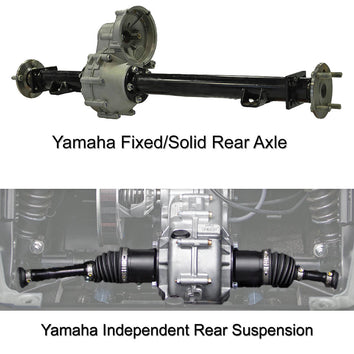
- Drive2 gas: QuieTech EFI, 2017 and later, with independent rear suspension.
- Drive2 electric: 48V AC PowerTech, 2017 and later.
- G1: a 2-stroke gas engine was common on the G1 (1979 through 1989).
Previous owners may have converted the batteries, swapped the controller, or re-bodied the cart, so check what is on the cart today, not just what left the factory.
Step 4: Pin Down the Exact Year
Some parts are year-specific even inside one generation. For example, the Eco Battery Yamaha Drive (2007-2010) Thru Hole Bracket is listed for 2007 through 2010 Drive carts only. To confirm the exact year:
- Match the cart to its Yamaha owner's manual, which Yamaha organizes by year and model family.
- Check the vehicle title or registration. For Drive2 carts registered for street use, the title year is usually reliable.
- Ask a Yamaha Golf Car dealer to run the serial, or call Yamaha Golf Car Company at 866-747-4027.
- Send our team a photo of the serial, the front of the cart, and the engine or motor compartment at 678-331-7404 or support@extremekartz.com, and we will help you identify it before you order.
Yamaha Model Series and Production Eras
Yamaha golf carts fall into three families. Knowing which one you have matters more for fitment than the exact year inside it.
G-Series (G1 Through G22)
The G1 ran from 1979 through 1989, often with a 2-stroke gas engine. Later G-series carts moved to 4-stroke gas engines and 36V or 48V DC electric drive, depending on the model, all on a steel frame. G-series fitment is split by model number, so confirm your exact G-number before ordering. Parts like the Yamaha G14-G21 impact-modified tinted folding windshield and G14-G22 rear seats are built for specific model ranges.
The Drive (G29): 2006 Through 2016
Yamaha calls it "The Drive," and G29 is the common shorthand. It brought a larger body with dual round headlights. Gas models used a 357cc 4-stroke engine, carbureted through 2011 and fuel-injected from 2012. Electric models ran 48V: DC through 2014, and AC in 2015 and 2016. Browse Yamaha Drive parts and accessories, including custom seats and Drive rear seats.
The Drive2: 2017 and Later
The Drive2 is the current generation, recognizable by its single integrated headlight pod. Gas models use QuieTech EFI with independent rear suspension, and electric models use 48V AC PowerTech drive. Stretch 4- and 6-passenger versions usually need stretch-specific parts. Shop Yamaha Drive2 parts and accessories.
Yamaha's UMAX utility vehicles are a separate platform with a cargo bed and do not share parts with the Drive line.
Yamaha Generations at a Glance
| Generation | Years | How to spot it | Powertrains |
|---|---|---|---|
| G1 | 1979-1989 | Small steel body, flat-front hood | 2-stroke gas common |
| G2 through G22 | Before the Drive | Steel frame, older and boxier body, dual headlights | 4-stroke gas; 36V or 48V DC electric by model |
| Drive (G29) | 2006-2016 | Dual round headlights, larger body | Carb gas 2006-2011; EFI gas 2012-2016; 48V DC electric 2006-2014; 48V AC electric 2015-2016 |
| Drive2 | 2017 and later | Single integrated headlight pod | QuieTech EFI gas with independent rear suspension; 48V AC PowerTech electric |
Frequently Asked Questions About Yamaha Golf Cart Year Lookup
Can I read the model year straight from a Yamaha serial number?
Not reliably. Yamaha does not publish a year code inside its serial numbers the way Club Car and E-Z-GO do. Use the serial to identify the model family, the headlights and powertrain to identify the generation, and then the owner's manual, the title, or a Yamaha dealer serial lookup for the exact year. If you are still unsure, send our team a photo and we will help.
What if part of my serial number is hard to read?
Clean the stamp gently with a wire brush, then rub chalk or a white paint pen across it to make the characters stand out. If a character is still unclear, such as O versus 0, photograph it and send it to our team or a Yamaha dealer rather than guessing. One wrong character can send a lookup to the wrong model.
How do I know if my Yamaha cart is a 36-volt or 48-volt model?
Count the batteries and their voltages, or count the water fill caps across the whole pack. On a flooded lead-acid battery, each cap marks one cell of about 2 volts.
- 36-volt system: six 6-volt batteries (18 caps in total).
- 48-volt system: six 8-volt batteries, four 12-volt batteries, or eight 6-volt batteries (24 caps in total).
Every Drive (G29) and Drive2 electric cart is 48V. Older G-series electrics were built as either 36V or 48V depending on the model, so count the batteries rather than assuming.
If your cart has been upgraded to a drop-in lithium battery pack, check the manufacturer's spec label on the battery casing to confirm the nominal voltage rating before installing high-draw electronics or performance motor controllers.
Conclusion
Accurate serial identification removes the guesswork when maintaining, repairing, or modifying your golf cart. By locating the serial stamp, confirming the generation by sight, verifying the drivetrain on the cart today, and checking the exact year against the owner's manual, the title, or a dealer, you can order parts with confidence.
Whether you are performing routine maintenance, adding custom seating, or preparing for high-output power upgrades, our team is here to assist with fitment recommendations tailored to your specific build. When you are ready to upgrade your ride, explore Yamaha golf cart parts and accessories to find parts matched to your model and year.
Own a different brand too? See our guides to E-Z-GO model and year identification and identifying your Club Car year and model.
About the Author
Martin Davis is the owner and founder of Extreme Kartz, a U.S. authority in golf cart upgrades, technical performance systems, and custom accessories. With years of hands-on experience working directly with cart owners, commercial fleet managers, and industry manufacturers, Martin specializes in simplifying technical fitment challenges, battery conversions, and interior restorations. His guidance helps golf cart owners build reliable, stylish, and high-performing vehicles.
Related Products

Vendor: 4" GTW Double A-Arm Lift Kit for Yamaha Drive2 Gas with Independent Rear Suspension

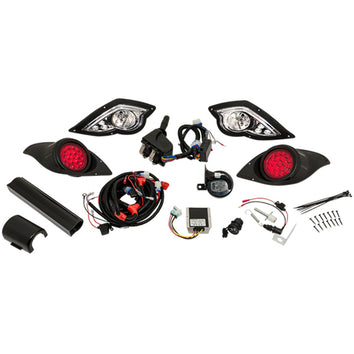
Vendor: Drive LED Ultimate Light Kit Plus (2007-16)

Vendor: RHOX Dashboard Carbon Fiber for Yamaha Drive


Vendor: Yamaha Drive2 DoubleTake Phoenix Body Kit with Street Legal Light Kit - Choose your Color


