


EZGO Model & Year Identification 101
Why Knowing What Year and Model Is My EZGO Can Save You Time and Money
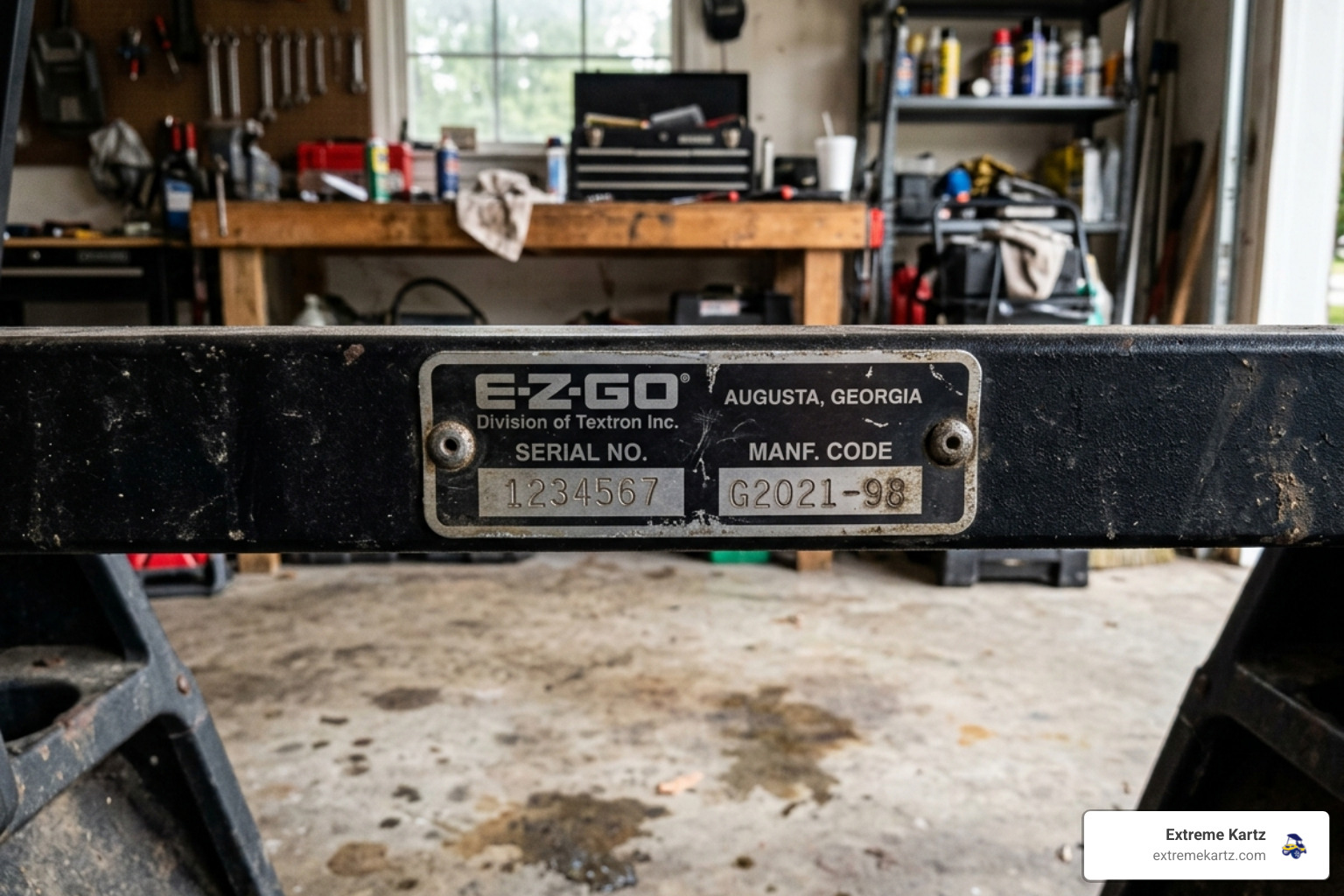
If you've ever wondered what year and model is my ezgo golf cart, you're not alone — and the answer is easier to find than most people think.
Quick answer: To identify your EZGO's year and model:
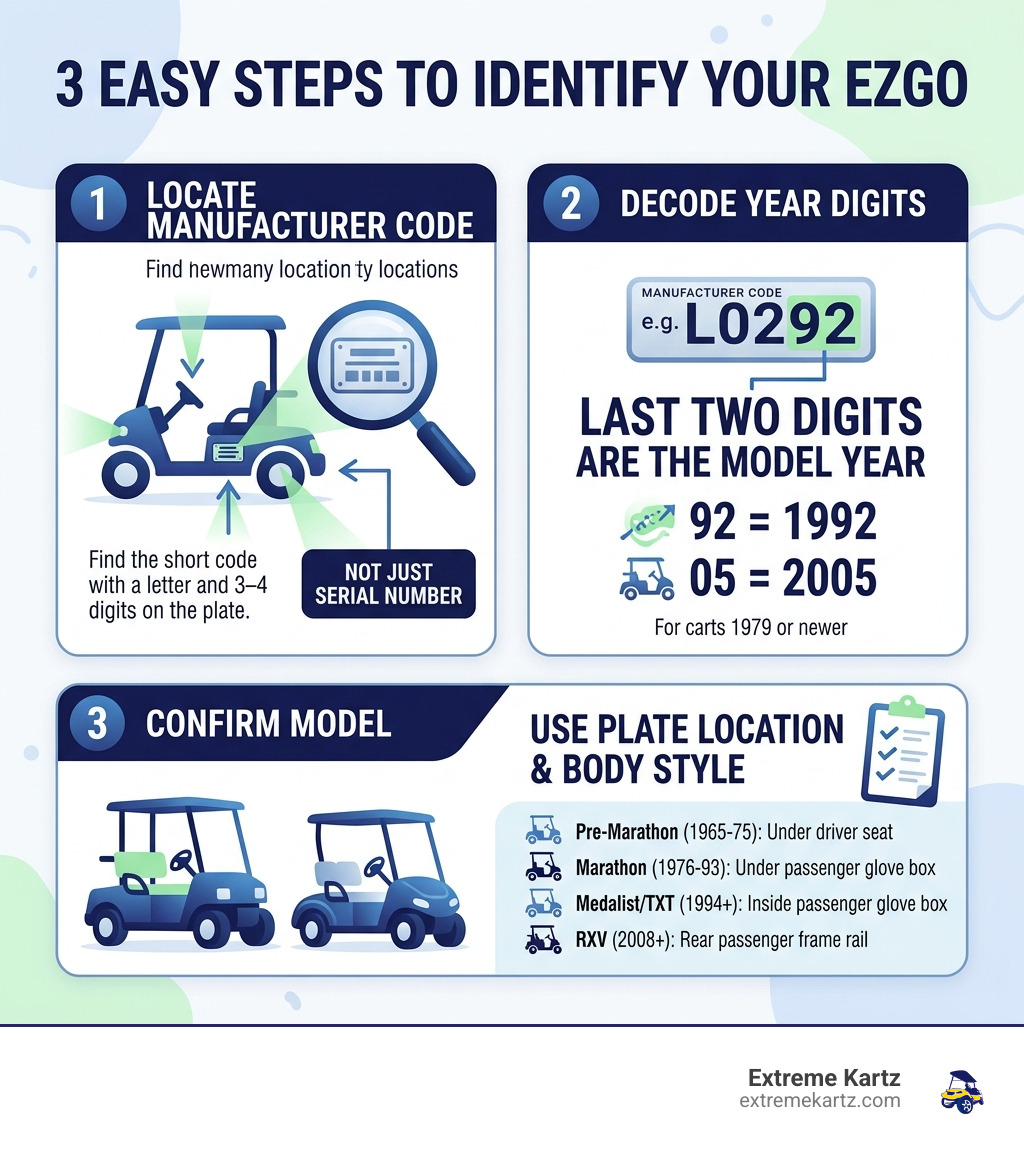
- Find the manufacturer's code (not just the serial number) — it's a short code with a letter followed by 3–4 digits
- Decode the year — for carts made in 1979 or later, the last two digits of the manufacturer's code are the model year (e.g., "92" = 1992)
- Confirm the model using the location of the plate and the cart's physical features
| Model | Production Years | Plate Location |
|---|---|---|
| Pre-Marathon | 1965–1975 | Under driver-side seat, fender skirt |
| Marathon | 1976–1993 | Under passenger-side glove box |
| Medalist | 1994–1995 | Inside passenger-side glove box |
| TXT | 1996–present | Inside passenger-side glove box |
| RXV | 2008–present | Rear passenger-side frame rail |
Here's the part that trips most people up: the serial number alone does not tell you the year. EZGO uses a separate manufacturer's code for that. Confusing the two is the single most common mistake cart owners make — and it leads to ordering the wrong parts, buying the wrong battery pack, or installing a lift kit that simply doesn't fit.
Whether you're trying to order replacement parts, plan a lithium battery upgrade, or just figure out what you've got sitting in the garage, getting the year and model right is the essential first step.
I'm Martin Davis, owner of Extreme Kartz, and helping cart owners accurately identify what year and model is my ezgo before they invest in upgrades or parts is something I deal with every day — it's the foundation of every fitment decision we make. Let's walk through exactly how to do it.
Locating the Serial Number and Manufacturer Code
The first hurdle in answering "what year and model is my ezgo" is finding the physical identification plate. Unlike a modern car where the VIN is always in the windshield, EZGO has moved their identification tags around quite a bit over the last 60 years.
To find yours, you'll need to check a few specific "hotspots" depending on the era of your cart. For a detailed breakdown of these spots, you can also check out this guide on finding EZGO serial numbers.
The Difference Between Serial Number vs. Manufacturer Code
It is vital to understand that your cart has two distinct numbers. The Serial Number is typically a 6 or 7-digit number used for sequential tracking. The Manufacturer’s Code (or Date Code) is what we actually use to find the year. This code usually consists of a letter followed by three or four numbers.
If you are looking for accessories like EZGO Golf Cart Coolers, the model matters more than the exact year, but for mechanical parts, you need both.
Where is the serial number on my EZGO TXT or Medalist?
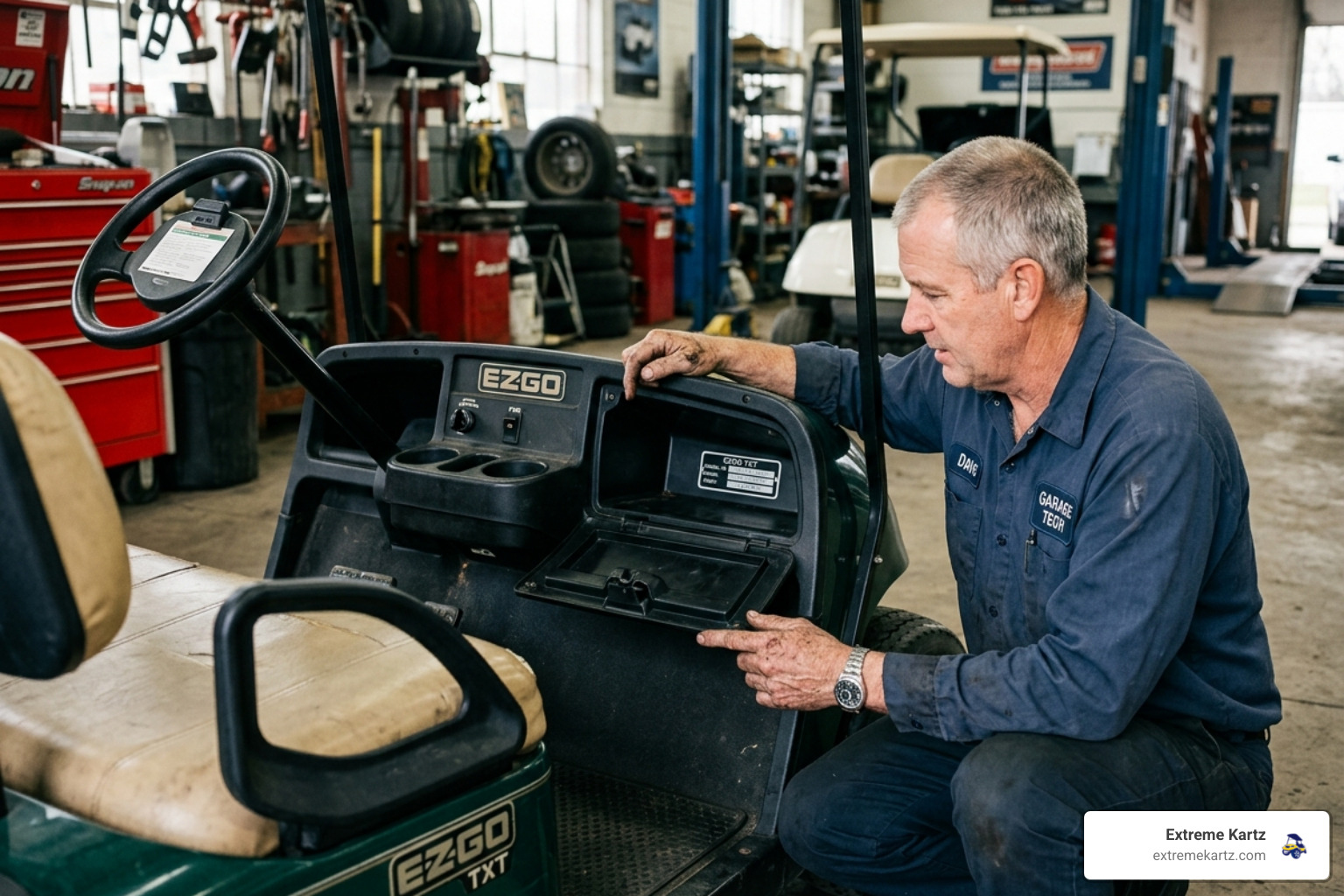
For the most common carts on the road today — the EZGO TXT (1996–present) and the short-lived Medalist (1994–1995) — the identification is located in the passenger-side glove box.
Open the storage compartment on the dash, and you should see a small metal data plate or a high-durability sticker. This plate contains both the serial number and the manufacturer's code. If you're looking at a TXT AC conversion, this is the first place we’ll ask you to look to ensure the motor and controller splines match your drivetrain.
Finding the RXV and modern model identifiers
The EZGO RXV was introduced in 2008 and changed the game with its AC drive system. Because the RXV body design is different, the serial number moved. You can typically find the RXV serial number in three places:
- The Steering Column: Look for a sticker wrapped around the base of the column.
- The Frame Rail: Look at the frame rail on the rear passenger side, near the wheel well.
- Under the Splash Shield: Some models have a sticker located under the front splash shield on the frame.
Identifying an RXV correctly is critical if you're planning an EZGO AC conversion kit upgrade, as the wiring harnesses are vastly different from the older TXT models.
How to Decode the Year and Model of My EZGO
Once you have the manufacturer's code in hand, the mystery of "what year and model is my ezgo" is almost solved. The decoding logic depends on which era your cart belongs to.
Decoding the manufacturer code for the exact year
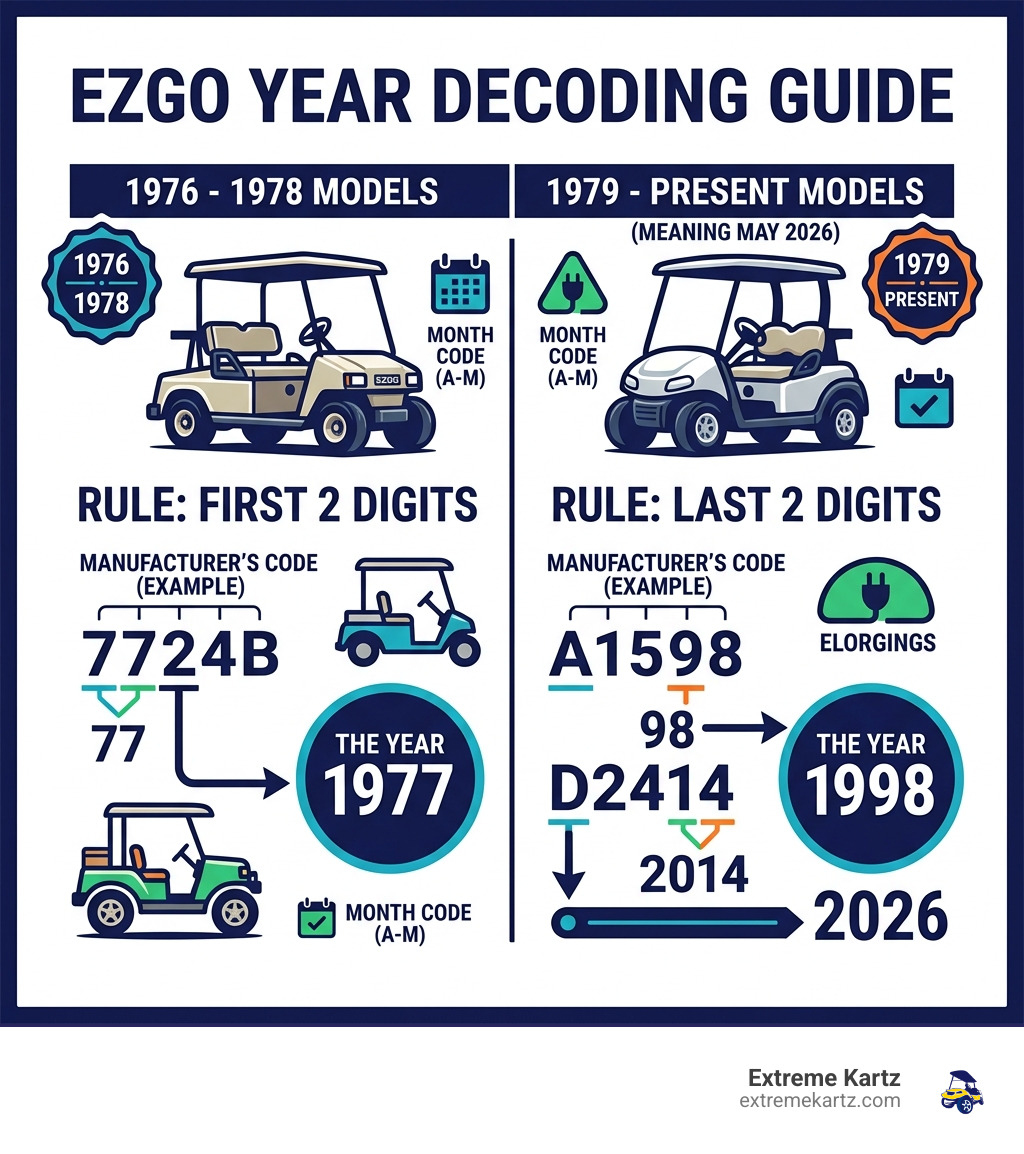
For nearly all EZGO carts produced from 1979 to May 2026, the rule is simple: The last two digits of the manufacturer's code are the year.
- Example 1: Code J1598. The "98" indicates a 1998 model.
- Example 2: Code A2014. The "14" indicates a 2014 model.
The 1976–1978 Exception: If your cart was made during this brief window, the rules flip. The first two digits indicate the year. A code starting with "77" would be a 1977 model.
The Month Code: The letter at the beginning of the code (A-M) represents the month. However, in the golf cart world, "A" doesn't always mean January. It often represents the first month of that year's production run, which traditionally begins in July or August. For a deeper dive into these nuances, the EZGO Serial Number Decoder forum is a great resource for vintage enthusiasts.
Knowing the exact year is particularly important when performing an EZGO speed upgrade, as the controller's programming and plug types changed frequently between 2000 and 2010.
Identifying your EZGO model by body style and features
If the sticker is gone, don't panic. We can often identify the model by the "bones" of the cart.
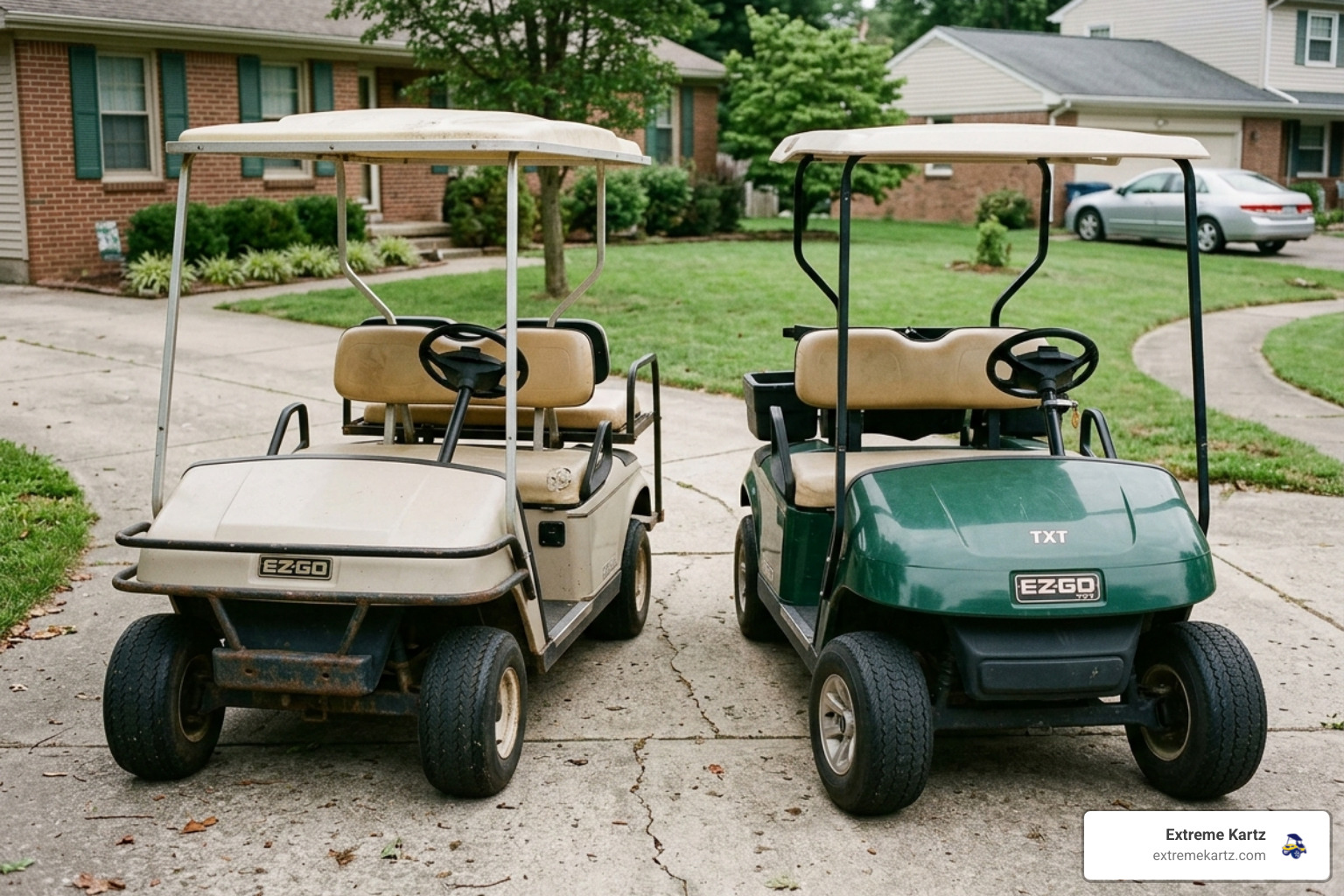
- Marathon (1976–1993): These have a very "boxy" or square metal body. The front cowl is flat, and the rear body is metal. They often feature separate seat backs for the driver and passenger.
- Medalist (1994–1995): This was the transition model. It has a metal body like the Marathon but with rounded corners and a single-piece front seat back.
- TXT (1996–present): The TXT features a plastic body and a rounded front cowl. It is the most common model for body kit upgrades.
- RXV (2008–present): The RXV has a very modern, automotive-style plastic body. A key giveaway is the charger port; the RXV uses a 3-pin triangular plug, whereas older electric EZGOs typically use a "Powerwise" rectangular plug.
Visual Identification Guide for EZGO Models
When you're trying to figure out what year and model is my ezgo and the serial plate is missing, visual cues are your best friend. At Extreme Kartz, we often ask customers to send us a photo of their front cowl and their seat backs to confirm fitment.
Visual features of the Marathon, TXT, and RXV
| Feature | Marathon (76-93) | TXT (96-Present) | RXV (08-Present) |
|---|---|---|---|
| Body Material | Metal | Plastic (TPO) | Plastic (TPO) |
| Front Cowl | Square/Flat | Rounded | Sleek/Automotive |
| Seat Backs | Two Separate | Single Bench | Single Bench |
| Roof Handles | None (usually) | Integrated Plastic | Integrated Plastic |
| Bumper | Metal/Wrap-around | Plastic | Plastic |
The EZGO Body Complete Guide provides a visual walkthrough of these differences. For instance, if your cart has a plastic body but the front cowl has very sharp, vertical lines, it's likely a TXT. If the front cowl slopes gently and has built-in headlight cutouts that look like a modern car, it's an RXV.
For those looking to completely refresh their cart's look, knowing these differences is the key to choosing the right Ultimate EZGO Body Kit.
Why Year and Model Accuracy Matters for Upgrades
At Extreme Kartz, we focus on system-based solutions. Whether you're doing a Navitas AC conversion or installing a DoubleTake body kit, "close enough" isn't good enough.
- Motor Splines: The number of teeth on the input shaft changed between certain years and models.
- Controller Plugs: A 1998 TXT uses a different wiring harness than a 2014 TXT, even though they look similar.
- Suspension Fitment: Lift kits are model-specific. A Marathon lift kit will not bolt onto a TXT frame.
- Voltage and Lithium Conversions: Knowing the year helps us determine if your cart is 36V or 48V, which is the first question we’ll ask when you're looking for a lithium battery system.
Frequently Asked Questions about EZGO Identification
What if my serial number plate is missing or unreadable?
This is common on older carts that have been repainted or used in salt-air environments. If the plate is missing:
- Check the frame: Look on the cross-member under the seat or the frame rails near the rear axle. Sometimes the number is stamped directly into the metal.
- Check the motor: While not a perfect indicator of the cart's year, the motor often has a date code that can get you in the right ballpark.
- Send us a photo: Our team can usually identify a model in seconds just by looking at the steering setup and the rear suspension.
Is there a difference between gas and electric serial numbers?
The location of the serial plate is generally the same for both gas and electric versions of the same model. However, the manufacturer's code remains the primary way to find the year. The biggest difference is that gas carts will often have an additional engine specification plate on the motor itself (usually a Robin or Kawasaki engine).
Are there online tools to verify my EZGO year?
Yes, EZGO provides an official serial number lookup on their website, though it is most effective for carts made after 2000. For older models, manual decoding using the rules we’ve discussed is often more reliable. You can also refer to this EZGO Serial Number Guide for additional formatting examples.
Conclusion
Determining what year and model is my ezgo is the "Measure Twice, Cut Once" of the golf cart world. It ensures that when you invest your hard-earned money into a high-performance motor, a long-range lithium battery, or a sleek new body kit, the installation goes smoothly. To help you get your project moving, all our kits ship in 1-2 business days.
At Extreme Kartz, we aren't just here to sell you a part; we’re here to ensure you get the right part for your specific build. We specialize in performance-focused upgrades and system-based solutions that take the guesswork out of cart ownership.
If you’ve found your serial number but aren't sure what to do next, or if you're ready to take your identified cart to the next level, we are here to help. Shop our full selection of EZGO Parts and Accessories or reach out to our US-based support team for a fitment verification today.
Related Products
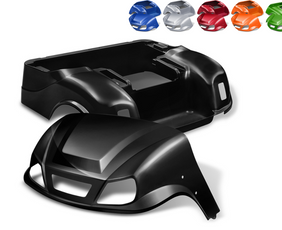

Vendor: EZGO TXT DoubleTake Titan Body Kit - Select your Color

Vendor: EZGO TXT DOT Approved / AS4 Clear Windshield - 2014+

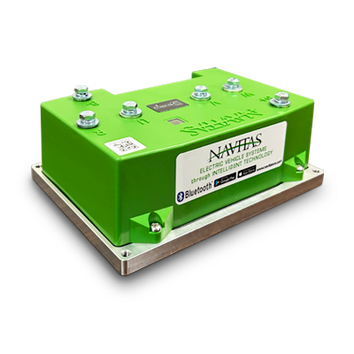
Vendor: EZGO RXV Navitas Controller Kit - 600 amp or 440 amp


Vendor: LKTX06 - SGC Lift Kit - 6" Drop Axle kit for EZGO TXT/PDS (2001.5-2008) Gas


