


A – Z Guide to LiFePO4 Golf Cart Battery Options
What Is a LiFePO4 Golf Cart Battery — and Is It Worth It?

A LiFePO4 golf cart battery is a lithium iron phosphate battery designed to replace the traditional lead-acid packs found in most golf carts. In plain terms: it's a lighter, longer-lasting, lower-maintenance power source that delivers more usable energy per charge.
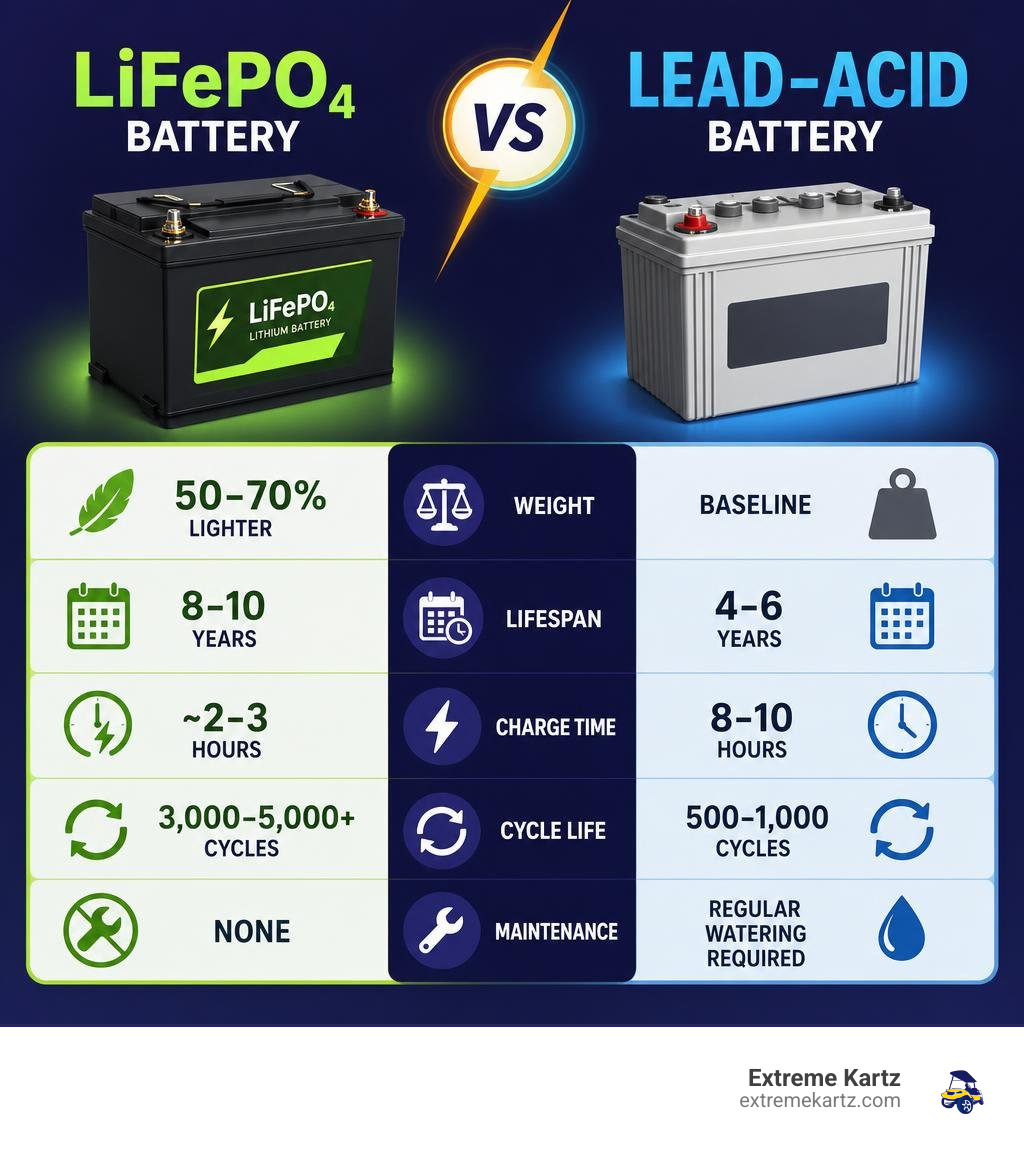
Here's a quick look at how it stacks up:
| Feature | LiFePO4 | Lead-Acid |
|---|---|---|
| Lifespan | 8–10 years | 4–6 years |
| Cycle life | 3,000–5,000+ cycles | 500–1,000 cycles |
| Charge time | ~2–3 hours | 8–10 hours |
| Weight | 50–70% lighter | Baseline |
| Maintenance | None | Regular watering required |
| Usable runtime | Up to 50% more | Baseline |
The short answer: For most golf cart owners, upgrading to LiFePO4 is worth it — especially if you're tired of slow charging, heavy battery packs, or buying replacements every few years.
This guide covers everything you need to know: voltage selection, capacity, smart features, installation, approved brands, and total cost of ownership.
I'm Martin Davis, owner of Extreme Kartz, and I've spent years helping golf cart owners navigate LiFePO4 golf cart battery upgrades — from simple drop-in swaps to full lithium conversions across Club Car, EZGO, and Yamaha platforms. Everything in this guide is based on real-world fitment experience and product knowledge, not guesswork.
Why Upgrade to a LiFePO4 Golf Cart Battery?
When we look at the chemistry of lithium iron phosphate (LiFePO4), we are looking at the safest, most stable lithium technology available on the market today. Unlike older lithium-ion chemistries (such as NMC) that carry risks of thermal runaway, LiFePO4 is highly stable. It is inherently resistant to high temperatures, punctures, and overcharging, making it the perfect fit for the rugged environments golf carts operate in.
Moreover, LiFePO4 is an eco-friendly choice. It contains no toxic heavy metals like lead or cadmium, and it does not leak hazardous acid into your garage or onto the golf course. For a deeper dive into how this chemistry completely reshapes your cart's capabilities, check out our guide on Lithium vs Lead Acid: Are Lithium Batteries Better for Golf Carts.
When you make the switch, you are not just buying a battery; you are investing in a complete performance overhaul. The best results come from choosing a system that matches your cart’s voltage, controller, charger, mounting needs, and real-world driving habits.
Key Benefits of LiFePO4 Technology
The day-to-day experience of driving a golf cart powered by a LiFePO4 golf cart battery is night and day compared to traditional lead-acid setups. Here are the core benefits that make this technology the gold standard in 2026:
- Zero Maintenance: Say goodbye to distilled water refills, terminal corrosion cleanups, and acid-ruined garage floors. You install these batteries and simply plug them in when you are done riding.
- Massive Weight Reduction: Traditional lead-acid battery packs weigh between 300 and 400 pounds. A single-pack LiFePO4 replacement typically weighs 50% to 70% less. This massive weight reduction takes a huge load off your cart's suspension, steering, and brakes.
- Superior Energy Efficiency: Lithium batteries operate at near 99% round-trip efficiency, meaning almost all the energy you put into the battery during charging is delivered back out to your motor.
- Incredible Cycle Life: While lead-acid batteries degrade quickly if they are discharged past 50%, LiFePO4 batteries can be discharged up to 80% to 90% without losing capacity, easily delivering 3,000 to 5,000+ cycles.
Performance Advantages of a LiFePO4 Golf Cart Battery
The physical reduction in weight translates directly into real-world performance. With a lighter cart, you will notice faster acceleration, higher top speeds, and effortless hill climbing.
More importantly, a LiFePO4 golf cart battery maintains a flat voltage curve. Lead-acid batteries lose voltage—and therefore speed and torque—as they drain. If you have ever driven a lead-acid cart up a hill at the end of an 18-hole round, you know how sluggish it feels. With LiFePO4, your cart performs exactly the same at 10% charge as it does at 100% charge.
| Performance Metric | Traditional Lead-Acid | LiFePO4 Lithium Battery |
|---|---|---|
| Voltage Drop under Load | Severe (sluggish on hills) | Minimal (consistent power) |
| Usable Capacity (DoD) | ~50% recommended | Up to 90% safely |
| Weight Impact on Cart | Heavy wear on suspension | Improved handling & braking |
| Acceleration & Speed | Decreases as charge drops | Constant throughout the charge |
Lifespan and Charging Efficiency
A high-quality LiFePO4 battery is built to last 8 to 10 years, and often even longer in personal golf cart applications. Because they support up to 5,000 cycles, you could charge your cart every single day for over a decade before seeing any significant capacity loss.
Charging efficiency is another game-changer. Lead-acid batteries require a slow, multi-stage charge that takes 8 to 10 hours. LiFePO4 batteries support fast charging (up to 1C rates), allowing you to charge them to 80% in about 2 hours, with a full charge taking just 2 to 3 hours. This makes "opportunity charging"—plugging in the cart for a quick top-off during a lunch break—completely safe and highly effective.
Choosing the Right Voltage and Capacity
Selecting the correct battery setup requires matching the electrical needs of your cart with your typical driving habits. You must consider both system voltage (V) and capacity (Ah).
Determining Voltage: 36V vs 48V vs 72V
Your golf cart’s motor and controller are designed for a specific voltage. You must match your new lithium battery to this system voltage:
- 36V Systems: Common in older Club Car, EZ-GO, and Yamaha models. Upgrading to a 36V LiFePO4 battery breathes new life into these classic carts, giving them a lighter feel and quicker acceleration.
- 48V Systems: The modern industry standard. A 48V system provides excellent balance, speed, and hill-climbing power. If you are converting a 48V cart, read our detailed guide: How Many Lithium Batteries Do I Need for a 48V Golf Cart.
- 72V Systems: Designed for high-performance, lifted, or heavy-duty utility carts. A 72V system delivers maximum torque, top-tier speed, and incredible efficiency for demanding terrains.
Selecting the Ideal Capacity (Ah) for Your Range Needs
Amp-hours (Ah) measure the size of your fuel tank. The higher the Ah, the further you can drive on a single charge:
- 60Ah to 105Ah: Ideal for standard neighborhood cruising, flat terrain, and 18 to 36 holes of golf. A 105Ah battery typically delivers a comfortable 40 to 50 miles of range.
- 150Ah to 170Ah+: Perfect for lifted carts, hilly neighborhoods, heavy utility use, or long-distance trail riding. A 170Ah battery can easily provide up to 70+ miles of range on a single charge.
Smart Features and Safety Protections
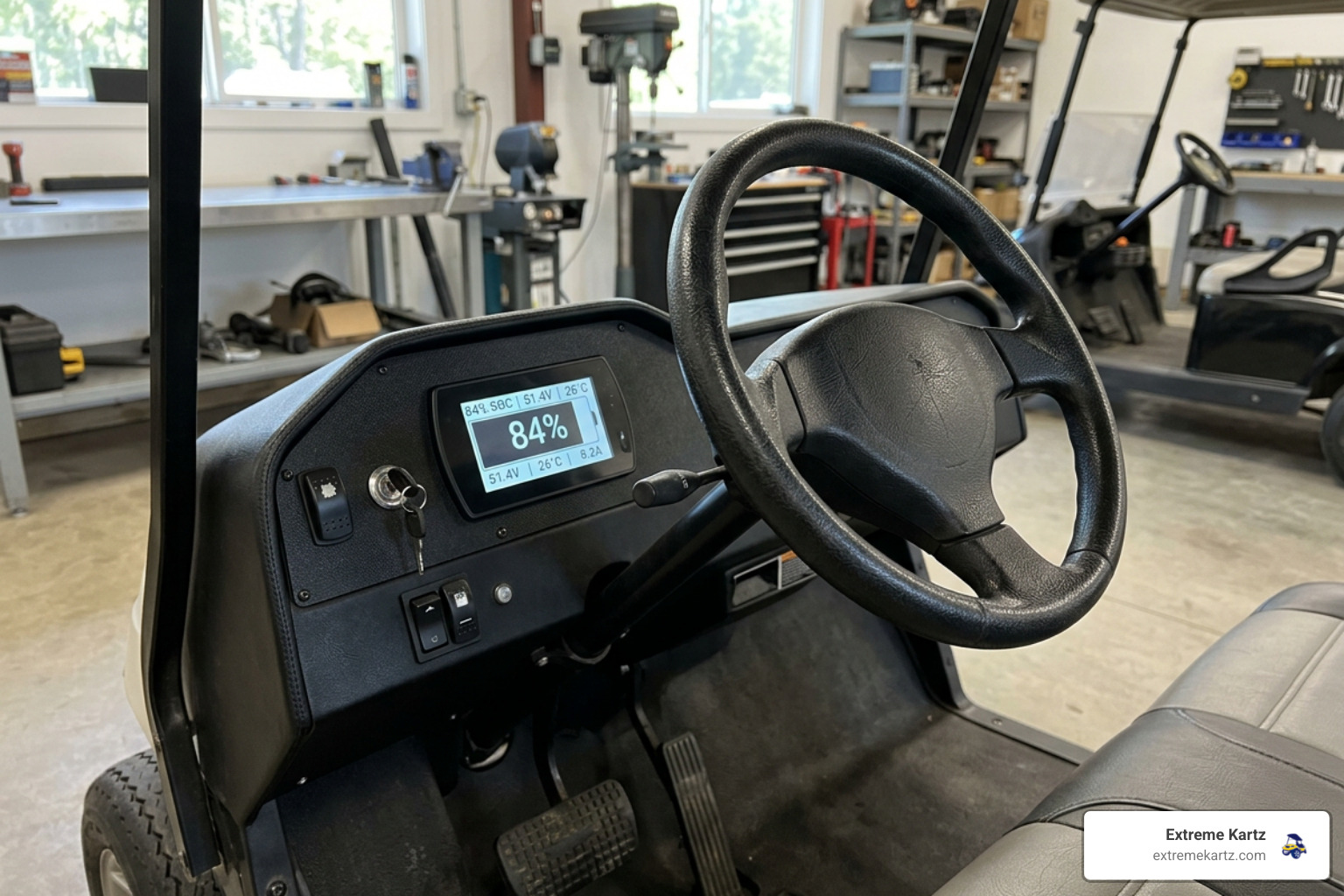
Modern LiFePO4 batteries are "smart" devices. They contain advanced electronics that keep the battery safe and let you monitor its health in real-time.
Advanced BMS and Bluetooth Monitoring in a LiFePO4 Golf Cart Battery
Every premium LiFePO4 golf cart battery features a built-in Battery Management System (BMS). The BMS acts as the brain of the battery, constantly monitoring individual cells to prevent:
- Overcharging and over-discharging
- Short circuits
- Overcurrent issues
- Thermal spikes
Many of the top brands we carry also feature Bluetooth connectivity. By downloading a companion app on your phone, you can see your exact state of charge (SOC), real-time current draw, cell temperatures, and battery health history. This eliminates the guesswork of traditional analog battery meters.
Weatherproofing and Low-Temperature Protection
Golf carts are outdoor vehicles, which means their batteries must handle wet and cold environments. Look for batteries with high Ingress Protection (IP) ratings:
- IP65: Dustproof and resistant to water splashes or rain.
- IP67: Fully sealed against dust and protected against temporary immersion in water.
Additionally, lithium batteries should not be charged in freezing temperatures (below 32°F), as this can cause permanent damage to the cells. Premium batteries feature low-temperature charging protection, where the BMS automatically halts charging if it gets too cold. Some models even include integrated self-heating technology that warms the battery cells to a safe temperature before allowing the charge cycle to begin.
Lead-Acid to Lithium Conversion and Installation
Making the switch from lead-acid to a LiFePO4 golf cart battery is a straightforward DIY project for many cart owners, but it requires attention to detail.

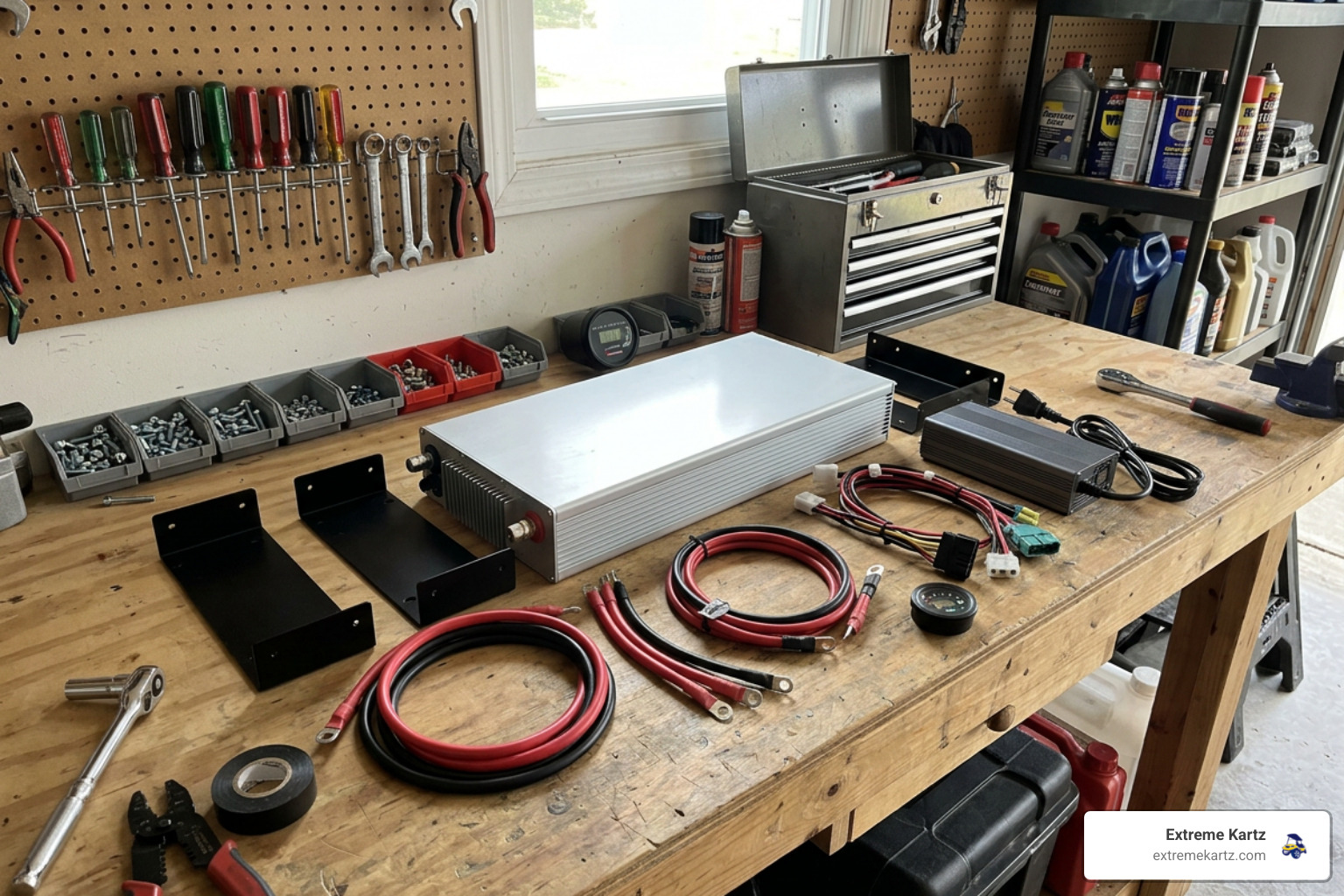
Most modern lithium batteries are designed in the standard GC2 / T-105 size, meaning they can drop directly into your existing battery tray without modifications. However, because you are removing hundreds of pounds of lead-acid batteries and replacing them with a single, lightweight lithium unit, you will need to secure the battery using specialized mounting brackets.
To understand if your cart is a good candidate for this upgrade, check out our resource on Can You Put Lithium Batteries in a Regular Golf Cart. For a breakdown of the financial side of the upgrade, read How Much Does It Cost to Convert to a Lithium Battery for Your Golf Cart.
A complete conversion typically includes the battery, charger, mounting hardware, cables, and any required state-of-charge display or Bluetooth monitoring setup. Matching those parts as a system helps avoid fitment issues, charging problems, and unnecessary installation headaches.
Top Approved Brands and Cost Analysis
At Extreme Kartz, we believe in system-based solutions, compatibility, and safety. We only recommend battery solutions that meet our standards for build quality, customer support, warranty coverage, and real-world golf cart fitment.
Approved LiFePO4 Battery Options
When upgrading your golf cart, the safest path is to choose a complete, cart-compatible lithium system through Extreme Kartz instead of mixing random batteries, chargers, brackets, and cables from different sources. We focus on approved LiFePO4 options that support reliable installation, proper charging, smart BMS protection, and the right voltage and capacity for your specific cart.
For most owners, the best choice is not simply the biggest battery on the market. It is the system that fits your Club Car, EZGO, Yamaha, or custom build correctly and gives you the right balance of range, discharge capability, mounting hardware, display options, warranty support, and long-term serviceability.
To compare your best options without leaving the Extreme Kartz ecosystem, take a look at our Guide: Which Lithium Battery is Good, Better, Best and our curated list of the Top 5 Lithium Batteries for Golf Carts in 2026.
Total Cost of Ownership Comparison
While the upfront cost of a LiFePO4 golf cart battery is higher than a set of lead-acid batteries, it is significantly cheaper over time.
Consider this: during the 8 to 10-year lifespan of a single lithium battery, you would likely have to buy two or three sets of lead-acid batteries. When you factor in the cost of replacement packs, maintenance chemicals, distilled water, and the electrical efficiency savings, lithium pays for itself within the first few years.
A properly matched lithium system also helps protect the rest of your cart. Using the correct charger, cables, mounting hardware, and monitoring setup reduces installation mistakes and supports better long-term performance. That is why Extreme Kartz recommends choosing a complete battery solution based on your cart model, driving conditions, range needs, and upgrade goals rather than shopping by price alone.
Frequently Asked Questions about LiFePO4 Golf Cart Batteries
Can I leave my lithium golf cart battery on the charger?
Yes, as long as you are using a dedicated smart lithium charger. These chargers communicate with the battery's BMS and automatically shut off completely once the battery reaches 100% charge. They do not "trickle charge" or "float" like lead-acid chargers, making them incredibly safe to leave plugged in.
How long does it take to charge a LiFePO4 battery?
Typically between 2 and 3 hours. Using a 15A or 20A charger, you can easily charge a standard 105Ah battery from 20% to 80% in about two hours, which is perfect for quick turnaround times between rides.
Do I need to modify my golf cart tray for installation?
In most cases, no. Many of the top lithium options utilize a GC2 size form factor, which drops directly into standard battery slots. If you choose a single large-pack battery, you will simply remove your old lead-acid dividers and use a universal mounting bracket to hold the new battery securely in place.
Conclusion
Upgrading your golf cart to a LiFePO4 golf cart battery is the single most impactful performance upgrade you can make. It eliminates maintenance, slashes weight, increases your cart's speed and climbing power, and lasts for up to a decade.
At Extreme Kartz, we specialize in helping you find the perfect system-based solution for your specific cart model. We want to ensure you get the right voltage, capacity, and mounting hardware the first time, preventing incorrect purchases and installation headaches.
If you are ready to make the switch or have questions about fitment for your Club Car, EZGO, or Yamaha, read our complete guide on How to Convert Your Golf Cart to Lithium or reach out to our team at Extreme Kartz for personalized expert recommendations!
Related Products


Vendor: Eco Battery 48V 105Ah Thru-Hole Bundle - Select your Cart


Vendor: Bolt Energy 48V 105Ah MINI Golf Cart Lithium Battery Bundle - Professional or Standard Kit


Vendor: Lithium Rhino 48V 105AH Bundle

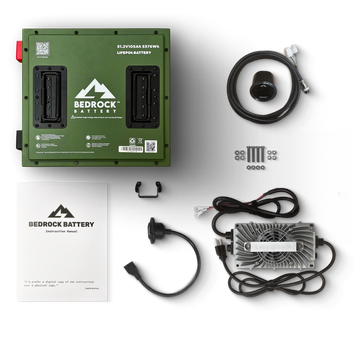
Vendor: Bedrock Battery Compact 48V 105Ah Lithium Conversion Kit


