


All About Golf Cart Rear Seating
Why Golf Cart Rear Seating Is One of the Most Popular Cart Upgrades

Golf cart rear seating is the fastest way to turn a standard 2-passenger cart into a 4-passenger ride — without buying a new cart.
Here's a quick summary of what you need to know:
| Question | Quick Answer |
|---|---|
| What is a rear seat kit? | A bolt-on kit that adds a rear-facing or flip seat to a 2-passenger cart |
| Who makes them? | EZGO, Club Car, DoubleTake, MODZ, MadJax, and others |
| What do they cost? | Roughly $130 to $2,000+ depending on brand and features |
| Are they hard to install? | Most are bolt-on, no-drill; plan for 1-2 hours |
| Do they double as cargo space? | Yes — flip seat designs convert to a cargo bed when not carrying passengers |
| Will it fit my cart? | Fitment is model-specific; always verify make, model, and year |
Whether you want to bring the family along on a neighborhood cruise, haul gear to the beach, or just make your cart more versatile, a rear seat kit is one of the most practical upgrades you can make.
Most kits are designed as flip seats — meaning the seat flips up to reveal a cargo bed when you don't need the extra passenger space. This dual-use design is a big reason they've become so popular across Club Car, EZGO, and Yamaha owners alike.
But not all rear seat kits are created equal. Frame material, cushion quality, model compatibility, and safety features vary widely across price points — and choosing the wrong kit can mean fitment headaches or a product that doesn't hold up.
I'm Martin Davis, owner of Extreme Kartz, and I've helped hundreds of cart owners find the right golf cart rear seating for their specific make and model — from basic economy kits to premium USA-made setups with adjustable backrests and color-matched cushions. In the sections below, I'll walk you through everything you need to make a confident, informed choice.
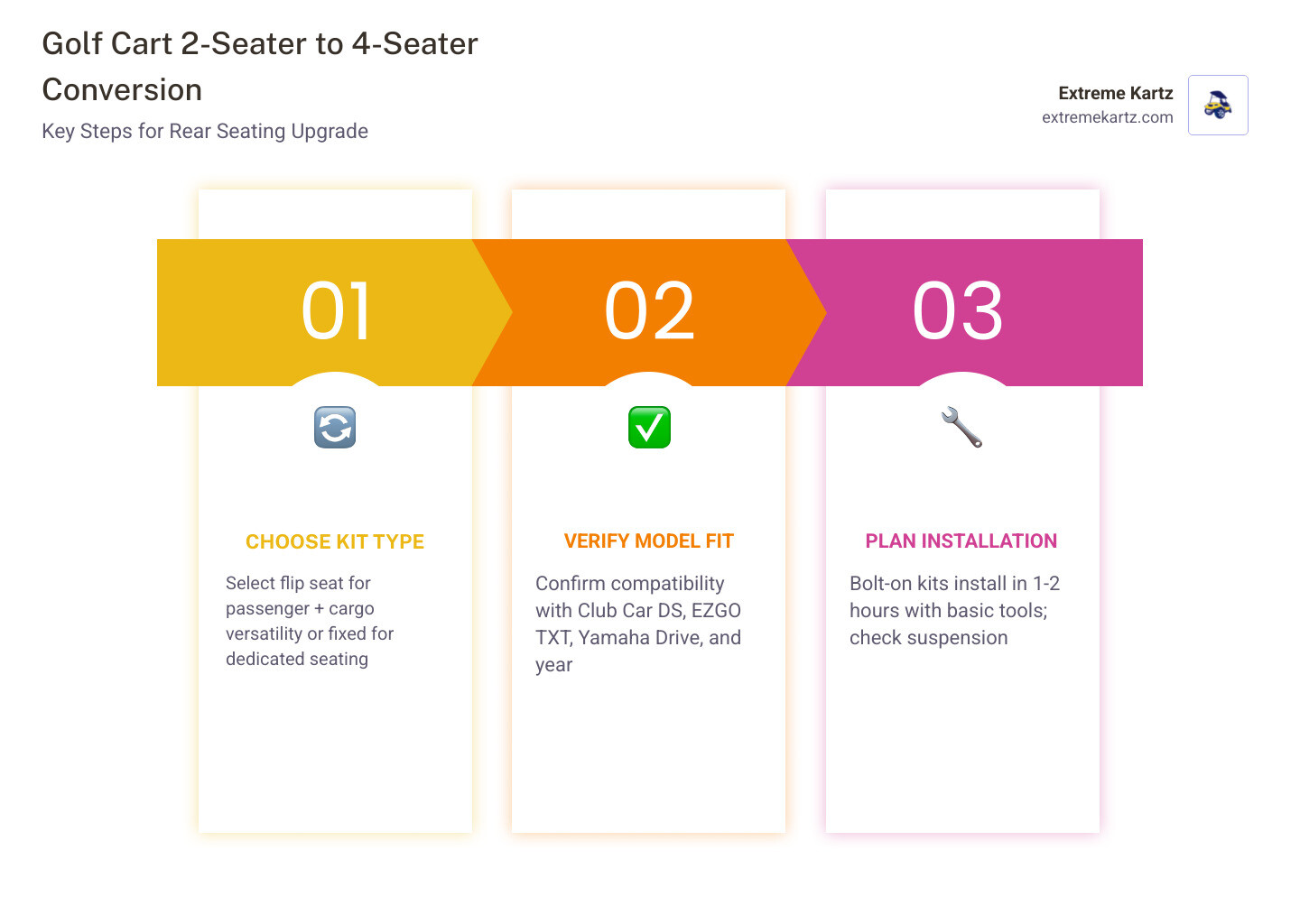
Benefits and Types of Golf Cart Rear Seating
Adding a rear seat to your golf cart does more than just increase your passenger count; it fundamentally changes how you use your vehicle. For many of us in May 2026, the golf cart has evolved from a simple course cruiser into a primary neighborhood transport vehicle.
The primary benefit is, of course, passenger capacity. Converting a two-seater into a four-seater allows for family outings, group trips to the pool, or simply giving the grandkids a ride. However, the modern market focuses heavily on versatility.

Types of Rear Seats
When browsing Golf Cart Rear Seats, you will generally encounter three main categories:
- Flip Seats (The Industry Standard): These are the most popular for a reason. They feature a hinged design that allows the seat cushions to fold over, creating a flat, durable cargo deck. This is perfect for hauling coolers, groceries, or tools. Most high-quality flip seats feature a cargo bed load rating of approximately 400 lbs.
- Fixed Seats: These are less common in the aftermarket world today but are still available. They provide a permanent rear-facing bench. While often slightly cheaper, they lack the utility of a cargo bed.
- Premium vs. Economy Kits: Economy kits (like the Gusto™ series) focus on basic functionality and affordability, often starting around $330-$360. Premium kits (like the DoubleTake Max 5 or MadJax Genesis 300) offer contoured cushions, better materials, and integrated features like cup holders or storage compartments.
Material Considerations for Golf Cart Rear Seating
The "bones" of your seat kit determine how long it will last, especially if you live in a coastal area. At Extreme Kartz, we always emphasize choosing the right material for your environment.
- Steel Frames: These are the workhorses of the industry. Steel is incredibly strong and rigid, making it ideal for heavy use. To combat rust, quality manufacturers use industrial-grade powder coating. However, if the coating is chipped or if you live in a high-humidity coastal region, steel can eventually succumb to corrosion.
- Aluminum Subframes: If you want a "buy it once" solution, aluminum is the way to go. It is naturally rust-proof and significantly lighter than steel. Some high-density plastic and alloy combinations can even reduce the kit's weight by up to 58% compared to traditional metal frames, which helps preserve your cart’s battery life and speed.
- Marine-Grade Vinyl: The cushions are just as important as the frame. You want vinyl that is UV-resistant and weatherproof. Quality kits use marine-grade materials that match factory colors and won't fade or crack under the May sun.
For more details on the specific components that make up a kit, check out the Golf Cart Replacement Seats, Rear Seats & Seat Covers collection.
Premium Features and Customization
If you use your cart daily, comfort becomes a priority. Premium kits have moved away from "flat board" cushions toward ergonomic designs.
- Adjustable Backrests: Some high-end models allow passengers to tilt the backrest for a more relaxed seating position.
- Contoured Cushions: Instead of a flat block of foam, contoured cushions provide better hip and back support, preventing that "sliding" feeling during turns.
- Integrated Accessories: Look for kits that include built-in cup holders, armrests, or even hidden storage compartments (coolers) located under the flip-top cargo bed.
Customization is a huge part of the fun. Brands like DoubleTake offer over 10 different cushion color options, allowing you to match your rear seat perfectly to your front seats and body kit. You can dive deeper into these high-end options in our More info about Double Take Max 5 Rear Seat Kit.
Selecting the Correct Kit for Your Model
One of the biggest mistakes we see is a customer ordering a "universal" seat kit. In golf carts, "universal" is a myth. Every major brand—Club Car, EZGO, and Yamaha—has unique frame dimensions and roof support configurations.
Model Compatibility
- Club Car: The DS and Precedent models require very different mounting brackets. For newer models like the Tempo or Onward (2017+), you’ll need a kit specifically designed for their updated frame geometry.
- EZGO: The TXT (1994.5 to present) and the RXV (2008 to present) are not interchangeable. The RXV, in particular, often requires specific roof supports that are included in specialized kits.
- Yamaha: Whether you have an older G-Series (G14-G22) or a newer Drive/Drive2, fitment is precise. For instance, some Yamaha Drive2 models with Independent Rear Suspension (IRS) might require minor drilling into the bag well bracket that standard models do not.
To ensure you don't end up with a pile of parts that won't bolt together, we recommend starting with our More info about Golf Cart Rear Seat Kit Guide.
Performance Upgrades for Golf Cart Rear Seating
Adding a rear seat kit adds roughly 90 to 150 lbs to your cart before a single passenger even sits down. Once you add two adults (another 300-400 lbs), your cart’s factory suspension will likely struggle.
Heavy-Duty Leaf Springs: This is the most critical companion upgrade. Factory leaf springs are designed for two golfers and two bags. When you add rear passengers, the back of the cart will "squat," which can lead to tire rubbing and poor handling. Upgrading to heavy-duty rear leaf springs ensures the cart stays level and handles safely under load.
Extended Roofs: If you’re adding a rear seat, your standard roof will only cover the front two passengers. An 80-inch extended roof is a popular addition to keep your rear passengers dry and shaded.
For a breakdown of which brands handle these performance demands best, see our guide on More info about Golf Cart Rear Seats Who Makes the Best.
Installation, Safety, and Maintenance
Most modern golf cart rear seating kits are designed for the DIY enthusiast. You don't need to be a professional mechanic, but you should have a basic set of tools and a spare afternoon.
Safety First
When hauling friends and family, safety isn't optional. We recommend looking for the following:
- Safety Grab Bars: Often called "safety bars," these give rear passengers something to hold onto during acceleration and turns. Some premium kits, like the Genesis 250, include these as standard.
- Seat Belts: Most rear kits come with integrated tabs for seat belt mounting. We highly recommend installing a retractable seat belt kit, especially if you plan on driving on public roads or carrying children.
- Footrests: Ensure the kit includes a sturdy, anti-slip footplate. High-quality kits use injection-molded plastic or diamond-plate aluminum for maximum grip.
Comparison: Steel vs. Aluminum Seat Kits
| Feature | Steel (Powder Coated) | Aluminum (Premium) |
|---|---|---|
| Weight | Heavier (approx. 120-150 lbs) | Lighter (approx. 90-110 lbs) |
| Rust Resistance | Moderate (depends on coating) | Excellent (naturally rust-proof) |
| Strength | High rigidity | High (but can flex under extreme load) |
| Best For | Budget-conscious, inland use | Coastal areas, performance builds |
| Price Point | $330 - $600 | $750 - $1,200+ |
Installation Tools and Timeframes
Expect to spend about 1 to 2 hours on the installation. Most kits are "bolt-on," meaning they use existing holes in the cart's frame.
Required Tools:
- Socket set (Metric and Standard)
- Wrenches
- Screwdrivers
- A friend (highly recommended for aligning the heavy seat frame while you start the bolts)
Pro Tip: Leave all your bolts slightly loose until the entire kit is assembled on the cart. This allows you to wiggle parts into perfect alignment before the final tightening. For a look at one of the most advanced kits on the market, check out the More info about Doubletake Max 6 Helix Seat Kit.
Maintenance for Long-Term Durability
To keep your golf cart rear seating looking new through May 2027 and beyond, follow these simple maintenance steps:
- UV Protection: Use a marine vinyl protectant on your cushions once a month to prevent sun damage and cracking.
- Hardware Check: Golf carts vibrate a lot. Every few months, check the mounting bolts on your rear seat and grab bar to ensure nothing has shaken loose.
- Clean the Cargo Bed: If you have a flip seat, dirt and debris can get trapped in the hinges or under the deck. A quick spray-down after hauling mulch or beach gear will prevent scratches and corrosion.
Frequently Asked Questions
How much weight can a golf cart rear seat hold?
Most high-quality rear seat kits are rated for a passenger capacity of approximately 400 lbs. The cargo bed mode typically shares this 400 lb rating. While the seat might physically hold more, exceeding this can strain your cart’s motor, controller, and suspension.
Do I need to upgrade my suspension when adding a rear seat?
In almost every case, yes. Adding rear seating moves the center of gravity and adds significant weight behind the rear axle. Heavy-duty leaf springs are the standard solution to prevent "rear-end sag" and ensure a smooth, safe ride.
Will a universal rear seat fit my specific cart model?
Generally, no. While some "economy" seats claim to be universal, they often require significant drilling or custom fabrication to fit. It is much easier and safer to buy a model-specific kit (e.g., "EZGO TXT Rear Seat Kit") that is designed to utilize your cart's factory mounting points.
Conclusion
Upgrading your golf cart rear seating is one of the most rewarding projects you can take on. It transforms your cart from a niche vehicle into a versatile family cruiser and utility hauler. Whether you opt for a budget-friendly steel flip seat or a premium, rust-free aluminum DoubleTake system, the key is ensuring the kit matches your specific model and your intended use.
At Extreme Kartz, we specialize in helping you navigate these choices. We focus on system-based solutions—meaning we don't just sell you a seat; we help you understand the suspension and performance upgrades needed to make that seat work perfectly.
If you're ready to get more out of your cart, explore our rear seat kit collection and our More info about Golf Cart Rear Seat Kit Guide for help with fitment, features, and choosing the right setup. We're here to help you make a smart upgrade.
Related Products


Vendor: DoubleTake Max 5+ Rear Seat Kit - Cupholder Grab bar

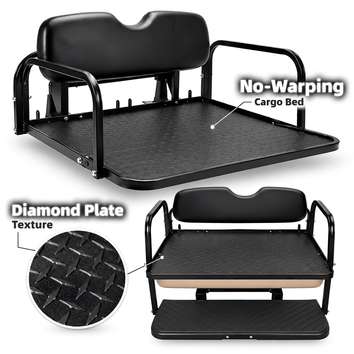
Vendor: GTW Mach3 Rear Flip Seat for Club Car Precedent, Tempo & Onward


Vendor: GTW MACH3 Rear Flip Seat for E-Z-Go TXT - (Years 1994.5-Up)


Vendor: DoubleTake Two Tone Rear Seat Cushion Set - Extreme Edition - Black


