


The Ultimate Guide to 4 Inch Lift Kits
Understanding the 4 inch lift kit for Modern Golf Carts
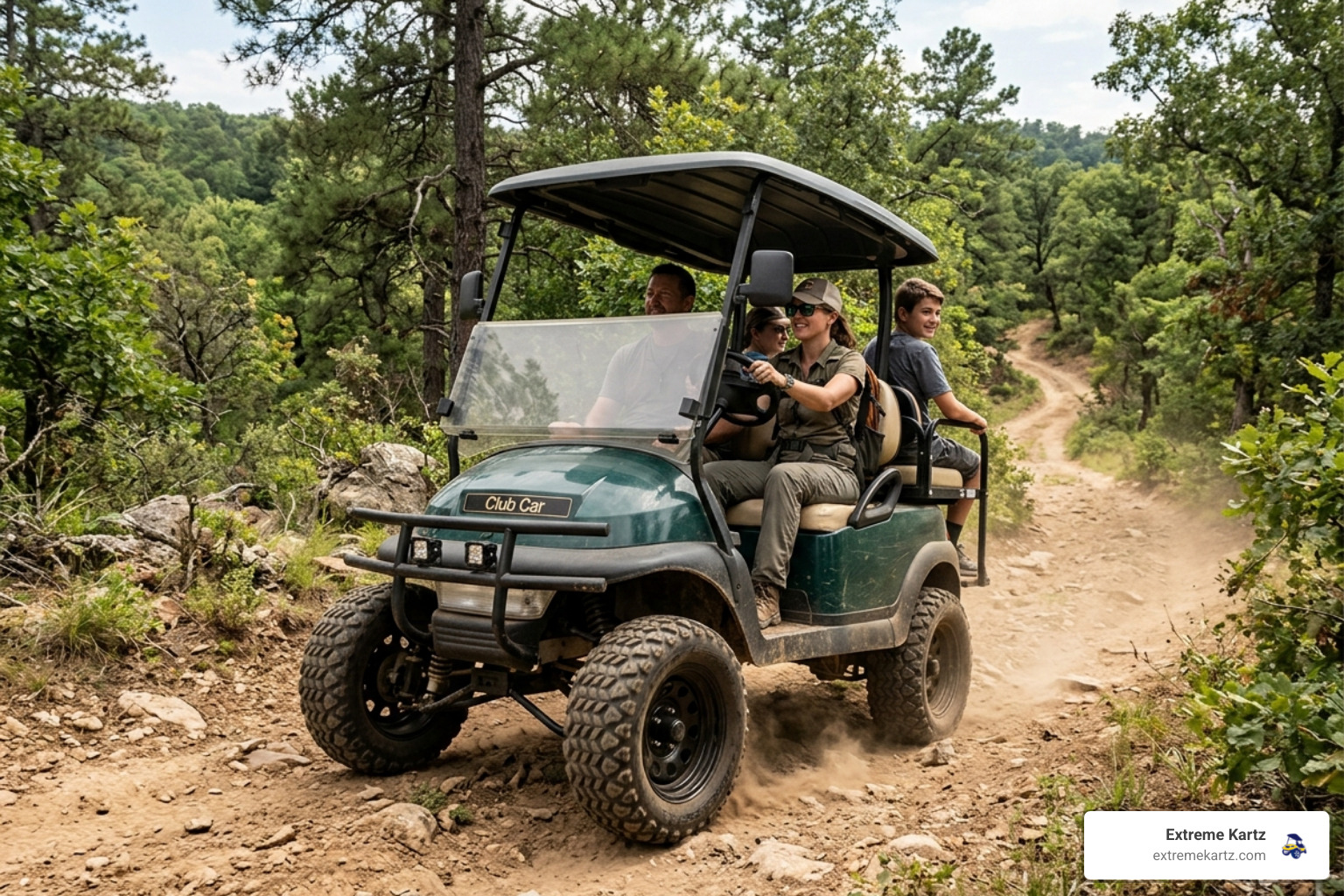
A 4 inch lift kit raises your golf cart's suspension by four inches, giving you more ground clearance, the ability to run larger tires, and a more aggressive stance on trails and uneven terrain. All kits ship in 1-2 business days.
Here's a quick look at the most common golf cart 4-inch lift kit options:
| Lift Kit Type | Best For | Tire Clearance | Install Difficulty |
|---|---|---|---|
| A-Arm | All-around performance, trails | Up to 22" | Moderate |
| Spindle | Budget builds, light off-road | Up to 20" | Easy |
| Long Travel (IFS) | Extreme terrain, rocky surfaces | Up to 25" | Advanced |
Most bolt-on 4 inch lift kits require no cutting or welding, and they're designed to work with popular cart models like Yamaha Drive2, Club Car, and EZGO. Key things to know before you buy:
- Compatibility matters — IRS (Independent Rear Suspension) vs. solid axle models require different kits
- Tire size — most 4" lifts clear 20" to 22" tires; some long-travel designs go up to 25"
- Alignment — camber and toe adjustments are typically needed after installation
Whether you're navigating wooded trails, rough property terrain, or just want a more capable cart for weekend adventures, a 4 inch lift kit is one of the most impactful upgrades you can make.
I'm Martin Davis, owner of Extreme Kartz, and I've worked closely with manufacturers and technicians since 2022 to help golf cart owners find the right 4 inch lift kit for their specific cart model and use case. In this guide, I'll walk you through everything you need to know to choose and install the right kit with confidence.
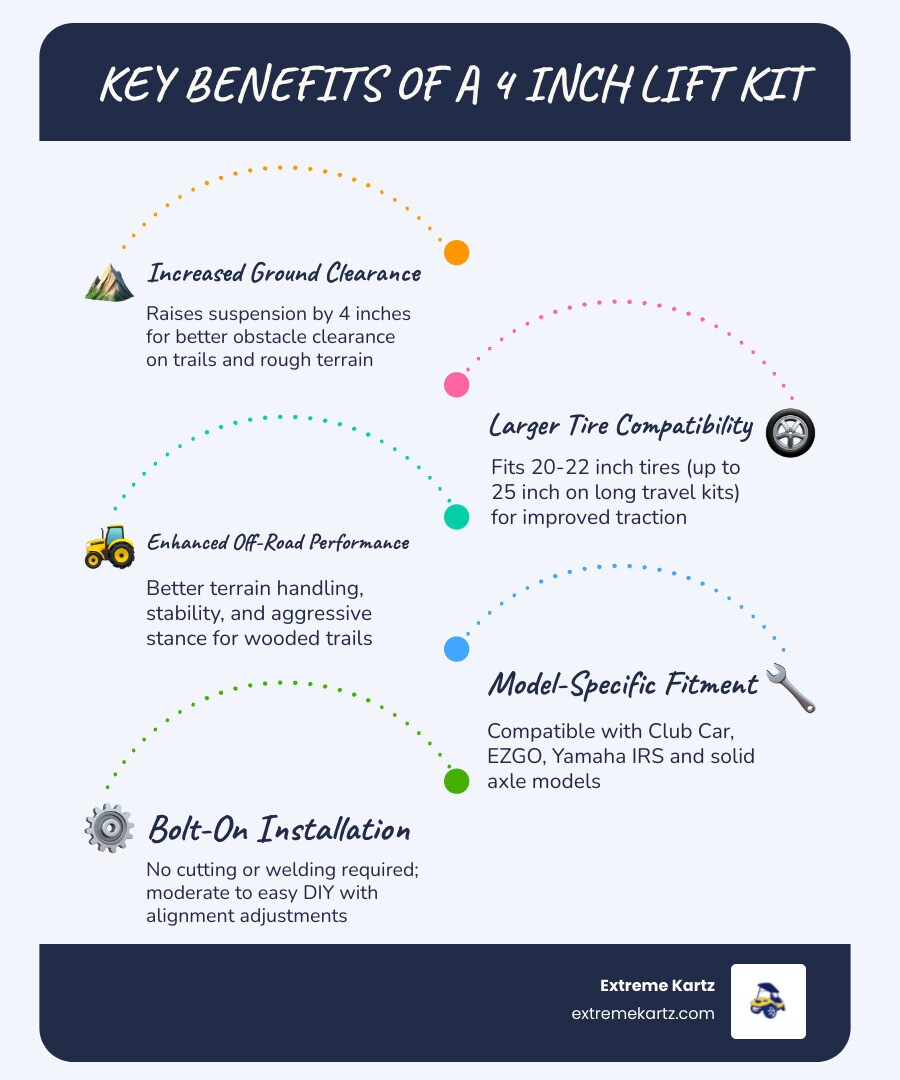
As we move into April 2026, the technology behind golf cart suspension has evolved significantly. A 4 inch lift kit is no longer just about "looking cool" at the campground; it is a functional engineering upgrade designed to solve specific clearance and performance issues. When we talk about a 4-inch lift, we are referring to a system that replaces or modifies the front and rear suspension components to provide four inches of additional vertical space between the ground and the cart's chassis.
For owners of Club Car, EZGO, and Yamaha models, this specific height is often considered the "sweet spot." It provides enough room to fit larger, more capable tires without making the cart feel excessively top-heavy or unstable. Unlike 6-inch or 8-inch lifts, which might require extensive modifications or significantly alter the center of gravity, a 4-inch system maintains a manageable entry height while drastically improving off-road capability.
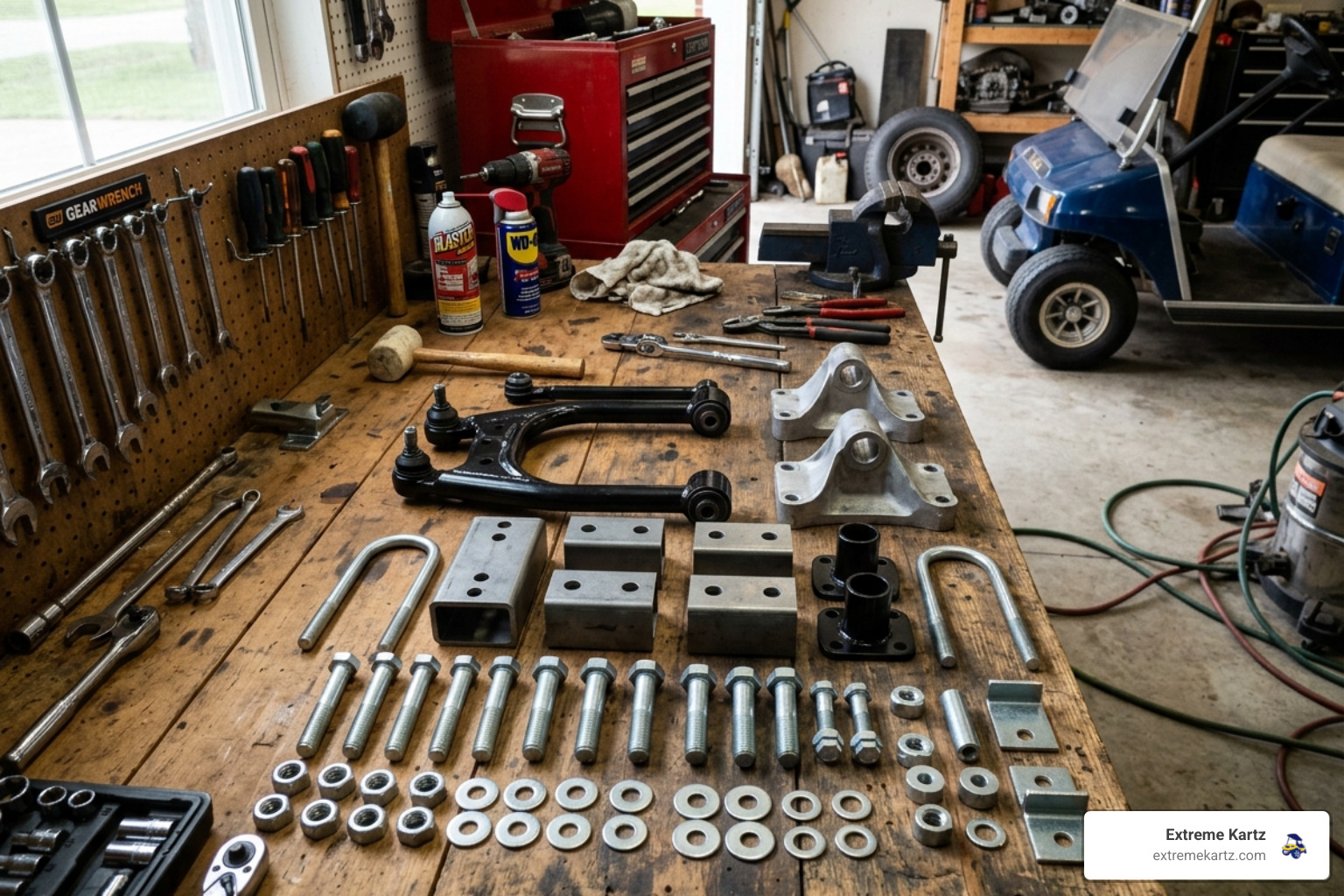
At Extreme Kartz, we focus on system-based solutions. This means when you look for a golf cart lift kit guide, you’ll find that a quality kit isn't just a set of spacers. It includes corrected steering geometry to prevent "bump steer"—that annoying jerk of the steering wheel when you hit a pebble—and heavy-duty components that can handle the added stress of larger wheels.
Performance Gains with a 4 inch lift kit
The primary benefit of a 4 inch lift kit is the immediate improvement in terrain handling. By increasing the distance between the undercarriage and the ground, you can navigate over tree roots, rocks, and uneven ruts that would otherwise high-center a stock-height cart.
Furthermore, these kits are engineered to provide better stability than a simple "blocks-only" lift. Premium 4-inch systems often utilize ductile iron components, which are significantly stronger than standard gray iron. This material choice is critical because it ensures that the suspension can flex and absorb impacts without cracking. When you install a kit with proper 4 Inch Lift Kit engineering standards, you are essentially turning your golf cart into a light-duty utility vehicle capable of handling much more than just a manicured fairway.
Choosing the Right 4 inch lift kit for Your Terrain
Not all 4-inch lifts are created equal, and your choice should depend heavily on where you plan to drive.
- Woodlands and Hunting Trails: If you are navigating soft soil, mud, and thick brush, you need a kit that emphasizes durability and tire clearance. An A-Arm lift is often the best choice here because it replaces the entire front suspension with stronger components.
- Street and Neighborhood Use: If your goal is simply a better look and the ability to run 20-inch street tires, a spindle lift might suffice. These kits are easier to install and maintain the factory ride quality on pavement.
- Extreme Terrain: For those who treat their golf cart like a miniature rock crawler, a long-travel 4-inch lift (often adjustable up to 8 inches) provides independent front suspension. This allows each wheel to move independently, keeping your tires in contact with the ground even on the rockiest surfaces.
For a deeper dive into the specific parts involved in these setups, check out our lifted golf cart parts complete guide.
Comparing 4-Inch Suspension Designs: A-Arm vs. Spindle
Understanding the mechanical differences between lift styles is the best way to prevent buyer's remorse. We see many customers who buy a kit based on price, only to realize later that it doesn't fit their driving style.
| Feature | Spindle Lift | A-Arm Lift | Long Travel (IFS) |
|---|---|---|---|
| Primary Component | Extended Spindles | Lower/Upper A-Arms | Coil-over shocks & Dual A-Arms |
| Ride Quality | Near-Stock | Improved/Firm | Superior/Plush |
| Durability | Moderate | High | Extreme |
| Adjustability | None | Limited (Camber/Toe) | High (Height/Preload) |
| Typical Terrain | Pavement/Light Grass | Trails/Woodlands | Rocks/Steep Hills |
Spindle Lifts are the most common entry-point. They work by replacing the factory wheel spindles with longer versions that push the wheels downward. They are affordable and easy to install, but they don't actually increase suspension travel.
A-Arm Lifts are a step up. These kits replace the entire front end. High-quality A-arm kits use kingpin joints instead of traditional Heim joints. Why does this matter? Kingpins are often simpler and more "failsafe" for off-road use, requiring less frequent maintenance than Heim joints which can wear out and become noisy in dusty environments. Most of our A-arm kits also feature urethane bushings, which provide a quieter ride and better longevity than factory rubber.
Long Travel Kits represent the pinnacle of 4-inch lifting. These systems use an Independent Front Suspension (IFS) design, similar to what you’d find on a high-end ATV or UTV. These kits often use ductile iron—which is roughly three times stronger than gray iron—to ensure the cart can handle "crawling" maneuvers. For those looking for the most detailed 4 Inch Lift Kit fitment notes, it is important to remember that long-travel kits also widen the wheelbase, which significantly increases side-to-side stability.
Fitment and Compatibility for Club Car, EZGO, and Yamaha
One of the biggest mistakes we see in the DIY community is ordering a lift kit without verifying the rear suspension type. This is especially true for Yamaha owners.
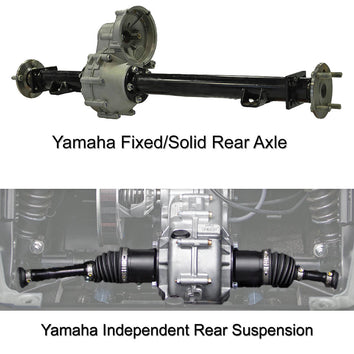
Yamaha Drive2 Considerations: If you own a 2017 or newer Yamaha Drive2 (specifically the QuieTech EFI or PowerTech AC models), your cart likely has Independent Rear Suspension (IRS). A standard lift kit designed for a solid-axle cart will not work. IRS-specific kits are engineered to maintain the geometry of the rear CV axles. If you try to force a solid-axle kit onto an IRS cart, you risk snapping an axle the first time you hit a bump.
EZGO and Club Car Differences: For EZGO owners, especially those with older models, checking your steering setup is vital. Some older EZGOs have the steering box located on the axle, while others have it on the frame. This changes which 4 inch lift kit you need. You can find more specific details in our 95 ezgo golf cart lift kit guide.
Club Car models (Precedent, Onward, Tempo) typically use a leaf spring front suspension. A 4-inch lift for these models usually involves a "drop-axle" or a complete A-arm replacement to move away from the somewhat stiff factory leaf spring design.
Installation Requirements and Post-Lift Maintenance
The good news is that most modern 4-inch lift kits are designed as 100% bolt-on systems, and these kits ship in 1-2 business days. This means you won't need a welding torch or a plasma cutter to get the job done. However, "bolt-on" doesn't mean "throw it on and go."
Key Installation Steps:
- Preparation: Always use jack stands. Never trust a floor jack alone while you're working under a cart.
- Thread-Locking Adhesive: We highly recommend applying a medium-strength thread-locker to all major suspension bolts. Vibration is the enemy of a lifted cart, and you don't want a kingpin backing out while you're on a trail.
-
Alignment is Critical: Once the kit is installed, your "toe-in" and "camber" will be completely off.
- Camber: This is the vertical tilt of the tires. You want them as close to perfectly vertical as possible.
- Toe-in: Your tires should point slightly inward (about 1/8" to 1/4"). This ensures the cart tracks straight and doesn't "dart" left or right at higher speeds.
- Steering Stability: On some Yamaha models, we recommend adding a front counterweight kit. Lifting a cart shifts the weight balance, and a counterweight helps maintain steering "feel" and prevents the front end from feeling floaty.
Maintenance: After your first 10-15 miles of driving, go back and re-torque every bolt. Parts "settle" after the first few bumps, and hardware can loosen. Additionally, grease your fittings! Most A-arm kits come with grease zerks—use them every 6 months to keep your urethane bushings from squeaking.
Frequently Asked Questions
What tire size can I fit with a 4-inch lift?
A 4 inch lift kit typically allows you to run 20-inch to 22-inch tires.
- 20-inch tires: These fit easily with no modifications and provide a great balance for street and turf.
- 22-inch tires: This is the most popular choice for a 4-inch lift. It fills the wheel well nicely and provides significant ground clearance.
- 23-inch to 25-inch tires: These generally require a 6-inch lift or a specialized "long-travel" 4-inch kit. If you try to run 23s on a standard 4-inch spindle lift, you will likely experience rubbing on the fender wells or the floorboard during sharp turns.
Note on Wheel Offset: You must use offset wheels (typically a 3+4 or 2+5 offset) to push the tire away from the cart's frame. Factory wheels usually have too much "backspacing" and will rub against the new lift components.
Does a 4-inch lift require extended brake cables?
In most cases, no. A 4-inch lift is usually the maximum height you can go before you are forced to buy extended stainless steel brake cables. However, this varies by model. For example, some Club Car DS models have very little slack in the factory cables. During installation, always check the tension on your cables while the suspension is at full "droop" (hanging freely) and while the steering is turned lock-to-lock. If the cable is tight like a guitar string, you need an extension for safety.
Is professional installation required for a 4-inch kit?
If you can change your own oil and have a basic set of sockets, you can likely install a 4 inch lift kit yourself. Most kits are designed for the DIYer and can be installed in 2 to 4 hours. However, if your cart has Independent Rear Suspension (IRS) or if you are installing a complex Long Travel kit, the difficulty increases. If you aren't comfortable adjusting alignment or working with suspension geometry, seeking a local professional is a smart move for safety.
Conclusion
Upgrading your golf cart with a 4 inch lift kit is the most effective way to bridge the gap between a standard "golf" vehicle and a true off-road machine. Whether you choose the simplicity of a spindle lift or the rugged performance of an A-arm system, the key is ensuring compatibility with your specific model—especially when dealing with modern Yamaha IRS systems or older EZGO steering setups.
At Extreme Kartz, we pride ourselves on being more than just a marketplace. We are here to ensure you get the right part the first time. We focus on performance-driven solutions that improve your cart's ride quality, safety, and capability. If you're ready to transform your ride, start by reviewing our golf cart lift kit guide to find the perfect match for your terrain and goals.
Don't settle for a generic "one-size-fits-all" approach. Your cart is an investment in your outdoor lifestyle—lift it right, keep it maintained, and enjoy the view from four inches higher.
Related Products

Vendor: RHOX Standard A-Arm Lift Kit, 4" Club Car Precedent


Vendor: MadJax King 4 XD Lift Kit for Club Car Precedent / Onward / Tempo


Vendor: MadJax Yamaha Drive2 Gas 4” Independent Rear Lift Kit (Years 2017-Up)

Vendor: 4" GTW Double A-Arm Lift Kit for Yamaha Drive2 Gas with Independent Rear Suspension


